 PDF (Español)
 FLIP
FLIP
How to Cite
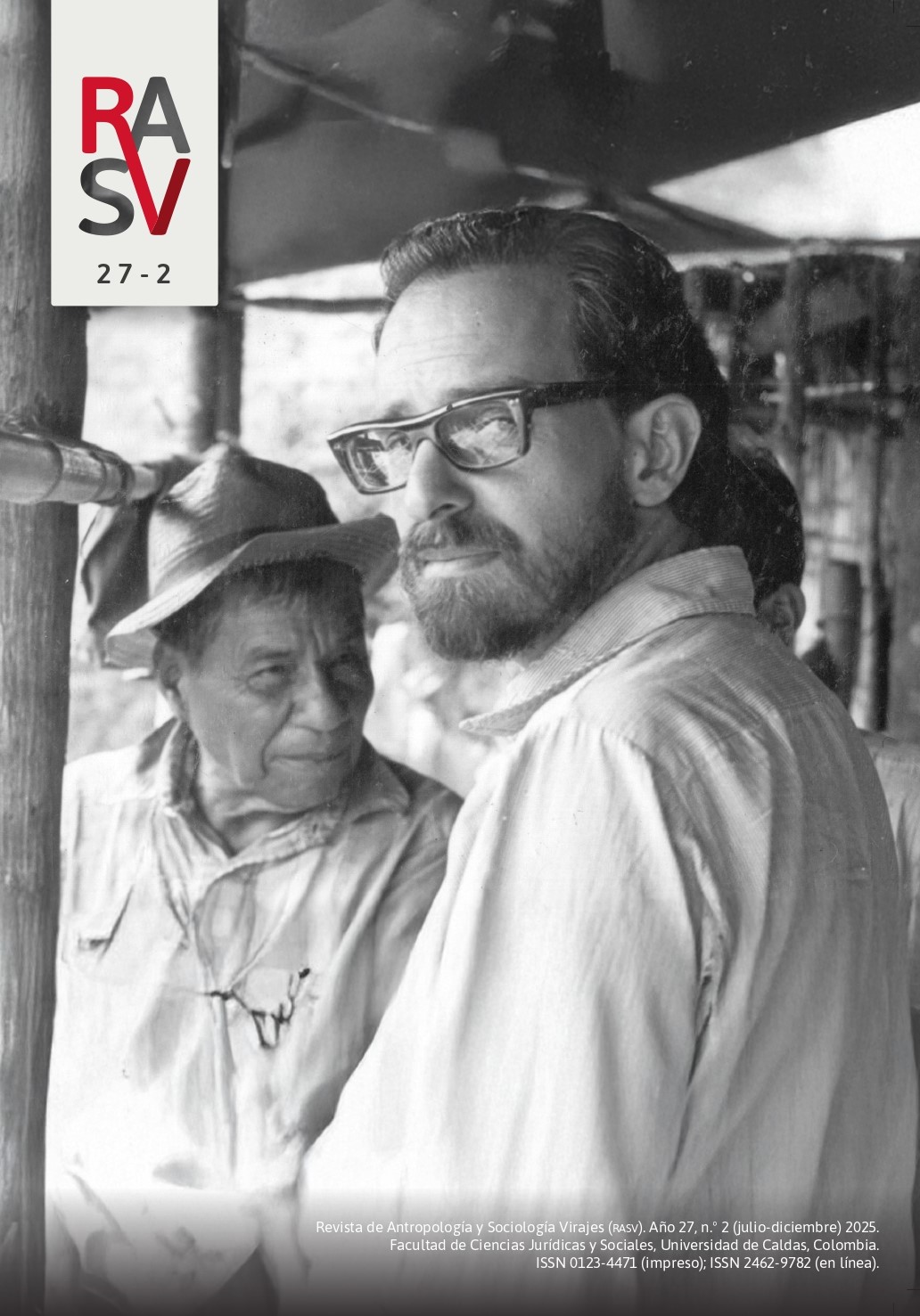
Díaz-Barón, M. (2025). Confronting to Educate: The Traces of Luis Guillermo Vasco in My Journey through the Anthropology of Childhoods and Educational Anthropology. Revista De Antropología Y Sociología : Virajes, 27(2), 21–36. https://doi.org/10.17151/rasv.2025.27.2.2
More Citation Formats
Authors

Abstract
This article explores three aspects of a particular trajectory in anthropology, which has been influenced by the work of Luis Guillermo Vasco. First, confrontation as a form of education, based on the assumption that we must always question what is taken for granted. Second, it shows how research on childhood developed in the author’s case. Finally, it offers a suggestive glimpse into the university environment of anthropology at the National University in the 1970s and 1980s.


References
Benedict, R. (1934). Patterns of Culture. Houghton Mifflin.
Carvalho, S. (2003). Infância e exclusão social: Um estudo antropológico sobre crianças em situação de rua no Brasil. Editora UFMG.
Centro de Expresión Artística Mafalda. (2024) PEI. https://centromafalda.edu.co/
Cohn, C. (2002). A criança indígena: A concepção xicrin de infância e aprendizado. PPGASUSP.
Concejo de Bogotá, D.C. (2009, enero 5). Acuerdo 359 de 2009: Por el cual se establecen los lineamientos de política pública para los indígenas en Bogotá, D.C. y se dictan otras disposiciones. Alcaldía Mayor de Bogotá, Secretaría Jurídica Distrital. https://www.alcaldiabogota.gov.co/sisjur/normas/Norma1.jsp?i=34386
Díaz, M. (2024). Reconfigurar las nociones de infancia y la educación inicial desde las pedagogías propias de algunos grupos amazónicos. Revista Áltera, 17. https://periodicos.ufpb.br/index.php/altera/article/view/66880
Lancy, D. (2008). The anthropology of childhood: Cherubs, chattel, changelings. Cambridge University Press.
Levine, R. (2003). Childhood socialization: Comparative studies of parenting, learning and educational change. Levine, R. (2007). Ethnographic studies of childhood: A historical overview. American Anthropologist, 109(2), 247-260. https://doi.org/10.1525/aa.2007.109.2.247
Mao, T. (1967). Citas del Presidente Mao Tse-Tung [Libro Rojo]. República Popular de China.
Mao, T. (1968). Sobre la práctica. República Popular de China.
Mead, M. (1928). Coming of Age in Samoa: A Psychological Study of Primitive Youth for Western Civilisation. William Morrow y Company.
Ministerio de Educación Nacional (M.E.N.). (s.f.). Sistema Educativo Indígena Propio (SEIP). https://www.mineducacion.gov.co/1621/article-214913.html
Pachón, X. (2007). Los gamines: Una historia social de la infancia en Bogotá. Universidad Nacional de Colombia, Instituto Colombiano de Antropología e Historia (ICANH).
Pedraza Gómez, Z. (2011). Educación y cultura: La escuela como espacio de configuración de la infancia. En Infancias y adolescencias: Teorías y experiencias en el borde (pp. 45-68). Universidad Distrital Francisco José de Caldas.
Piaget, J. (1937). La construction du réel chez l’enfant. Delachaux et Niestlé.
Piaget, J. (1985). La construcción de lo real en el niño. Editorial Crítica. (Trabajo original publicado en 1937).
Rockwell, E. (1985). Etnografía y teoría de la investigación educativa. En Etnografía y teoría de la investigación educativa. Cinvestav-IPN.
Steiner, R. (1995). The education of the child in the light of anthroposophy. Anthroposophic Press.
Vasco, L. G. (2007). Así es mi método en etnografía. Tabula Rasa, 6, 19-52.
Vasco, L. G. (1987). Objetividad en antropología: Una trampa mortal. Uroboros, 1, 7-9.
Vygotsky, L. (1934). Thought and language. MIT Press.
Vygotsky, L. (1978). Pensamiento y lenguaje. Paidós. (Trabajo original publicado en 1934). Whiting, J., y Whiting, B. (1975). Children of six cultures: A psycho-cultural analysis. Harvard University Press.
Carvalho, S. (2003). Infância e exclusão social: Um estudo antropológico sobre crianças em situação de rua no Brasil. Editora UFMG.
Centro de Expresión Artística Mafalda. (2024) PEI. https://centromafalda.edu.co/
Cohn, C. (2002). A criança indígena: A concepção xicrin de infância e aprendizado. PPGASUSP.
Concejo de Bogotá, D.C. (2009, enero 5). Acuerdo 359 de 2009: Por el cual se establecen los lineamientos de política pública para los indígenas en Bogotá, D.C. y se dictan otras disposiciones. Alcaldía Mayor de Bogotá, Secretaría Jurídica Distrital. https://www.alcaldiabogota.gov.co/sisjur/normas/Norma1.jsp?i=34386
Díaz, M. (2024). Reconfigurar las nociones de infancia y la educación inicial desde las pedagogías propias de algunos grupos amazónicos. Revista Áltera, 17. https://periodicos.ufpb.br/index.php/altera/article/view/66880
Lancy, D. (2008). The anthropology of childhood: Cherubs, chattel, changelings. Cambridge University Press.
Levine, R. (2003). Childhood socialization: Comparative studies of parenting, learning and educational change. Levine, R. (2007). Ethnographic studies of childhood: A historical overview. American Anthropologist, 109(2), 247-260. https://doi.org/10.1525/aa.2007.109.2.247
Mao, T. (1967). Citas del Presidente Mao Tse-Tung [Libro Rojo]. República Popular de China.
Mao, T. (1968). Sobre la práctica. República Popular de China.
Mead, M. (1928). Coming of Age in Samoa: A Psychological Study of Primitive Youth for Western Civilisation. William Morrow y Company.
Ministerio de Educación Nacional (M.E.N.). (s.f.). Sistema Educativo Indígena Propio (SEIP). https://www.mineducacion.gov.co/1621/article-214913.html
Pachón, X. (2007). Los gamines: Una historia social de la infancia en Bogotá. Universidad Nacional de Colombia, Instituto Colombiano de Antropología e Historia (ICANH).
Pedraza Gómez, Z. (2011). Educación y cultura: La escuela como espacio de configuración de la infancia. En Infancias y adolescencias: Teorías y experiencias en el borde (pp. 45-68). Universidad Distrital Francisco José de Caldas.
Piaget, J. (1937). La construction du réel chez l’enfant. Delachaux et Niestlé.
Piaget, J. (1985). La construcción de lo real en el niño. Editorial Crítica. (Trabajo original publicado en 1937).
Rockwell, E. (1985). Etnografía y teoría de la investigación educativa. En Etnografía y teoría de la investigación educativa. Cinvestav-IPN.
Steiner, R. (1995). The education of the child in the light of anthroposophy. Anthroposophic Press.
Vasco, L. G. (2007). Así es mi método en etnografía. Tabula Rasa, 6, 19-52.
Vasco, L. G. (1987). Objetividad en antropología: Una trampa mortal. Uroboros, 1, 7-9.
Vygotsky, L. (1934). Thought and language. MIT Press.
Vygotsky, L. (1978). Pensamiento y lenguaje. Paidós. (Trabajo original publicado en 1934). Whiting, J., y Whiting, B. (1975). Children of six cultures: A psycho-cultural analysis. Harvard University Press.
Downloads
Download data is not yet available.