Environmental Determinants of Respiratory
Diseases: Current Evidence and Preventive Strategies
Zhanibek
Muratov1

Aida
Zotaj2
Amina
Kalandarova3
Katarzyna
Wisniewska4
Oleksandr
Dobrovanov5
Received:
15/11/2025 Accepted: 10/02/2026 Updated: 4/08/2026
DOI: 10.17151/luaz.2026.63.8
Abstract
The deterioration of ambient air quality worldwide has intensified the need to examine the environmental factors associated with the growing burden of respiratory disease. This study aimed to identify broad patterns in the adverse effects of environmental exposures on the respiratory system, while accounting for regional variation and population-specific vulnerability. A systematic literature review was conducted between April and December 2024 using four international databases: PubMed, Web of Science, Scopus, and Google Scholar. Seventy-one relevant publications were included in the final analysis. The findings indicate that, in India, concentrations of particulate matter with aerodynamic diameters of up to 10 μm (PM₁₀) and 2.5 μm (PM₂.₅) exceed recommended limits by a factor of 2.56. In Northern Thailand, reductions of 5.3%–34.3% in particulate matter concentrations were associated with significant declines in hospitalization rates. In China and South Africa, pollutant levels substantially exceed the World Health Organization guideline of 5 μg/m³, while national standards in some settings permit concentrations of up to 40 μg/m³, thereby increasing the risk of chronic inflammatory respiratory conditions. In Bogotá, Colombia, heavy traffic contributes to increased morbidity and mortality from respiratory complications. In Kyrgyzstan, seasonal variation and changes in vegetation patterns have been linked to a rise in allergic reactions, whereas in Slovakia, prolonged pollen seasons are associated with a higher prevalence of bronchial asthma. Children, particularly those under 5 years of age, older adults, and industrial workers were identified as the most vulnerable groups. Climate change further aggravates these risks by intensifying exposure to fine particulate matter and gaseous pollutants. The findings underscore the need for integrated policies focused on emission reduction, environmental monitoring, public awareness, and the harmonization of air-quality standards. The study provides evidence that may support cross-sectoral planning and the development of preventive strategies aimed at reducing the burden of acute and chronic respiratory disease.
Keywords: air pollution; air quality; environmental monitoring; fine particulate matter; respiratory inflammation.
Influencias ambientales en el desarrollo
de enfermedades respiratorias: enfoques actuales para la prevención
Resumen
El deterioro de la calidad del aire ambiental a nivel mundial exige la investigación de los factores que contribuyen al aumento de las patologías respiratorias en la población. El objetivo de este estudio fue identificar patrones generalizados de los efectos adversos de diversos factores ambientales en el sistema respiratorio, considerando las especificidades regionales y los grupos de riesgo. Se realizó un análisis sistemático de la literatura entre abril y diciembre de 2024 utilizando cuatro bases de datos internacionales (PubMed, Web of Science, Scopus y Google Scholar), lo que resultó en la selección de 71 publicaciones relevantes. Los hallazgos revelan que en la India, los niveles de material particulado con diámetros de hasta 10 y 2,5 micras superan los estándares recomendados en 2,56 veces, mientras que en el norte de Tailandia, una reducción del 5,3-34,3 % en estos indicadores disminuyó significativamente las tasas de hospitalización. En China y Sudáfrica, las concentraciones de contaminantes superan considerablemente los cinco microgramos por metro cúbico recomendados por la Organización Mundial de la Salud, ya que las normas locales en algunos casos permiten límites de hasta cuarenta microgramos, lo que aumenta el riesgo de enfermedades inflamatorias crónicas. El análisis también confirmó que en la capital de Colombia, el tráfico intenso contribuye a una mayor morbilidad y mortalidad por complicaciones respiratorias, mientras que en Kirguistán, los cambios estacionales y los patrones alterados de la vegetación han provocado un aumento de las reacciones alérgicas. En Eslovaquia, la prolongada temporada de polen se asocia con un aumento de los casos de asma bronquial. Las poblaciones más vulnerables incluyen a los niños (especialmente los menores de 5 años), los ancianos y los trabajadores industriales. Los cambios climáticos exacerban estas tendencias al amplificar los efectos de las partículas finas y los contaminantes gaseosos. Se concluye que las políticas integrales dirigidas a la reducción de emisiones y a la sensibilización pública pueden aliviar la carga de los trastornos respiratorios agudos y crónicos. La importancia práctica del estudio radica en la aplicabilidad de los patrones identificados para la planificación intersectorial de medidas preventivas y la armonización de las normas ambientales.
Palabras clave: Contaminación; Monitoreo; Calidad Del Aire; Partículas Finas; Respuestas Inflamatorias.
Introduction
The growing burden of respiratory diseases, together with the progressive deterioration of environmental conditions worldwide, has intensified interest in understanding how environmental exposures affect respiratory health. Air pollution, rapid urbanization, industrial expansion, and climate change have contributed to the increasing prevalence of acute and chronic respiratory conditions, placing substantial medical, social, and economic pressure on healthcare systems. Consequently, developing evidence-based preventive strategies has become a public health priority, particularly for protecting vulnerable populations through interdisciplinary approaches that integrate environmental and health perspectives.
Recent research has increasingly examined the links between environmental change and respiratory disease, demonstrating that worsening air quality and climate variability substantially influence respiratory health outcomes.
Savouré et al. (2023) investigated the influence of environmental exposures on respiratory health throughout the life course. Drawing on several large European cohort studies, they showed that industrial activity, urbanization, and pollutants such as phthalates and fine particulate matter have profound effects on lung function and respiratory health. Their findings further suggest that effective air pollution control policies can substantially reduce the incidence of chronic respiratory diseases.
Similarly, Xu et al. (2025) identified multiple environmental drivers—including increasing air pollution, temperature anomalies, dust storms, wildfires, and elevated allergen concentrations—as important contributors to chronic respiratory diseases such as chronic obstructive pulmonary disease (COPD) and asthma. The authors highlighted older adults, children, socioeconomically disadvantaged populations, and communities with limited adaptive capacity as particularly vulnerable. Although they proposed several adaptive strategies, including co-benefit policies, public awareness initiatives, and international collaboration, they also emphasized that the long-term mechanisms through which climate change affects respiratory health remain insufficiently understood.
Alsharif et al. (2024) likewise examined the global challenges posed by environmental degradation and the increasing burden of respiratory disease. Their review identified strong associations between air pollution, climate change, deforestation, rising atmospheric carbon dioxide concentrations, and the growing prevalence of asthma and COPD. They emphasized the disproportionate impact on vulnerable groups—including children, older adults, and individuals with pre-existing chronic conditions—and advocated coordinated policy interventions, strengthened healthcare infrastructure, and climate adaptation strategies.
Beyond clinical outcomes, environmental respiratory diseases also impose considerable socioeconomic costs. Kožená et al. (2023) examined their economic impact on businesses in Slovakia and found that workplace health promotion and prevention programs can significantly reduce employee morbidity. However, many organizations lack systematic disease surveillance and have yet to exploit the potential of artificial intelligence for predicting respiratory illnesses.
Rodrigues et al. (2023) explored how air quality influences the travel decisions of individuals with respiratory diseases. Their findings indicate that tourists with asthma or COPD preferentially select destinations with cleaner air, adopt protective measures, and reduce physical activity during periods of poor air quality. Nevertheless, the study paid limited attention to the economic consequences of air pollution for the tourism industry.
At the global level, Achakulwisut et al. (2019) estimated the number of childhood asthma cases attributable to nitrogen dioxide (NO₂), a major traffic-related air pollutant. Their analysis suggested that approximately four million new childhood asthma cases occur annually as a result of NO₂ exposure, with nearly two-thirds occurring in urban areas. In some megacities, such as Shanghai, traffic-related pollution accounted for nearly half of all new childhood asthma cases. The authors concluded that substantial reductions in asthma incidence could be achieved through improved air quality, although they noted that NO₂ may act as a proxy for broader mixtures of traffic-related pollutants rather than as the sole causal agent.
Technological innovations have also emerged as promising tools for prevention. Polychronidou et al. (2019) developed an automated sensor system capable of continuously monitoring air pollution and predicting its potential effects on respiratory health. Such systems may support environmental policymaking while enabling individuals with chronic respiratory diseases to make informed decisions regarding exposure. However, the study did not assess the economic feasibility of implementing this technology in low-resource settings or address potential barriers to large-scale adoption.
Occupational exposure remains another major environmental determinant of respiratory disease. Vlahovich and Sood (2021) reviewed occupational lung diseases (OLDs), emphasizing that many cases remain underdiagnosed because occupational exposures are frequently overlooked during clinical assessment. As a result, conditions such as occupational asthma and chronic bronchitis may be misclassified, delaying appropriate preventive interventions. The authors called for greater physician awareness, more comprehensive occupational history-taking, stronger regulatory enforcement, particularly in developing countries, and further research into the genetic and epigenetic mechanisms underlying occupational respiratory diseases.
Despite the growing body of evidence, important knowledge gaps remain regarding the integration of environmental, biological, technological, and socioeconomic factors into comprehensive prevention strategies. Most studies focus on specific pollutants, diseases, or geographic contexts, whereas fewer provide an integrated assessment of environmental determinants across diverse populations and settings.
Accordingly, this study aims to synthesize current scientific evidence on the relationship between environmental factors and respiratory diseases in order to identify effective prevention strategies in the context of escalating environmental challenges. Specifically, the study seeks to: (1) identify the environmental determinants most strongly associated with acute and chronic respiratory diseases across different demographic, social, and geographic populations; (2) examine the pathophysiological mechanisms through which major pollutants and allergens affect the respiratory system, including molecular, immunological, and epigenetic pathways; and (3) evaluate the effectiveness of current technological, pharmacological, and socioeconomic interventions for preventing environmentally related respiratory diseases at the individual, community, and population levels.
Materials and Methods
This study was conducted as a systematic literature review to identify recurring patterns in the effects of environmental pollutants on respiratory health. The review was carried out between April and December 2024, encompassing the identification, screening, and analysis of relevant scientific publications.
The literature search was performed using four major electronic databases: PubMed, Web of Science, Scopus, and Google Scholar. Search terms included combinations of the following keywords: air pollution, respiratory diseases, environmental pollutants, PM2.5, PM10, NO₂, SO₂, O₃, CO, air quality, biomass burning, lung function, and risk factors. The search strategy was adapted to the indexing requirements of each database to maximize retrieval of relevant studies.
All references were imported into EndNote (Version 20.2), which was used for citation management, duplicate removal, and organization of the study database. Records were imported in RIS or XML formats and automatically screened to identify duplicate entries. Sources were subsequently organized according to keywords, journal titles, and first authors to facilitate thematic classification. EndNote's advanced search, tagging, annotation, and Smart Groups functions were used to support the screening process, categorize publications, and manage references throughout the review.
Studies were included if they: (1) investigated the effects of environmental pollutants—particularly particulate matter and gaseous pollutants—on respiratory health; (2) reported qualitative or quantitative outcomes, including pollutant concentrations, disease prevalence, severity, or respiratory function, while considering demographic or occupational characteristics; and (3) clearly described their methodological procedures and employed recognized statistical analyses.
Studies were excluded if they: (1) lacked statistically supported evidence of associations between environmental exposures and respiratory diseases; (2) provided insufficient methodological or population information; (3) were duplicate publications or did not present original findings; or (4) did not focus primarily on respiratory diseases.
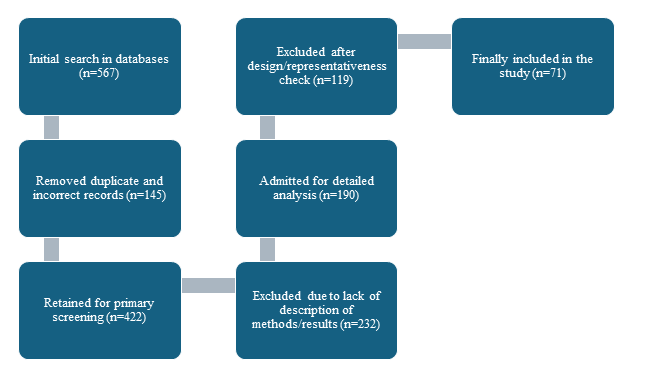
The study selection process followed the Preferred Reporting Items for Systematic Reviews and Meta-Analyses (PRISMA 2020) guidelines (Page et al., 2021). After duplicate removal, titles and abstracts were screened against the eligibility criteria, followed by full-text assessment of potentially relevant studies. The complete selection process is summarized in Figure 1.
Figure 1. PRISMA 2020 flow diagram illustrating the study selection process.
Note. Created by the authors based on the PRISMA 2020 guidelines.
At the data synthesis stage, the selected studies were evaluated following the methodological principles of the PRISMA 2020 guidelines. Information on study design (e.g., observational, randomized, and retrospective studies), participant characteristics, statistical methods, and methodological quality was systematically extracted and compared. Studies were further classified according to the type of environmental pollutant investigated, geographic setting, and population characteristics to facilitate cross-study comparisons.
A qualitative content analysis was conducted to identify recurring patterns and emerging themes. When studies reported comparable quantitative outcomes, additional descriptive syntheses of cumulative effects were performed using specialized statistical software.
The final corpus of 71 studies provided a comprehensive evidence base for identifying consistent patterns in the relationship between environmental pollutants and respiratory health across different geographical regions and population groups. Integrating findings from diverse study designs enabled a broader understanding of the magnitude and determinants of environmentally related respiratory diseases and informed evidence-based recommendations for their prevention and mitigation.
Results and Discussion
Environmental pollutants and their impact on respiratory health across populations
The evidence consistently identifies fine particulate matter (PM₂.₅ and PM₁₀), nitrogen dioxide (NO₂), sulfur dioxide (SO₂), ozone (O₃), and carbon monoxide (CO) as the principal environmental pollutants associated with adverse respiratory outcomes. These pollutants are especially prevalent in highly urbanized regions of Asia (India, China, and Thailand), Latin America (e.g., Bogotá, Colombia), and Africa (South Africa), where vehicle emissions, industrial activity, biomass burning, and power generation constitute their primary sources. For example, Ingabire and Nkundabose (2020) reported that PM₁₀ and PM₂.₅ concentrations in India exceed regulatory limits by a factor of 2.56, resulting in measurable declines in lung function among university students chronically exposed to polluted air. Similarly, Molina-Gómez et al. (2021) found that densely populated areas of Bogotá with elevated PM₂.₅ and NO₂ concentrations exhibit higher mortality rates from respiratory diseases.
Pollutant concentrations also display marked regional variability. In northern Thailand, PM₂.₅ and PM₁₀ levels peak between January and April, coinciding with increased mortality from chronic obstructive pulmonary disease (COPD) (Sapbamrer et al., 2024). In China, concentrations of both particulate fractions frequently exceed national air quality standards, contributing to higher hospitalization rates, particularly among children and older adults (Dong, 2024). Likewise, Novela et al. (2020) reported PM₂.₅ concentrations in South Africa that exceeded World Health Organization (WHO) recommendations severalfold, primarily because of industrial emissions and vehicular traffic.
Air quality standards also vary considerably across countries. The WHO recommends an annual mean PM₂.₅ concentration of no more than 5 μg/m³, whereas countries such as India and South Africa permit annual concentrations of up to 40 μg/m³ (World Health Organization, 2021). Even modest exceedances of recommended thresholds have been associated with increased risks of asthma and COPD (Han et al., 2022). Conversely, environmental interventions can yield measurable health benefits. In northern Thailand, seasonal restrictions on biomass burning reduced PM₁₀ concentrations by 5.3–34.3 %, accompanied by a significant decline in hospital admissions for respiratory diseases (Uttajug et al., 2022).
Susceptibility to pollution-related respiratory diseases is strongly influenced by demographic and socioeconomic factors (Cortes-Ramirez et al., 2021). Children constitute one of the most vulnerable populations because of the ongoing development of their respiratory system and their higher metabolic rates. Cortes-Ramirez et al. (2021) further showed that children from socioeconomically disadvantaged households are disproportionately exposed to indoor biomass combustion, secondhand tobacco smoke, and aeroallergens, increasing their risk of asthma, allergic rhinitis, and respiratory infections.
Older adults are likewise particularly susceptible because of age-related declines in pulmonary function, impaired immune responses, and the presence of multiple chronic conditions. Morty and Prakash (2019) demonstrated that cellular senescence and reduced tissue repair capacity increase vulnerability to chronic respiratory diseases such as COPD and asthma. Exposure to PM₂.₅ further elevates the risk of severe complications and premature mortality in this population.
Occupational exposure represents another important risk factor. Workers routinely exposed to dust, toxic gases, and industrial chemicals experience substantially higher rates of respiratory disease (Balabayev et al., 2025; Ilderbayeva et al., 2024a). Duan et al. (2020) reported that patients with COPD exposed to biomass smoke or industrial emissions exhibited significantly poorer lung function and faster disease progression than those exposed exclusively to tobacco smoke. Similar findings were reported by D’Ovidio et al. (2023), who identified occupational exposure to dust, gases, and fumes as a major contributor to asthma and COPD, particularly under conditions of climate change.
Comparisons between urban and rural environments reveal distinct pollution profiles and associated health risks. Urban areas are primarily affected by vehicle emissions, industrial activities, and secondary aerosols, whereas rural environments are more heavily influenced by biomass burning and windborne particulate matter (Dyomin et al., 2021; Pilecka et al., 2017). Dong (2024) demonstrated that PM₂.₅, PM₁₀, NO₂, SO₂, and CO were all significantly associated with hospitalizations for acute respiratory diseases in China. Interestingly, particulate matter exerted stronger effects in rural areas, whereas NO₂ and CO had greater impacts in urban environments because of traffic-related emissions.
Comparable patterns have been reported elsewhere. In Catalonia, reductions in NO₂ and PM₁₀ concentrations during the COVID-19 lockdown were accompanied by substantial declines in hospital admissions for respiratory diseases. However, ozone concentrations increased because of reduced NO₂ emissions, potentially contributing to asthma exacerbations and other chronic respiratory conditions (Gorrochategui et al., 2022). Similarly, Komarudin et al. (2024) found that seasonal increases in PM₂.₅ and PM₁₀ during Indonesia's dry season coincided with higher rates of acute respiratory infections. Although O₃, NO₂, and SO₂ also exhibited seasonal variation, particulate matter remained the predominant risk factor in rural communities, while multiple pollutants contributed to disease burden in urban centers.
Evidence from Spain further highlights the need for geographically tailored mitigation strategies. Jaén et al. (2021) showed that transportation-related NO₂ and PM₁₀ dominate urban pollution, whereas biomass combustion is the principal source of air pollution in rural areas. Their toxicological analyses demonstrated that emissions from biomass burning induced stronger inflammatory responses in lung tissue than traffic-related pollutants, underscoring the importance of developing differentiated pollution-control policies for urban and rural environments.
Overall, the reviewed evidence demonstrates that the respiratory health impacts of environmental pollution vary according to pollutant type, emission source, geographic context, and population characteristics. Urban populations are predominantly affected by traffic- and industry-related pollutants such as NO₂ and PM₁₀, whereas biomass burning and coarse particulate matter constitute the principal threats in rural settings. These findings emphasize the need for region-specific environmental policies and targeted public health interventions to reduce the burden of respiratory diseases.
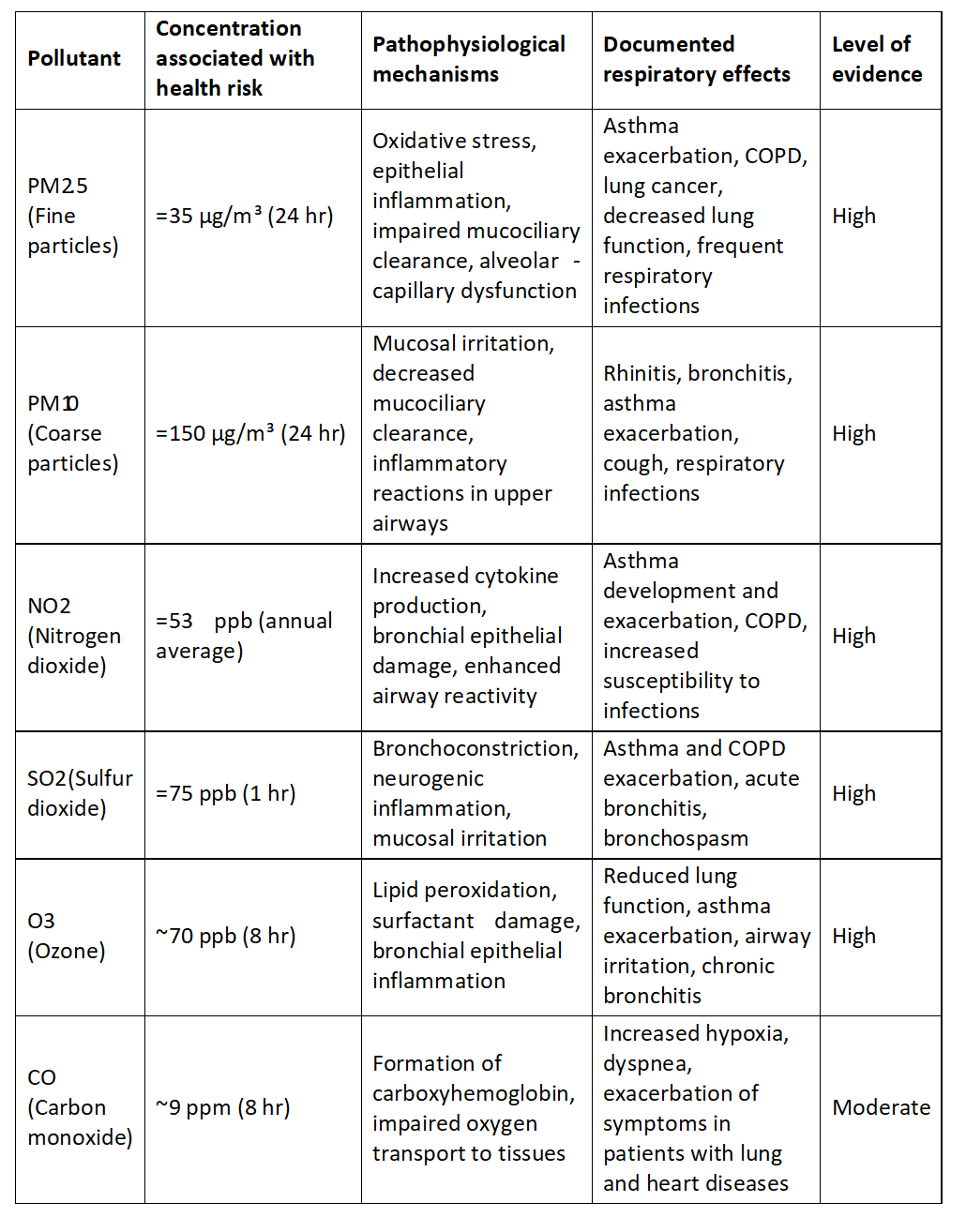
Table 1 presents a comparative overview of the principal environmental pollutants, their concentrations, mechanisms of respiratory toxicity, and the associated health outcomes reported in the literature.
Table 1. Comparative analysis of the main environmental pollutants and their
documented impact on the health of the respiratory system
Note. Compiled by the authors based on United States Environmental Protection Agency (2024), Wallbanks et al. (2024).
Climate change is profoundly reshaping the prevalence and severity of respiratory diseases, particularly among vulnerable populations. Rising average temperatures, more frequent extreme weather events, and shifts in pollen seasons collectively influence respiratory health through multiple interacting pathways. Higher temperatures and elevated ozone concentrations intensify airway inflammation, exacerbating chronic respiratory conditions such as asthma and chronic obstructive pulmonary disease (COPD) (Bayram et al., 2023). Likewise, increased concentrations of aeroallergens—including pollen and fungal spores—have been associated with higher rates of allergic rhinitis and bronchial asthma, particularly among children (D’Amato et al., 2020).
Extreme weather events further amplify respiratory risks by degrading air quality. Wildfires substantially increase concentrations of fine particulate matter (PM₂.₅), which penetrates deep into the respiratory tract, triggering inflammatory responses and increasing hospital admissions among patients with COPD and asthma (Covert et al., 2023). Similarly, storms and heavy rainfall elevate indoor humidity, creating favorable conditions for fungal proliferation and consequently increasing the frequency of asthma attacks and allergic exacerbations (Paoletti et al., 2023). Rising atmospheric CO₂ concentrations and prolonged growing seasons also enhance pollen production and allergenicity, extending the duration of pollen seasons and worsening symptoms among individuals with seasonal allergic diseases (Melnychaiko & Andreychyn, 2023). Recent evidence further suggests that contemporary pollen grains contain higher concentrations of allergenic proteins, increasing their capacity to trigger immune responses in sensitized individuals (Malik et al., 2024).
The health impacts of climate change vary considerably across regions, reflecting differences in environmental conditions, adaptation capacity, and healthcare infrastructure. In Kyrgyzstan, increasing temperatures are expected to alter vegetation patterns and expand the distribution of highly allergenic plants such as ragweed, thereby increasing the prevalence of seasonal allergic diseases. Desertification-related dust storms further contribute to respiratory infections. In Slovakia, warmer temperatures have lengthened the pollen seasons of birch and grass species, placing additional pressure on healthcare services through increased cases of allergic rhinitis and asthma (D’Amato et al., 2020).
These findings underscore the need for comprehensive adaptation strategies that integrate continuous air quality monitoring, pollen forecasting systems, and targeted healthcare interventions for vulnerable populations. Simultaneously, reducing greenhouse gas emissions and strengthening air pollution control policies remain fundamental to mitigating the respiratory health impacts of climate change (Shahini & Shahini, 2025; Valujeva et al., 2024).
Pathophysiological Mechanisms Underlying
Pollution-Induced Respiratory Damage
Exposure to particulate matter (PM) and gaseous pollutants initiates a complex cascade of cellular and molecular events characterized by oxidative stress, chronic inflammation, and structural damage to the airway epithelium. Pulmonary epithelial cells and alveolar macrophages constitute the primary cellular targets, responding to pollutant exposure through activation of pro-oxidant signaling pathways, inflammasomes, and apoptotic and necrotic processes.
One of the principal mechanisms associated with exposure to PM₁₀ and PM₂.₅ is oxidative stress, resulting from excessive production of reactive oxygen species (ROS) within epithelial cells and macrophages (Valacchi et al., 2020). Elevated ROS levels activate the nuclear factor erythroid 2–related factor 2 (Nrf2), which regulates antioxidant defenses by controlling the expression of enzymes such as glutathione peroxidase (GPx) and superoxide dismutase (SOD). Under sustained pollutant exposure, however, these protective mechanisms become overwhelmed, leading to mitochondrial dysfunction, lipid peroxidation, membrane damage, and DNA injury (Radan et al., 2019).
At the same time, PM₂.₅ activates NF-κB signaling pathways, stimulating the release of pro-inflammatory cytokines, including interleukin-6 (IL-6), interleukin-8 (IL-8), and tumor necrosis factor-alpha (TNF-α), thereby sustaining chronic airway inflammation (Xu et al., 2020). Experimental studies using human airway epithelial models—including BEAS-2B cells and advanced air–liquid interface (ALI) systems—have provided compelling evidence of these pathological processes. Zhou et al. (2019), for example, demonstrated that PM₂.₅ exposure disrupts normal cell-cycle regulation, induces apoptosis through activation of caspase-mediated pathways, and compromises epithelial barrier integrity by disrupting tight junction proteins. These alterations increase epithelial permeability, facilitating deeper penetration of pollutants and amplifying inflammatory responses. Particulate matter also activates mitogen-activated protein kinase (MAPK) signaling, inducing cyclooxygenase-2 (COX-2) expression and prostaglandin E₂ (PGE₂) production, thereby further reinforcing inflammatory cascades (Fernando et al., 2019).
These molecular mechanisms are reflected in epidemiological observations across different countries. In Bishkek (Kyrgyzstan), where coal combustion and industrial emissions frequently elevate PM₂.₅ and PM₁₀ concentrations beyond WHO guidelines, respiratory diseases such as asthma and COPD have become increasingly prevalent. Similarly, in Slovakia, traffic emissions and coal-based energy production contribute to elevated concentrations of nitrogen dioxide (NO₂) and particulate matter, which have been associated with increased respiratory infections and more frequent asthma exacerbations (de Oliveira et al., 2021).
Environmental pollutants also exert profound effects on the immune system by disrupting both innate and adaptive immune responses, thereby increasing susceptibility to hypersensitivity reactions and autoimmune disorders (Hussain et al., 2022; Turmagambetova et al., 2017b). Inhaled particles and gaseous pollutants activate macrophages, dendritic cells, and airway epithelial cells through Toll-like receptors (TLRs) and damage-associated molecular pattern (DAMP) receptors. These signaling pathways activate NF-κB, promoting sustained production of pro-inflammatory cytokines such as IL-6 and TNF-α and contributing to chronic airway inflammation (Beerweiler et al., 2023).
Pollutants also influence adaptive immunity by altering the balance among T-helper cell subsets. Fine particulate matter favors a Th2-dominant immune response, thereby promoting allergic diseases such as asthma, whereas dysregulated Th17 responses may contribute to autoimmune processes through excessive production of interleukin-17 (IL-17), leading to neutrophilic inflammation and tissue damage (Glencross et al., 2020).
An additional mechanism involves the development of hypersensitivity pneumonitis (HP), an immune-mediated disease resulting from prolonged exposure to organic and inorganic aerosols (Qasimov et al., 2009; Turmagambetova et al., 2017a). Airborne antigens activate dendritic cells, which present them via major histocompatibility complex (MHC) molecules to CD4⁺ T lymphocytes, stimulating IgG production and inflammatory infiltrates within lung tissue (Vašáková et al., 2019). Chronic pollutant exposure may also impair immune tolerance and promote autoimmunity. Under persistent inflammatory conditions, antimicrobial peptides (AMPs), normally involved in host defense, may instead activate dendritic cells and promote autoantibody production, thereby contributing to diseases such as systemic lupus erythematosus and rheumatoid arthritis (Liang & Diana, 2020).
Individual susceptibility to environmentally induced respiratory disease is further influenced by genetic polymorphisms and epigenetic modifications. De Souza et al. (2020) demonstrated that variants in genes involved in xenobiotic metabolism, inflammatory regulation, and DNA repair—including CYP1A1 and XRCC4—significantly modify susceptibility to chronic respiratory diseases among workers exposed to coal dust. Carriers of specific alleles exhibited greater DNA hypomethylation and consequently experienced more severe pollutant-induced cellular damage.
DNA methylation has emerged as one of the most important epigenetic mechanisms linking environmental exposures to respiratory disease. Patients with asthma exhibit altered methylation patterns in regulatory regions controlling inflammatory genes, and environmental exposures—including air pollution and tobacco smoke—can further modify these patterns, increasing expression of pro-inflammatory mediators and enhancing airway hyperresponsiveness (Bae et al., 2020). Experimental evidence also suggests that these epigenetic effects may extend across generations. Lebold et al. (2023) demonstrated in a murine model that maternal exposure to house dust mite allergens during pregnancy altered DNA methylation in offspring, increasing their susceptibility to airway hyperresponsiveness and asthma.
Beyond DNA methylation, post-translational histone modifications also play an important role in mediating individual susceptibility to environmental exposures. Formaldehyde exposure, for example, has been shown to induce epigenetic alterations in the HTR4 gene, which has been implicated in the pathogenesis of COPD. Increased HTR4 expression resulting from these epigenetic modifications may enhance inflammatory responses to inhaled pollutants, as demonstrated in both in vitro and animal studies (Tian et al., 2022). Taken together, these findings indicate that susceptibility to pollution-induced respiratory injury results from the complex interaction between genetic predisposition and epigenetic regulation. Variations in genes involved in detoxification, inflammatory signaling, and DNA repair increase the risk of pulmonary damage, whereas epigenetic mechanisms—including DNA methylation and histone modifications—shape the long-term biological consequences of pollutant exposure and may even be transmitted across generations.
Exposure, effect, and susceptibility biomarkers have emerged as valuable tools for the early detection of environmentally induced respiratory diseases and for developing personalized prevention strategies. Results from the Household Air Pollution Intervention Network (HAPIN) Trial identified urinary metabolites of polycyclic aromatic hydrocarbons (PAHs), volatile organic compounds (VOCs), and metals as reliable biomarkers of pollutant exposure. These biomarkers correlate closely with household air pollution and provide valuable information on both recent exposure and its long-term respiratory consequences (Barr et al., 2020).
Biomarkers of biological effect enable the assessment of physiological and pathological responses to environmental pollution (Bakalets et al., 2023; Ilderbayeva et al., 2024b). A systematic review of particulate matter exposure identified serum and sputum concentrations of IL-6, IL-8, and TNF-α as particularly informative inflammatory biomarkers. Elevated levels of these cytokines were consistently associated with PM₂.₅ exposure and COPD progression, highlighting their usefulness for monitoring disease severity and predicting exacerbation risk (Kim et al., 2023). Likewise, susceptibility biomarkers—including genetic and epigenetic indicators—provide important insights into individual vulnerability (Zotaj et al., 2024). Advances in transcriptomics and epigenomics now make it possible to characterize gene expression changes induced by air pollution with increasing precision.
Integrating biomonitoring with genetic and epigenetic profiling offers considerable potential for personalized prevention of respiratory diseases. For example, measuring fractional exhaled nitric oxide (FeNO) as a biomarker of airway inflammation enables the early detection of oxidative stress among workers exposed to engineered nanomaterials. Such monitoring facilitates timely interventions, including modifications of occupational exposure and individualized preventive healthcare strategies (Lavicoli et al., 2020). Collectively, validated exposure, effect, and susceptibility biomarkers provide the foundation for early diagnosis, individualized monitoring, and precision-based prevention of environmentally related respiratory diseases.
Evidence-Based Strategies for Preventing
Environmentally Induced Respiratory Diseases
Controlled intervention studies consistently demonstrate that individual protective measures—including personal respiratory protection, indoor air quality management, and behavioral modifications—can substantially reduce exposure to environmental pollutants.
Among personal protective measures, high-efficiency respirators (N95, FFP2, and FFP3) have proven effective in reducing inhalation of fine particulate matter (PM₂.₅) and gaseous pollutants. Janjua et al. (2021) reported that these respirators significantly reduce particle penetration into the respiratory tract, although their long-term health benefits require further investigation. Similarly, Niu et al. (2022) found that respiratory protection improves cardiopulmonary function among young adults, although its effectiveness varies according to urban environmental conditions and pollutant concentrations.
Indoor air quality interventions have likewise demonstrated promising results. The CLEAN AIR study showed that high-efficiency particulate air (HEPA) filtration substantially reduces indoor PM₂.₅ concentrations, resulting in improved respiratory symptoms among patients with chronic respiratory diseases (Woo et al., 2023). McIntyre et al. (2024) similarly reported clinical benefits of portable air purifiers, particularly among individuals with asthma. However, a systematic review by Park et al. (2021) concluded that although HEPA filtration consistently improves peak expiratory flow, its effects on overall respiratory symptoms and forced expiratory volume in one second (FEV₁) remain inconsistent.
Behavioral interventions also play a critical role in minimizing exposure. Kang et al. (2021) demonstrated that regular monitoring of air quality, appropriate ventilation, indoor air purification, and avoiding outdoor activities during periods of elevated pollution significantly reduce COPD exacerbations. Likewise, Laumbach et al. (2021) found that combining behavioral adaptations with indoor air purification technologies represents one of the most effective strategies for reducing individual exposure to environmental pollutants. Overall, current evidence supports a comprehensive preventive approach that integrates high-quality respiratory protection, effective indoor air filtration, and adaptive behavioral practices.
Environmental monitoring systems, early warning networks, and public health communication strategies have become essential components of respiratory disease prevention. Recent implementation studies demonstrate that integrating these approaches into healthcare systems enhances risk detection while facilitating timely preventive interventions that reduce disease burden (Bhowmik & Most, 2022; Flavian et al., 2023; Hahm & Yoon, 2021).
One of the most promising developments is the application of Internet of Things (IoT) technologies for continuous air quality monitoring. In mining regions, sensor networks capable of measuring PM₂.₅, PM₁₀, CO, NO₂, and SO₂ in real time have enabled automated Air Quality Index (AQI) systems that generate public alerts and behavioral recommendations. These systems not only help individuals minimize exposure but also support governmental decision-making by informing environmental policies and public health adaptation strategies (Flavian et al., 2023).
Machine learning has further expanded these capabilities by enabling personalized forecasting of exacerbations in chronic respiratory diseases. Spatiotemporal predictive models integrate environmental monitoring data with historical clinical records to estimate individual risks of asthma and COPD exacerbations in real time. Early warnings allow patients to implement preventive measures before symptom deterioration, thereby reducing hospital admissions and healthcare costs (Bhowmik & Most, 2022).
Evidence from South Korea further demonstrates the effectiveness of public alert systems. Wireless Emergency Alerts (WEA) reduced new respiratory disease cases by 16.4%, whereas conventional Air Quality Information Text (AIT) messaging achieved only a 2.8% reduction, emphasizing the importance of rapid, accessible, and clearly communicated public health information (Hahm & Yoon, 2021).
Environmental education also represents a fundamental preventive strategy. Educational interventions incorporated into pulmonary rehabilitation programs improve patients' ability to adapt their daily activities according to pollution levels, resulting in better disease control, fewer exacerbations, and reduced medication use (Souto-Miranda et al., 2020). At the population level, integrated monitoring initiatives such as those implemented by the China CDC combine air quality data, meteorological information, and climate forecasts to anticipate environmental health risks and coordinate healthcare responses during pollution episodes (Sun et al., 2023).
Taken together, IoT-based monitoring, predictive analytics, and effective communication strategies substantially strengthen the capacity of healthcare systems to anticipate and mitigate the respiratory consequences of environmental pollution (Bruno et al., 2019; Bulatov et al., 2024).
Technological innovations are creating new opportunities for reducing population exposure to airborne pollutants.
Among filtration technologies, nanofibrous filters have demonstrated exceptional efficiency in capturing ultrafine particles, including PM₂.₅, as well as airborne microorganisms, owing to their high porosity and large surface area. These filters offer considerable potential for long-term improvements in indoor air quality and public health (Toptaş, 2024). More recently, biodegradable electroactive nanofibrous filters have been developed that not only efficiently remove PM₀.₃ and PM₂.₅ particles but also monitor respiratory parameters in real time, opening new possibilities for personalized respiratory disease prevention (Wang et al., 2023). Likewise, studies evaluating HEPA filtration consistently report reductions in inflammatory biomarkers and improvements in lung function among individuals particularly vulnerable to air pollution (Saeed et al., 2024).
Nature-based solutions also represent promising preventive strategies. Green infrastructure—including urban vegetation and phytoremediation systems—can effectively remove toxic volatile organic compounds (TVOCs) and airborne particulate matter. Intelligent monitoring platforms such as GreenAir IoT further optimize the performance of plant-based filtration systems by continuously evaluating their effectiveness under real-world conditions (Doshi & Stevens, 2021). However, the success of these interventions depends on factors such as plant species selection, climatic conditions, and urban design.
Reducing pollutant emissions remains the most effective long-term preventive strategy. Advances in electrostatic filtration using nanostructured membranes have increased PM₂.₅ removal efficiency by approximately 206% compared with conventional filters while reducing operational costs by nearly 70% (Nag, 2022). In the transportation sector, evidence from Nigeria demonstrates that residential proximity to major roadways substantially increases respiratory disease risk, reinforcing the need for cleaner transportation systems, improved urban planning, and more stringent vehicle emission standards (Sadiq et al., 2022).
Overall, integrating advanced filtration technologies, green infrastructure, and effective emission control policies provides a comprehensive framework for protecting respiratory health at the community level. Together, these approaches have the potential to substantially reduce population exposure to airborne pollutants while enhancing the resilience of both public health systems and urban environments.
Table 2. Evaluation of technological strategies for preventing environmentally induced respiratory diseases based on effectiveness and implementation feasibility
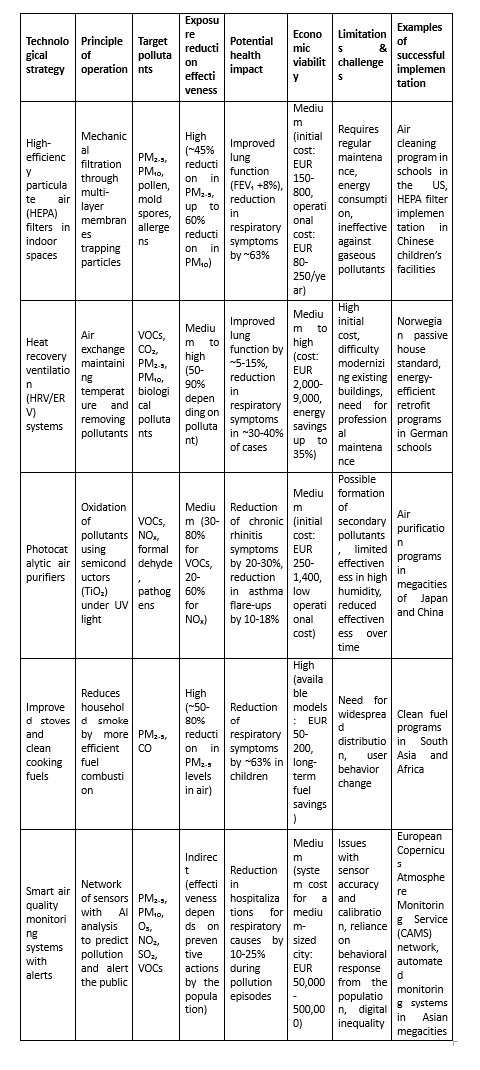
Note. compiled by the authors based on Pope et al. (2017), Lei et al. (2025).
Policy frameworks, regulatory approaches, and intersectoral strategies designed to reduce the burden of environmentally related respiratory diseases vary considerably in their economic effectiveness depending on the socioeconomic context. Studies by Marks (2020), Dymond et al. (2021), and Janjua et al. (2021) consistently demonstrate that comprehensive policies integrating primary, secondary, and tertiary prevention yield the greatest benefits, particularly in countries facing high levels of air pollution and constrained healthcare resources.
Marks (2020) highlights that primary prevention measures—such as strengthening air quality regulations and implementing comprehensive tobacco control policies—offer the greatest potential for reducing the incidence of chronic respiratory diseases. Although the World Health Organization Framework Convention on Tobacco Control (2003) represents a landmark international policy, its implementation continues to face resistance from commercial interests, limiting progress in reducing diseases associated with tobacco use and air pollution.
The cost-effectiveness of regulatory interventions depends largely on balancing implementation costs against the economic savings achieved through lower disease burden and reduced healthcare expenditures. Dymond et al. (2021) demonstrated that investments in improved indoor air quality, particularly enhanced ventilation and high-efficiency filtration systems, provide substantial health and economic benefits for vulnerable populations. These interventions are especially cost-effective in highly polluted urban environments, where the greatest reductions in respiratory morbidity can be achieved. Their optimization model further shows that cost-effectiveness varies according to building characteristics and environmental conditions, supporting the need for context-specific implementation strategies.
Long-term reductions in respiratory disease also require coordinated action across the environmental, public health, and social sectors. Integrated policies that combine industrial emission controls, cleaner transportation systems, stricter environmental standards, and improved access to healthcare have proven more sustainable than isolated interventions. Janjua et al. (2021) reported that individual protective measures—including air quality warning systems, educational campaigns, and personal exposure reduction strategies—can effectively reduce health risks among individuals with chronic respiratory diseases. However, their long-term impact remains limited without complementary governmental policies that address pollution at its source.
Overall, the evidence indicates that the most effective public policies combine stringent environmental regulation, sustained investment in public health, and coordinated intersectoral interventions. Their ultimate success depends not only on scientific evidence but also on political commitment and the capacity to implement and enforce these measures across diverse socioeconomic settings.
Conclusions
This review identified fine particulate matter (PM₂.₅ and PM₁₀), nitrogen dioxide, carbon monoxide, and ozone as the principal environmental pollutants contributing to respiratory disease worldwide. Elevated concentrations of PM₂.₅ and PM₁₀ are consistently associated with industrial activity and traffic emissions, whereas biomass burning and dust particles remain the predominant pollution sources in rural environments. Vulnerability to these pollutants is greatest among children, older adults, and occupationally exposed workers because of developmental, physiological, and health-related factors. Furthermore, climate change—including rising temperatures and more frequent extreme weather events—intensifies respiratory risks by increasing concentrations of aeroallergens and airborne particulate matter.
The evidence also highlights the complex biological mechanisms through which environmental pollutants damage the respiratory system. Oxidative stress, chronic inflammation, and immune dysregulation emerge as central pathways linking exposure to PM₂.₅, volatile organic compounds, and gaseous pollutants with respiratory disease. In addition, genetic susceptibility and epigenetic modifications—including polymorphisms in DNA repair genes and DNA methylation patterns—modulate individual responses to environmental exposures. Emerging biomarkers such as IL-6, TNF-α, and fractional exhaled nitric oxide (FeNO) offer promising opportunities for early detection, individualized risk assessment, and precision-based prevention. Technological innovations—including HEPA filtration systems, nanofibrous filtration materials, green infrastructure, enhanced emission control technologies, and integrated regulatory policies—have demonstrated considerable potential for reducing the burden of environmentally induced respiratory diseases.
Based on these findings, expanding environmental monitoring systems, strengthening industrial and transportation emission controls, and promoting public awareness of personal preventive measures should be prioritized. One limitation of this review is the limited availability of long-term environmental and epidemiological data from several regions, including Kyrgyzstan, Kazakhstan, Uzbekistan, Moldova, Georgia, Armenia, Ethiopia, Kenya, and Tanzania, which constrains the generalizability of some conclusions. Future research should focus on integrating epigenetic markers, novel biomarkers, and advanced environmental monitoring technologies to improve individualized risk prediction and support the development of more targeted preventive strategies.
Acknowledgements
None.
Potential conflict of interests
The authors declare that they have no competing interests.
Funding
This research received no specific grant from any funding agency in the public, commercial, or not-for-profit sectors.
References
Achakulwisut, P., Brauer, M., Hystad, P. & Anenberg, S.C. (2019). Global, national, and urban burdens of paediatric asthma incidence attributable to ambient NO₂ pollution: Estimates from global datasets. The Lancet Planetary Health, 3(4), 166-178. https://doi.org/10.1016/S2542-5196(19)30046-4
Alsharif, A.M., Alsharef, A.K., Al Qureshia, H.K., Alshareef, A.M., Alzmanan, M.N.H., Am Alqirad, H.M.B., Al Dhaherian, N.S., Al Heak, S.Y., Alfehaid, M.M.M. & Alsharief, H.A.H. (2024). Exploring the connections between environmental changes and health issues like respiratory diseases and infectious outbreaks: A critical analysis. Journal of Ecohumanism, 3(6), 1916-1922. https://doi.org/10.62754/joe.v3i6.4147
Bae, D.-J., Jun, J.A., Chang, H.S., Park, J.S. & Park, C.-S. (2020). Epigenetic changes in asthma: Role of DNA CpG methylation. Tuberculosis & Respiratory Diseases, 83(1), 1-13. https://doi.org/10.4046/trd.2018.0088
Bakalets, O., Dzyha, S. & Behosh, N. (2023). Functional diagnostics of the respiratory system in patients with Long COVID. Bulletin of Medical and Biological Research, 5(2), 60-66. https://doi.org/10.61751/bmbr.2706-6290.2023.2.60
Balabayev, O., Askarov, B., Bulatov, N., Adilova, N. & Beisembayev, D. (2025). Development of exhaust gas insulation system for quarry diesel locomotives. Mechanics Based Design of Structures and Machines, 53(4), 2696-2718. https://doi.org/10.1080/15397734.2024.2412754
Barr, D.B., Puttaswamy, N., Jaacks, L.M., Steenland, K., Rajkumar, S., Gupton, S., Ryan, P.B., Balakrishman, K., Peel, J.L., Chekley, W., Clasen, T., Clark, M.L. & HAPIN Investigative Team. (2020). Design and rationale of the biomarker center of the Household Air Pollution Intervention Network (HAPIN) trial. Environmental Health Perspectives, 128(4), 47010. https://doi.org/10.1289/EHP5751
Bayram, H., Rice, M.B., Abdalati, W., Elci, M.A., Mirsaeidi, M., Annesi-Maesano, I., Pinkerton, K.E. & Balmes, J.R. (2023). Impact of global climate change on pulmonary health: Susceptible and vulnerable populations. Annals of the American Thoracic Society, 20(8), 1088-1095. https://doi.org/10.1513/AnnalsATS.202212-996CME
Beerweiler, C.C., Masanetz, R.K. & Schaub, B. (2023). Asthma and allergic diseases: Cross talk of immune system and environmental factors. European Journal of Immunology, 53(6), 2249981. https://doi.org/10.1002/eji.202249981
Bhowmik, R.T. & Most, S.P. (2022). A personalized respiratory disease exacerbation prediction technique based on a novel spatio-temporal machine learning architecture and local environmental sensor networks. Electronics, 11(16), 2652. https://doi.org/10.3390/electronics11162562
Bruno, M.F., Molfetta, M.G., Pratola, L., Mossa, M., Nutricato, R., Morea, A., Nitti, D.O. & Chiaradia, M.T. (2019). A combined approach of field data and earth observation for coastal risk assessment. Sensors (Switzerland), 19(6), 1399. https://doi.org/10.3390/s19061399
Bulatov, N., Uvaliyeva, A., Kassymzhanova, K., Izteleuova, M. & Saukenova, I. (2024). Intelligent Systems for Managing and Monitoring the Collection, Sorting, and Transportation of Solid Waste for Processing. Evergreen, 11(2), 938-948. https://www.tj.kyushu-u.ac.jp/evergreen/contents/EG2024-11_2_content/pdf/p938-948.pdf
Cortes-Ramirez, J., Wilches-Vega, J.D., París-Pineda, O.M., Rod, J.E., Ayurzana, L. & Sly, P.D. (2021). Environmental risk factors associated with respiratory diseases in children with socioeconomic disadvantage. Heliyon, 7(4), e06820. https://doi.org/10.1016/j.heliyon.2021.e06820
Covert, H.H., Wahid, F.A., Wenzel, S.E. & Lichtveld, M.Y. (2023). Climate change impacts on respiratory health: Exposure, vulnerability, and risk. Physiological Reviews, 103(4), 2507-2522. https://doi.org/10.1152/physrev.00043.2022
D’Amato, G., Chong-Neto, H.J., Ortega, O.P.M., Vitale, C., Ansotegui, I., Rosário, N., Haathela, T., Galan, C., Pawankar, R., Murrieta-Aguttes, M., Cecchi, L., Bergmann, C., Ridolo, E., Ramon, G., Díaz, S.G., D’Amato, M. & Annesi-Maesano, I. (2020). The effects of climate change on respiratory allergy and asthma induced by pollen and mold allergens. Allergy, 75(9), 2219-2228. https://doi.org/10.1111/all.14476
D’Ovidio, M.C., Lancia, A., Melis, P., Vonesch, N., Tomao, P., Grandi, C. & Annesi-Maesano, I. (2023). Non-malignant occupational respiratory diseases and climate change. International Journal of Tuberculosis and Lung Disease, 27(11), 858-863. https://doi.org/10.5588/ijtld.23.0131
de Souza, M.R., Rohr, P., Kahl, V.F.S., Kvitko, K., Cappetta, M., Lopes, W.M., Simon, D. & da Silva, J. (2020). The influence of polymorphisms of xenobiotic-metabolizing and DNA repair genes in DNA damage, telomere length and global DNA methylation evaluated in open-cast coal mining workers. Ecotoxicology and Environmental Safety, 189, 109975. https://doi.org/10.1016/j.ecoenv.2019.109975
Dong, S. (2024). The correlation between respiratory infectious diseases, air pollution, and meteorological factors in Jinan, China from 2021 to 2023. American Journal of Translational Research, 16(9), 4577-4588. https://doi.org/10.62347/vnqf2150
Doshi, G., Stevens, J. (2021). GreenAir: An IoT field testing system for bio-air filtration. In 2021 31st International Conference on Computer Theory and Applications (pp. 99-103). Alexandria: IEEE. https://doi.org/10.1109/ICCTA54562.2021.9916633
Duan, J.X., Cheng, W., Zeng, Y.Q., Chen, Y., Cai, S., Li, X., Zhu, Y.Q., Chen, M., Zhou, M.L., Ma, L.B., Liu, Q.M. & Chen, P. (2020). Characteristics of patients with chronic obstructive pulmonary disease exposed to different environmental risk factors: A large cross-sectional study. International Journal of Chronic Obstructive Pulmonary Disease, 15, 2857-2867. https://doi.org/10.2147/COPD.S267114
Dymond, A., Mealing, S., McMaster, J., Holmes, H. & Owen, L. (2021). Indoor air quality at home – An economic analysis. International Journal of Environmental Research and Public Health, 18(4), 1679. https://doi.org/10.3390/ijerph18041679
Dyomin, M., Ivashko, Y., Ivashko, O., Kuśnierz, K. & Kuzmenko, T. (2021). Development trends and problems of large ukrainian historical cities in the twentieth and twenty-first century: Case study of urban tendencies and problems of revitalization of an industrial district. Wiadomosci Konserwatorskie, 2021(65), 26-36. https://doi.org/10.48234/WK65TRENDS
De Oliveira, T.G., Trancoso, I.A., Lorençoni, M.F., Júnior, A.D.S., Campagnaro, B.P., Coco, L.Z., Carneiro, M.T.W.D., Lemos, M.D.E.S., Endringer, D.C. & Fronza, M. (2021). Toxicological effects of air settled particles from the Vitoria Metropolitan Area mediated by oxidative stress, pro-inflammatory mediators and NFκB pathway. Environmental Research, 204(A), 112015. https://doi.org/10.1016/j.envres.2021.112015
Fernando, I.P.S., Jayawardena, T.U., Kim, H.-S., Lee, W.W., Vaas, A.P.J.P., de Silva, H.I.C., Abayaweera, G., Nanayakkara, C., Abeytunga, D., Lee, D. & Jeon, Y. (2019). Beijing urban particulate matter-induced injury and inflammation in human lung epithelial cells and the protective effects of fucosterol from Sargassum binderi (Sonder ex J. Agardh). Environmental Research, 172, 150-158. https://doi.org/10.1016/j.envres.2019.02.016
Flavian, D., Sinde, R. & Kisangiri, M. (2023). Real-time IoT-based air quality monitoring and health hazards indicator system for mines regions: A case study of Bulyanhulu Gold Mine. International Journal of Computer Science and Mobile Computing, 12(7), 7-16. https://doi.org/10.47760/ijcsmc.2023.v12i07.002
Glencross, D.A., Ho, T.-R., Camiña, N., Hawrylowicz, C.M. & Pfeffer, P.E. (2020). Air pollution and its effects on the immune system. Free Radical Biology and Medicine, 151, 56-68. https://doi.org/10.1016/j.freeradbiomed.2020.01.179
Gorrochategui, E., Hernandez, I., Pérez-Gabucio, E., Lacorte, S. & Tauler, R. (2022). Temporal air quality (NO₂, O₃, and PM₁₀) changes in urban and rural stations in Catalonia during COVID-19 lockdown: An association with human mobility and satellite data. Environmental Science and Pollution Research International, 29, 18905-18922. https://doi.org/10.1007/s11356-021-17137-7
Hahm, Y. & Yoon, H. (2021). The impact of air pollution alert services on respiratory diseases: Generalized additive modeling study in South Korea. Environmental Research Letters, 16, 064048. https://doi.org/10.1088/1748-9326/ac002f
Han, M., Choi, S.J., Jeong, Y., Lee, K., Lee, T.H., Lee, S.H. & Kim, T.H. (2022). Association between concentration of air pollutants and prevalence of inflammatory sinonasal diseases: A nationwide cross-sectional study. American Journal of Rhinology & Allergy, 36(5), 649-660. https://doi.org/10.1177/19458924221099373
Hussain, T., Ahmed, S.R., Lahori, A.H., Mierzwa-Hersztek, M., Vambol, V., Khan, A.A., Rafique, L., Wasia, S., Shahid, M.F. & Zengqiang, Z. (2022). In-situ stabilization of potentially toxic elements in two industrial polluted soils ameliorated with rock phosphate-modified biochars. Environmental Pollution, 309, 119733. https://doi.org/10.1016/j.envpol.2022.119733
Ilderbayeva, G., Rakhyzhanova, S., Utegenova, A., Salkhozhayeva, G. & Ilderbayev, O. (2024a). Combined Effect of Gamma Radiation and Heavy Metals on Some Living Organisms. Biological Trace Element Research, 203(3), 1764-1775. https://doi.org/10.1007/s12011-024-04272-8
Ilderbayeva, G., Utegenova, A., Ilderbayev, O., Sembaeva, Z. & Askarova, G. (2024b). Assessment of the Combined Effects of Heavy Metal Cobalt and Sublethal Radiation on the Immune System. Biomedical and Biotechnology Research Journal, 8(4), 455-463. https://doi.org/10.4103/bbrj.bbrj_316_24
Ingabire, T. & Nkundabose, J.P. (2020). Assessment of air quality and respiratory health status within an institutional area. International Journal of Science and Research Methodology, 14(3), 24-33. https://papers.ssrn.com/sol3/papers.cfm?abstract_id=3800822
Jaén, C., Villasclaras, P., Fernández, P., Grimalt, J.O., Udina, M., Bedia, C. & van Drooge, B.L. (2021). Source apportionment and toxicity of PM in urban, sub-urban, and rural air quality network stations in Catalonia. Atmosphere, 12(6), 744. https://doi.org/10.3390/ATMOS12060744
Janjua, S., Powell, P., Atkinson, R., Stovold, E. & Fortescue, R. (2021). Individual-level interventions to reduce personal exposure to outdoor air pollution and their effects on people with long-term respiratory conditions. Cochrane Database of Systematic Reviews, 8, CD013441. https://doi.org/10.1002/14651858.CD013441.pub2
Kang, J., Jung, J.Y., Huh, J.-Y., Ji, H.W., Kim, H.-C. & Lee, S.W. (2021). Behavioral interventions to reduce particulate matter exposure in patients with COPD. Medicine, 100(49), e25119. https://doi.org/10.1097/MD.0000000000028119
Kim, J., Kim, N.Y. & Kim, W.J. (2023). Biomarkers of particulate matter exposure in patients with chronic obstructive pulmonary disease: A systematic review. Journal of Thoracic Disease, 15(6), 3453-3465. https://doi.org/10.21037/jtd-23-78
Komarudin, M., Sulistyanti, S. R., Suharso, Irsyad, M., Septama, H. D., & Yulianti, T. (2024). Analyzing urban air quality through machine learning and geographic context. In 2024 7th International Conference on Informatics and Computational Sciences (pp. 173–178). IEEE https://doi.org/10.1109/ICICoS62600.2024.10636828
Kožená, M., Mandysová, M., Brodský, Z., Šatera, K., Horáčková, K. & Václavíková, K. (2023). The economic and social impact of respiratory diseases on organisations. Academic Acta Karviniensia, 23(1), 19-31. https://doi.org/10.25142/aak.2023.002
Laumbach, R.J., Cromar, K.R., Adamkiewicz, G., Carlsten, C., Charpin, D., Chan, W.R., de Nazelle, A., Forastiere, F., Goldstein, J., Gumy, S., Halllman, W.K., Jerrett, M., Kipen, H.M., Pirozzi, C.S., Polivka, B.J., Radbel, J., Shaffer, R.E., Sin, D.D. & Viegi, G. (2021). Personal interventions for reducing exposure and risk for outdoor air pollution: An official American Thoracic Society Workshop Report. Annals of the American Thoracic Society, 18(9), 1435-1443. https://doi.org/10.1513/AnnalsATS.202104-421ST
Lavicoli, I., Fontana, L., Leso, V., Macrini, M.C. & Pelclova, D. (2020). Fractional exhaled nitric oxide and nanomaterial exposure in workplaces. Current Medicinal Chemistry, 27(42), 7200-7212. https://doi.org/10.2174/0929867327666200320154545
Lebold, K.M., Cook, M., Pincus, A.B., Nevonen, K.A., Davis, B.A., Carbone, L., Calco, G.N., Pierce, A.B., Proskocil, B.J., Fryer, A.D., Jacoby, D.B. & Drake, M.G. (2023). Grandmaternal allergen sensitization reprograms epigenetic and airway responses to allergen in second-generation offspring. American Journal of Physiology, 325(6), 776-787. https://doi.org/10.1152/ajplung.00103.2023
Lei, J., Sun, Q., Chen, R., Zhu, Y., Zhou, L., Xue, X., Fang, J., Du, Y., Wang, Y., Li, T. & Kan, H. (2025). Respiratory benefits of multisetting air purification in children: A cluster randomized crossover trial. JAMA Pediatrics, 179(2), 122-128. https://doi.org/10.1001/jamapediatrics.2024.5049
Liang, W. & Diana, J. (2020). The dual role of antimicrobial peptides in autoimmunity. Frontiers in Immunology, 11, 2077. https://doi.org/10.3389/fimmu.2020.02077
Malik, S., Malik, S.A., Tan, J.H. & Zia, A. (2024). Climate-induced respiratory challenges: Understanding allergic reactions and asthma caused by pollen allergens. Nangarhar University International Journal of Biosciences, 3(2), 53-56. https://doi.org/10.70436/nuijb.v3i02.165
Marks, G.B. (2020). Reducing the burden of respiratory symptoms and illness in the elderly and general population requires multi‐pronged strategies. Respirology, 25(3), 232-233. https://doi.org/10.1111/resp.13654
McIntyre, A.M., Scammell, M.K., Kinney, P.L., Khosla, K., Benton, L., Bongiovanni, R., McCannon, J. & Milando, C.W. (2024). Portable air cleaner usage and particulate matter exposure reduction in an environmental justice community: A pilot study. Environmental Health Insights, 18. https://doi.org/10.1177/11786302241258587
Melnychaiko, I. & Andreychyn, S. (2023). Biological therapy of severe bronchial asthma. Bulletin of Medical and Biological Research, 5(2), 86-92. https://doi.org/10.61751/bmbr.2706-6290.2023.2.86
Molina-Gómez, N.I., Calderón-Rivera, D.S., Sierra-Parada, R., Díaz-Arévalo, J.L. & López-Jiménez, P.A. (2021). Analysis of incidence of air quality on human health: A case study on the relationship between pollutant concentrations and respiratory diseases in Kennedy, Bogotá. International Journal of Biometeorology, 65, 119-132. https://doi.org/10.1007/s00484-020-01955-4
Morty, R.E. & Prakash, Y.S. (2019). Senescence in the lung: Is this getting old? American Journal of Physiology. Lung Cellular and Molecular Physiology, 316(5), 822-825. https://doi.org/10.1152/ajplung.00081.2019
Nag, I. (2022). Air pollution abatement by selective nanoparticle deposition on filtration systems. Clean Air Journal, 32(1), 1-9. https://doi.org/10.17159/caj/2022/32/1.11389
Niu, W., Wang, W., Huang, C., Zhang, Z., Li, R., Cherrie, J., Miller, M.R., Loh, M., Chen, J., Lin, C., Wu, S., Guo, X. & Deng, F. (2022). Cardiopulmonary benefits of respirator intervention against near road ambient particulate matters in healthy young adults: A randomized, blinded, crossover, multi-city study. Chemosphere, 308(3), 136437. https://doi.org/10.1016/j.chemosphere.2022.136437
Novela, R.J., Gitari, W.M., Chikoore, H., Molnar, P., Mudzielwana, R. & Wichmann, J. (2020). Chemical characterization of fine particulate matter, source apportionment and long-range transport clusters in Thohoyandou, South Africa. Clean Air Journal, 30(2), 1-12. https://doi.org/10.17159/caj/2020/30/2.8735
Page, M.J., McKenzie, J.E., Bossuyt, P.M., Boutron, I., Hoffmann, T.C., Mulrow, C.D., Shamseer, L., Tetzlaff, J. M., Akl, E. A., Brennan, S. E., Chou, R., Glanville, J., Grimshaw, J. M., Hróbjartsson, A., Lalu, M. M., Li, T., Loder, E. W., Mayo-Wilson, E., McDonald, S., McGuinness, L.A., Stewart, L.A., Thomas, J., Tricco, A.C., Welch, V.A., Whiting, P. & Moher, D. (2021). The PRISMA 2020 statement: An updated guideline for reporting systematic reviews. BMJ, 372, n71. https://doi.org/10.1136/bmj.n71
Paoletti, G., Costanzo, G., Eigenmann, P. & Kalaycı, Ö. (2023). Editorial comment on “Environmental influences on childhood asthma: Climate change”. Pediatric Allergy and Immunology, 34(8), e14011. https://doi.org/10.1111/pai.14011
Park, H.J., Lee, H.Y., Suh, C.H., Kim, H.C., Kim, H.C., Park, Y.-J. & Lee, S.W. (2021). The effect of particulate matter reduction by indoor air filter use on respiratory symptoms and lung function: A systematic review and meta-analysis. Allergy, Asthma & Immunology Research, 13(5), 719-732. https://doi.org/10.4168/aair.2021.13.5.719
Pilecka, J., Grinfelde, I., Valujeva, K., Straupe, I. & Purmalis, O. (2017). Heavy metal contamination and distribution in the urban environment of Jelgava. Research for Rural Development, 1, 173-179. https://doi.org/10.22616/rrd.23.2017.026
Polychronidou, E., Lalas, A., Tzovaras, D. & Votis, K. (2019). A systematic distributing sensor system prototype for respiratory diseases. In 2019 International Conference on Wireless and Mobile Computing, Networking and Communications (pp. 191-196). Barcelona: IEEE. https://doi.org/10.1109/WiMOB.2019.8923169
Pope, D., Bruce, N., Dherani, M., Jagoe, K. & Rehfuess, E. (2017). Real-life effectiveness of “improved” stoves and clean fuels in reducing PM2.5 and CO: Systematic review and meta-analysis. Environment International, 101, 7-18. https://doi.org/10.1016/j.envint.2017.01.012
Qasimov, E.K., Akberov, E.Ch., Quliyeva, N.T., Ayyubova, G.M., Husenova, S.H.A., Najafova, T.M. & Aliyarbayova, A.A. (2009). The charachteri̇sti̇cs of histological and ultrastructural peculiarities of structures participating in the formation of the perineural sheath. Azerbaijan Medical Journal, 4, 52-57. https://www.researchgate.net/publication/287638803_The_charachteristics_of_histological_and_ultrastructural_peculiarities_of_structures_participating_in_the_formation_of_the_perineural_sheath
Radan, M., Dianat, M., Badavi, M., Mard, S.A., Bayati, V. & Goudarzi, G. (2019). In vivo and in vitro evidence for the involvement of Nrf2-antioxidant response element signaling pathway in the inflammation and oxidative stress induced by particulate matter (PM10): The effective role of gallic acid. Free Radical Research, 53(2), 210-225. https://doi.org/10.1080/10715762.2018.1563689
Rodrigues, V., Eusébio, C., Carneiro, M., Madaleno, M., Robaina, M., Gama, C. & Monteiro, A. (2023). The relevance of air quality perceptions on travel behavior of visitors with respiratory diseases. Tourism Review International, 27(2), 87-106. https://doi.org/10.3727/154427223x16717265382804
Sadiq, A.A., Trunfio-Sfarghiu, A.-M., Salam, S.P., Faruk, A. & Khardi, S. (2022). Emissions from road transport vehicles and respiratory health in rural and urban communities, Kano State, Nigeria: A comparative cross-sectional study. IOP Conference Series: Earth and Environmental Science, 1046, 012001. https://doi.org/10.1088/1755-1315/1046/1/012001
Saeed, M.S., Denoncourt, C.M., Chao, I.A., Schortmann, S., Nassikas, N.J., Synn, A.J., Koutrakis, P., Coull, B.A., Kang, C.-M., Wolfson, J.M., Ferguson, S.T., Rebuli, M.E., Jaspers, I., Liu, J.P., Greco, K.F., Phipatanakul, W. & Rice, M.B. (2024). Protocol for the air purification for eosinophilic COPD study (APECS): A randomised controlled trial of home air filtration by HEPA. BMJ Open, 14(1), e074655. https://doi.org/10.1136/bmjopen-2023-074655
Sapbamrer, P., Assavanopakun, P. & Panumasvivat, J. (2024). Decadal trends in ambient air pollutants and their association with COPD and lung cancer in Upper Northern Thailand: 2013-2022. Toxics, 12(5), 321. https://doi.org/10.3390/toxics12050321
Savouré, M., Eminson, K., Sese, L., Dumas, O. & Cai, Y.S. (2023). The exposome in respiratory diseases: Multiple preventable risk factors from early life to adulthood. Breathe, 19(2), 230034. https://doi.org/10.1183/20734735.0034-2023
Shahini, E. & Shahini, E. (2025). Role of urban green spaces and tree plantations in improving ecosystem services and urban resilience. Ukrainian Journal of Forest and Wood Science, 16(2), 136-151. https://doi.org/10.31548/forest/2.2025.136
Souto-Miranda, S., Gonçalves, A.-C., Valente, C., Freitas, C., Sousa, A.C.A. & Marques, A. (2020). Environmental awareness for patients with COPD undergoing pulmonary rehabilitation: Is it of added value? International Journal of Environmental Research and Public Health, 17(21), 7968. https://doi.org/10.3390/ijerph17217968
Sun, Q., Chen, C., Wang, Q. & Li, T. (2023). Early warning interventions for environmental risk factors at China CDC. China CDC Weekly, 5(29), 651-654. https://doi.org/10.46234/ccdcw2023.125
Tian, M., Xia, P., Yan, L., Gou, X., Giesy, J.P., Dai, J., Yu, H. & Zhang, X. (2022). Toxicological mechanism of individual susceptibility to formaldehyde-induced respiratory effects. Environmental Science & Technology, 56(10), 6511-6524. https://doi.org/10.1021/acs.est.1c07945
Toptaş, A. (2024). Innovative nanofibrous air filters: Advancing air quality and health protection. Sustainable Environment Magazine, 4(1), 29-40. https://doi.org/10.62816/cevder.1491367
Turmagambetova, A.S., Alexyuk, M.S., Bogoyavlenskiy, A.P., Linster, M., Alexyuk, P.G., Zaitceva, I.A., Smith, G.J.D. & Berezin, V.E. (2017a). Monitoring of Newcastle disease virus in environmental samples. Archives of Virology, 162(9), 2843-2846. https://doi.org/10.1007/s00705-017-3433-y
Turmagambetova, A.S., Alexyuk, P.G., Bogoyavlenskiy, A.P., Zaitseva, I.A., Omirtaeva, E.S., Alexyuk, M.S., Sokolova, N.S. & Berezin, V.E. (2017b). Adjuvant activity of saponins from Kazakhstani plants on the immune responses to subunit influenza vaccine. Archives of Virology, 162(12), 3817-3826. https://doi.org/10.1007/s00705-017-3560-5
United States Environmental Protection Agency. (2024). NAAQS table. https://www.epa.gov/criteria-air-pollutants/naaqs-table
Uttajug, A., Ueda, K., Seposo, X.T., Honda, A. & Takano, H. (2022). Effect of a vegetation fire event ban on hospital visits for respiratory diseases in Upper Northern Thailand. International Journal of Epidemiology, 51(2), 514-524. https://doi.org/10.1093/ije/dyac005
Valacchi, G., Magnani, N., Woodby, B., Ferreira, S.M. & Evelson, P. (2020). Particulate matter induces tissues oxinflammation: From mechanism to damage. Antioxidants & Redox Signaling, 33(4), 308-326. https://doi.org/10.1089/ars.2019.8015
Valujeva, K., Pilecka-Ulcugaceva, J., Darguza, M., Siltumens, K., Lagzdins, A. & Grinfelde, I. (2024). Environmental parameters and management as factors affecting greenhouse gas emissions from clay soil. Acta Agriculturae Scandinavica Section B: Soil and Plant Science, 74(1), 2290828. https://doi.org/10.1080/09064710.2023.2290828
Vašáková, M., Selman, M., Morell, F., Sterclova, M., Molina-Molina, M. & Raghu, G. (2019). Hypersensitivity pneumonitis: Current concepts of pathogenesis and potential targets for treatment. American Journal of Respiratory and Critical Care Medicine, 200(3), 301-308. https://doi.org/10.1164/rccm.201903-0541PP
Vlahovich, K.P. & Sood, A. (2021). A 2019 update on occupational lung diseases: A narrative review. Pulmonary Therapy, 7(1), 75-87. https://doi.org/10.1007/s41030-020-00143-4
Wallbanks, S., Griffiths, B., Thomas, M., Price, O.J. & Sylvester, K.P. (2024). Impact of environmental air pollution on respiratory health and function. Physiological Reports, 12(16), e70006. https://doi.org/10.14814/phy2.70006
Wang, C., Song, X., Li, T., Zhu, X., Yang, S., Zhu, J., He, X., Gao, J. & Xu, H. (2023). Biodegradable electroactive nanofibrous air filters for long-term respiratory healthcare and self-powered monitoring. ACS Applied Materials & Interfaces, 15(31), 37580-37592. https://doi.org/10.1021/acsami.3c08490
Woo, H., Koehler, K., Putcha, N., Lorizio, W., McCormack, M., Peng, R. & Hansel, N.N. (2023). Principal stratification analysis to determine health benefit of indoor air pollution reduction in a randomized environmental intervention in COPD: Results from the CLEAN AIR study. Science of the Total Environment, 868, 161573. https://doi.org/10.1016/j.scitotenv.2023.161573
World Health Organization. (2021, September 22). New WHO global air quality guidelines aim to save millions of lives from air pollution.https://www.who.int/news/item/22-09-2021-new-who-global-air-quality-guidelines-aim-to-save-millions-of-lives-from-air-pollution
World Health Organization. (2003). WHO Framework Convention on Tobacco Control. https://fctc.who.int/publications/i/item/9241591013
Xu, J., Su, Z., Liu, C., Nie, Y. & Cui, L. (2025). Climate change, air pollution and chronic respiratory diseases: Understanding risk factors and the need for adaptive strategies. Environmental Health and Preventive Medicine, 30, 7. https://doi.org/10.1265/ehpm.24-00243
Xu, Z., Wu, H., Zhang, H., Bai, J. & Zhang, Z. (2020). Interleukins 6/8 and cyclooxygenase-2 release and expressions are regulated by oxidative stress-JAK2/STAT3 signaling pathway in human bronchial epithelial cells exposed to particulate matter ≤2.5 μm. Journal of Applied Toxicology, 40(9), 1210-1218. https://doi.org/10.1002/jat.3977
Zhou, T., Hu, Y., Wang, Y., Sun, C., Zhong, Y., Liao, J. & Wang, G. (2019). Fine particulate matter (PM2.5) aggravates apoptosis of cigarette-inflamed bronchial epithelium in vivo and vitro. Environmental Pollution, 248, 1-9. https://doi.org/10.1016/j.envpol.2018.11.054
Zotaj, A., Milloshi, R., Sokoli, S. & Doci, H. (2024). Effectiveness of physiotherapy rehabilitation approaches for Parkinson's disease: A Durrës case study. Physiotherapy Research International, 29(4), e2124. https://doi.org/10.1002/pri.2124
1 Department of Natural Sciences and Humanities, Osh International Medical University, Osh, Kyrgyz Republic. Email: muratovzhanibek003@gmail.com. ORCID: https://orcid.org/0009-0001-4386-6854. Google Scholar: https://scholar.google.com/citations?user=0zhJp7QAAAAJ&hl=ru
2 Department of Medical Technical Sciences, Aleksander Moisiu University of Durrës, Durrës, Albania. Email: a.zotaj@outlook.com. ORCID: https://orcid.org/0009-0009-4788-5698. Google Scholar: https://scholar.google.com/citations?user=A7rreZ0AAAAJ&hl=it
3 Nukus Branch, Institute of Immunology and Human Genomics, Academy of Sciences of the Republic of Uzbekistan, Nukus, Republic of Karakalpakstan, Uzbekistan. Email: a-kalandarova@hotmail.com. ORCID: https://orcid.org/0009-0001-5881-8513. Google Scholar: https://scholar.google.com/citations?user=k-Wc3VYAAAAJ&hl=ru
4 Faculty of Health Sciences, Radom Higher School, Radom, Poland. Email: kate_wisniewska@outlook.com. ORCID: https://orcid.org/0009-0006-0874-5703
5 A. Getlik Clinic for Children and Adolescents, Slovak Medical University, Bratislava, Slovakia. Email: odobrovanov@hotmail.com. ORCID: https://orcid.org/0009-0005-9510-0577. Google Scholar: https://scholar.google.com/citations?user=Dm_SXbkAAAAJ&hl=ru
How to cite: Muratov, Z., Zotaj, A., Kalandarova, A., Wisniewska, K. & Dobrovanov, O. (2026). Environmental determinants of respiratory diseases: Current evidence and preventive strategies. Revista Luna Azul, (63), 159-194. https://doi.org/10.17151/luaz.2026.63.8
Esta obra está bajo una Licencia de Creative Commons Reconocimiento CC BY

Código QR del artículo