Evaluation of the Management of Agrochemical Residues Generated in
Avocado Production (Persea americana).
Carlos Humberto
Cabrera Valencia1
Jhoset Alejandro
Guerrero Otaya2
Adriana del Socorro
Guerra Acosta3
Yerson Orlando Gómez
Gómez4
Recibido: 05/10/2025 Aceptado: 22/10/2025 Actualizado:06/04/2026
DOI: 10.17151/luaz.2025.62.12
Abstract
Avocado production in Sibundoy, Putumayo faces challenges associated with the use of agrochemicals for agronomic management. It is essential that these products, as well as the waste they generate, are managed in an environmentally sound manner throughout their entire life cycle, from acquisition to final disposal. Agrochemicals and their residues must be handled responsibly to safeguard worker health and maintain ecosystem balance. Despite their relevance, the management of these products and their residues has been scarcely evaluated in the region. The objective of this research was to evaluate the management of agrochemical waste generated in avocado (Persea americana) production in Sibundoy, Putumayo. A survey was administered to avocado producers, and on-farm visits were conducted. Data collection was carried out every 15 days in order to classify agrochemical residues according to type, toxicological category, and weight. Survey data were tabulated using SPSS statistical software, and cluster analysis was performed. Of the containers collected, 36% corresponded to insecticides, 38% to fungicides, 10% to herbicides, and 16% lacked labeling. Among the 19 farmers surveyed, 61.11% reported storing containers in a safe manner. Nevertheless, overall management practices were found to be inadequate, posing risks to both operator safety and ecosystem balance.
Key words: agriculture; pollution; harvesting; hazardous waste.
Evaluación del Manejo de Residuos de Agroquímicos Generados en la
Producción de Aguacate (Persea americana).
Resumen
La producción de aguacate en Sibundoy Putumayo, enfrenta desafíos relacionados con el uso de agroquímicos para el manejo agronómico. Es crucial un manejo ambientalmente seguro de estos productos y los residuos generados, desde su origen hasta la disposición. Los agroquímicos y sus residuos deben manejarse de manera responsable para garantizar la salud de los trabajadores y el equilibrio ecosistémico. A pesar de su importancia, el manejo de estos productos y sus residuos ha sido poco evaluado en la región; el objetivo de la investigación fue evaluar el manejo de residuos de agroquímicos generados en la producción de aguacate (Persea americana) en Sibundoy, Putumayo. Se aplico una encuesta a productores de aguacate y se llevaron a cabo visitas a las fincas. Se realizo un levamiento de datos cada 15 días para clasificar los residuos de agroquímicos por tipo, categoría toxicológica y pesaje. Los resultados de las encuestas se tabularon utilizando el software estadístico SPSS, se realizó un análisis de conglomerados. De los envases recolectados el 36% correspondían a insecticidas, 38% a fungicidas, 10% a herbicidas y 16% estaban sin etiqueta. De los 19 agricultores encuestados, el 61,11% almacenan los envases de forma segura. el manejo de estos productos es inadecuado, afectando tanto la seguridad de los operarios como el equilibrio de los ecosistemas.
Introduction
Agrochemicals are defined as “chemical products formulated to optimize agricultural productivity,” encompassing fertilizers, pesticides (including insecticides, herbicides, fungicides, and nematicides), and plant growth regulators (Devi et al., 2022). Aktar et al. (2019) emphasize that the effectiveness of these compounds lies in their selective action against pest organisms, which significantly increases crop yields and reduces post-harvest losses. However, Basu (2024) cautions that the persistence of certain systemic insecticides may pose substantial risks to pollinating insects, thereby exposing a trade-off between productive gains and ecological sustainability.
Agrochemical residues exert considerable environmental impacts, as they persist in soils and water bodies and function as chronic pollutants. For example, Pathak et al. (2022) demonstrate that the continuous release of pesticides induces toxic effects that compromise water quality and disrupt aquatic trophic networks. Similarly, Sánchez-Bayo and Wyckhuys (2019) identify these compounds as a major driver of global pollinator decline, with consequences for pollination processes and the resilience of terrestrial ecosystems.
With regard to human health, Mostafalou and Abdollahi (2013) associate exposure to agrochemical residues with increased incidences of neurological disorders, reproductive dysfunctions, and various forms of cancer. These authors describe molecular mechanisms through which such substances interfere with essential physiological processes. Consequently, inadequate management of agrochemical containers and waste not only perpetuates environmental contamination but also poses serious health risks to rural communities exposed to these residues.
In Colombia, the management of agrochemical containers continues to present significant shortcomings, contributing to the dispersion of hazardous waste in rural settings. A study conducted on bean farms in Sibundoy, Putumayo, by Guerra Acosta et al. (2021) reported that only 43% of farmers collect empty containers, and that practices such as triple washing and proper sorting are insufficient. These deficiencies increase the risk of soil and water contamination and compromise worker health. In contrast, Mossa and Mohafrash (2024) demonstrated that the application of triple washing combined with solar photo-Fenton treatment of residual water can eliminate up to 99.8% of pesticide residues, substantially reducing the environmental burden associated with these containers.
Within this context, the present study addresses, in a sequential manner, the diagnosis of current residue management practices among farmers, the quantification of agrochemical residues generated in avocado farms located in the highland area of Sibundoy, and the formulation of strategies based on best practices to optimize container management and mitigate associated risks. This approach is consistent with the overarching objective of comprehensively evaluating agrochemical residue management and its implications for sustainability and public health.
Materials and Methods
Location
The study area encompassed the highland villages of the municipality of Sibundoy, located at 1°12′12″ N and 76°55′09″ W. The area includes the villages of Bellavista, Villaflor, San José de La Hidráulica, La Cumbre, Campo Alegre, Carrizayaco, and El Cedro. These locations present favorable topographic and humidity conditions for avocado cultivation.
Methodological Phases
Population
The study population consisted of 19 avocado producers from the highland area of Sibundoy.
Phase 1:
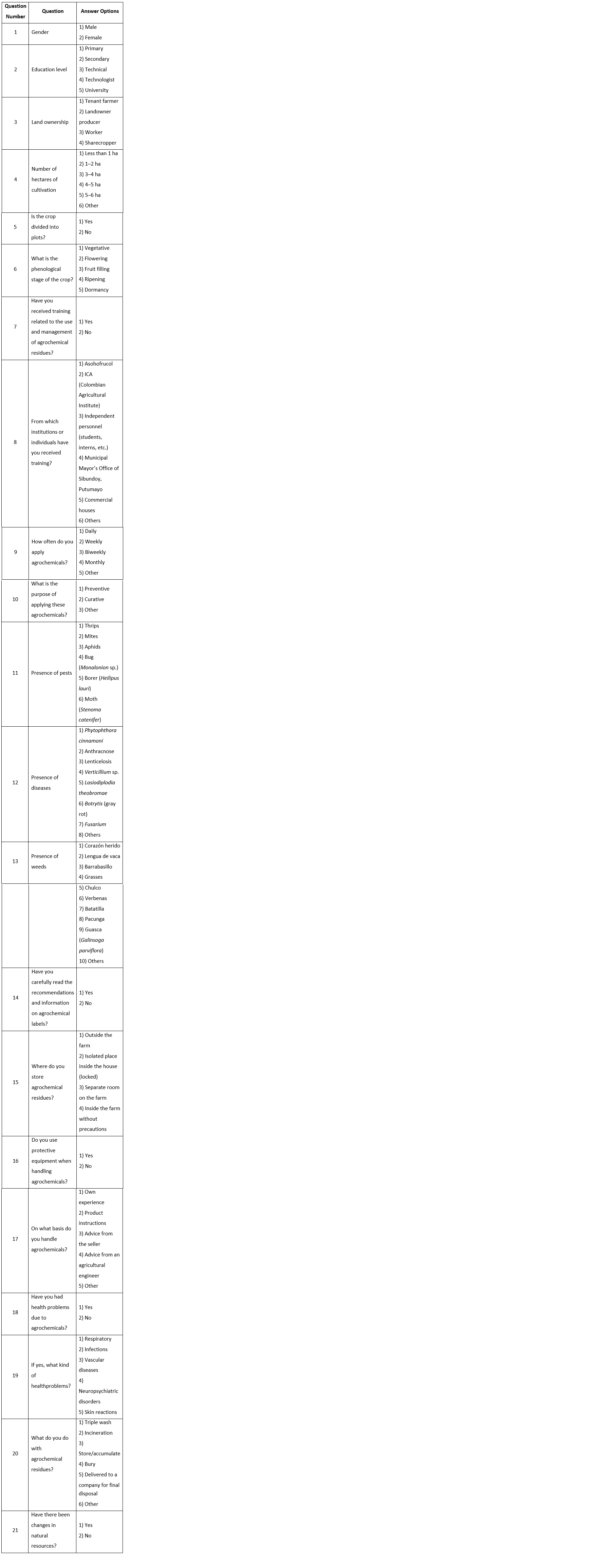
Table 1 presents the survey administered to avocado producers, which describes the management practices related to agrochemical residues on each farm
Table 1. Survey of Avocado Producers.
Statistical Analysis: Survey data were subjected to multivariate analysis. The results were tabulated using SPSS statistical software, and a dendrogram was generated through cluster analysis in order to visualize patterns in survey responses.
Phase 2
Farm visits were conducted on a biweekly basis to classify and weigh agrochemical residues. At each farm, a designated collection and weighing point was established with the collaboration of the producers. Residues were classified according to type (herbicides, fungicides, and insecticides) and toxicological category (I: extremely toxic; II: highly toxic; III: moderately toxic; IV: slightly toxic). Containers were weighed and categorized by packaging type (packets or containers). Triple washing and perforation of containers were carried out to ensure temporary safe storage prior to delivery during scheduled collection events. In addition, a leaflet was provided to farmers, detailing recommended management practices and key considerations for environmentally safe handling.
3. Results and Discussion
Survey Results Analysis
Socioeconomic Aspects of Farmers
Among the surveyed producers, 41.30% were members of the Hortifrutícola Association of Colombia (Asohofrucol), an organization that promotes improvements in productive, organizational, and commercial conditions nationwide. With respect to gender, 13 producers were male and 6 were female, and all participants were over 40 years of age. Only one farmer reported respiratory health problems associated with the absence of personal protective equipment during agrochemical application.
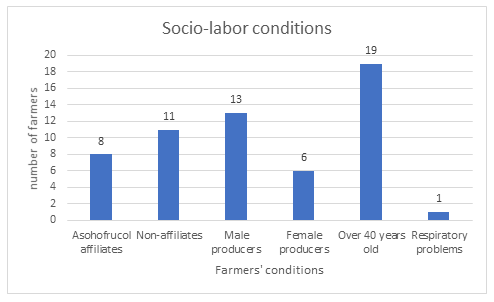
Figure 1: Socio-labor conditions of avocado producers.
Agrochemical Use Conditions
The results indicate that 33.33% of farmers rely on their own experience or apply agrochemicals empirically, without technical assistance from local or regional entities. This situation contributes to low yields and high production costs. In contrast, 48.15% of producers receive guidance from an agronomic engineer, a factor that is critical in rural agricultural production, as it facilitates the exchange of knowledge between farmers’ empirical experience and professional academic training, thereby promoting a more competitive and productive sector. Additionally, 11.11% of producers follow the instructions provided on product labels, while 7.41% rely on advice from vendors, who generally offer guidance limited to product application and not to final disposal or personal protection measures. The lack of technical assistance and training has constrained the adoption of best production practices, resulting in reduced yields and crop losses.
According to Resolution 1580 of 2022 issued by the Colombian Agricultural Institute (ICA), agrochemicals must be registered and authorized for use. Labels must be inspected to verify expiration dates and physical integrity, and products must be purchased exclusively from authorized suppliers. Consultation with a qualified technician is recommended in order to select products with low environmental impact that are appropriate for specific phytosanitary problems.
Under Decree 4741 of 2005, which regulates the comprehensive management of hazardous waste in Colombia, including pesticide containers, and Resolution 1675 of 2013, farmers are responsible for triple washing, disabling, and properly storing containers until their delivery to authorized collection points. Practices such as reuse, burial, burning, or disposal of containers in unauthorized locations are prohibited due to their associated health and environmental risks.
Despite these regulations, improper disposal of containers used for phytosanitary control has contributed to soil degradation, as containers are frequently stored in tarps or bags in direct contact with the ground. Prolonged exposure to sunlight promotes photodegradation, which causes containers to fragment into microplastics that adversely affect soil function and biodiversity (Yu et al., 2022).
Safe Application Conditions of Agrochemicals
Among producers who reported having received training, 61.11% store containers in isolated areas away from the farm, whereas 5.56% disregard recommended practices and leave residues in sacks or plastic bags outside the farm. An additional 11.11% store containers on the farm without implementing precautionary measures. Another 11.11% reported not having received training on agrochemical use and management, as their farms—ranging from 1 to 2 hectares—are managed empirically, resulting in the absence of designated storage spaces.
Furthermore, 15.79% of producers do not comply with safety protocols and report no apparent health problems, attributing noncompliance to discomfort associated with the use of gloves, goggles, masks, boots, or aprons during application. Prolonged exposure under these conditions may pose health risks to producers and their families. It was also observed that, despite the lack of certification in some farms, oversight and control by the competent authorities remain limited.
Agrochemicals must therefore be handled responsibly, in accordance with applicable laws, regulations, and technical guidelines governing their transport, storage, application, and disposal, including the management of empty containers, unused products, or expired materials, as well as the mandatory use of personal protective equipment (PPE).
Notably, several producers have reduced agrochemical use and adopted organic biopreparations in order to obtain clean, high-quality products without compromising human health or environmental integrity. These practices align with good agricultural practices in the Sibundoy Valley and aim to improve product hygiene, prevent market rejection due to toxic residues, and ensure acceptable sensory characteristics, such as taste and appearance, for consumers.
However, 6.52% of producers continue to apply agrochemicals empirically without training, leading to excessive application rates, low-quality yields, and crop losses. In addition, inadequate handling and disposal of containers contribute to contamination of nearby water sources.
Cluster Analysis of Surveys
As shown in Table 2, Group I includes 13 surveys (1, 6, 7, 8, 9, 11, 12, 13, 15, 16, 17, 18, and 19), Group II includes 4 surveys (2, 3, 4, and 5), and Group III includes 2 surveys (10 and 14), representing 68.4%, 21.0%, and 10.5% of the total, respectively. These clusters reflect differing conditions related to agrochemical input use and residue management practices.
Table 2. Survey Clusters.
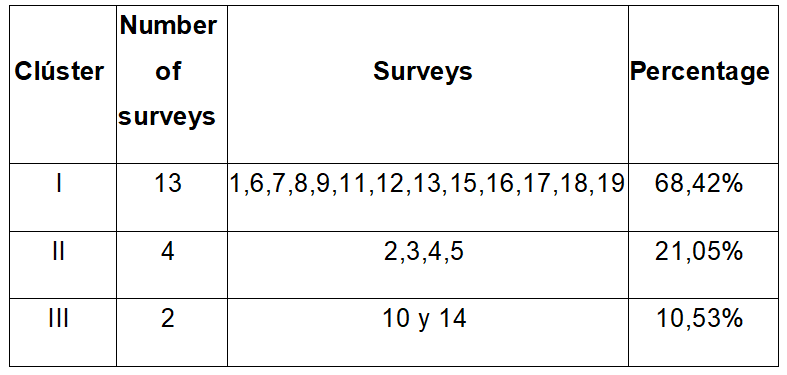
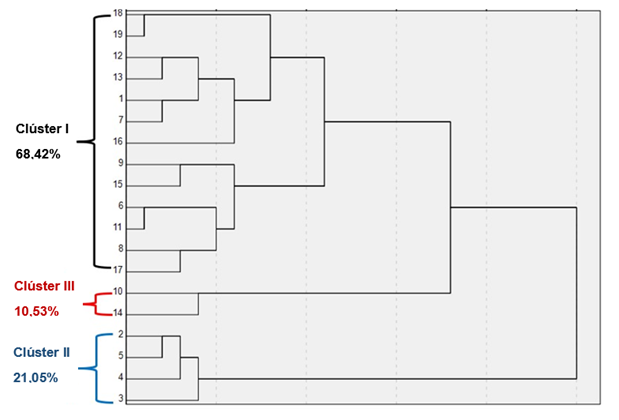
Figure 2. Cluster dendrogram for surveys conducted.
The following section presents the analysis of each cluster based on their grouping characteristics:
Cluster I/III
As shown in Table 3).
Table 3. Identified container products during collection, classification, and weighing.
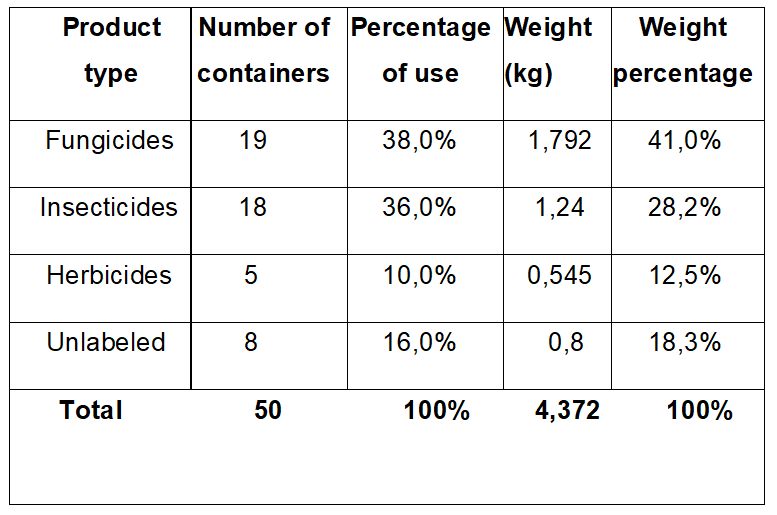
Following the classification process, the collected insecticide containers were identified according to their toxicological category, as shown in Table 4.
Table 4. Toxicological categorization of insecticides.
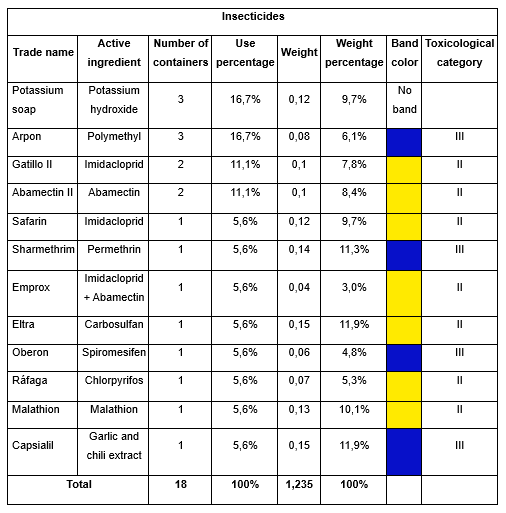
Avocado producers use insecticides in 36% of their agricultural inputs, with harpoons and potassium soap being the most frequently applied products. In addition, 50.2% of these insecticides belong to toxicological category II, which is classified as highly toxic. Improper use and inadequate waste management practices may lead to the bioaccumulation of harmful substances, thereby negatively affecting both human health and ecological systems (Elías Estremadoyro, 2022). Research conducted in Latin America indicates that excessive pesticide application is associated with environmental degradation and increased health risks (Olguín-Hernández et al., 2024).
Moreover, the implementation of farmer education programs has proven effective in promoting safer management practices and reducing exposure time to these inputs (Damalas and Koutroubas, 2017). This evidence underscores the necessity and relevance of continuous training processes on pesticide management, particularly with regard to understanding residues and materials that have come into contact with these substances (Salamanca, 2020).
On the other hand, the identification of collected fungicide containers was carried out and is presented in Table 5.
Table 5. Toxicological Categorization of Fungicides.
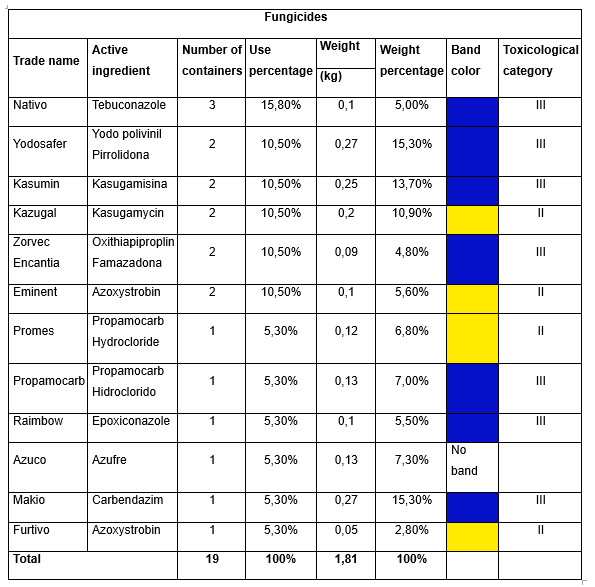
Table 5 presents the use of fungicides in the crop, comprising 16 active ingredients that are applied in mixtures, generally according to environmental conditions and agronomic management practices. Fungicides represent the most frequently used inputs in avocado (Persea americana) production, as the crop is highly susceptible to phytopathogens that must be controlled in order to achieve optimal yields (Motta Escobar et al., 2022). One of the principal threats to avocado cultivation is fungal infection, as fungi constitute some of the most prevalent pathogenic microorganisms in agricultural systems. To mitigate this threat, fungicides are routinely applied (Carranza Patiño et al., 2023).
However, fungicide use is also associated with undesirable effects on non-target organisms and ecosystems, including toxicity to beneficial species, ecological imbalance, environmental pollution, and the development of fungal resistance (Jorge-Escudero et al., 2022; Salis et al., 2023).
Similarly, the identification of herbicide containers was conducted, and the results are presented in Table 6.
Table 6. Toxicological Categorization of Herbicides.
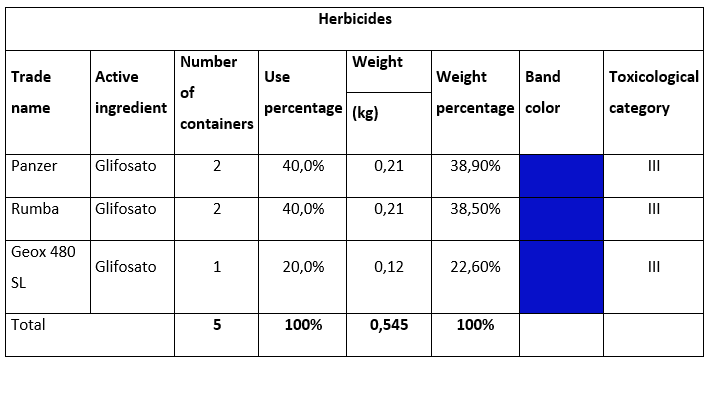
Herbicides are applied less frequently by producers, which reduces the volume of waste generated, as shown in Table 5. Nevertheless, herbicides are chemical inputs that can adversely affect human health and the environment, thereby hindering the conservation of natural ecosystems and resources (Garay et al., 2022). Despite the relatively limited use of herbicides in the study area, glyphosate was identified as the active ingredient. This compound may come into contact with air, soil, and surface and groundwater, and can be transported to adjacent areas, including water bodies. Glyphosate also exerts negative effects on populations of plants, algae, fungi, and bacteria that play essential roles in ecosystem functioning, and its repeated application may promote the development of resistance in certain weed species (Ramírez Muñoz, 2021). Moreover, glyphosate persists in soils and aquatic systems, posing long-term ecological and toxicological risks (Duke, 2020). Chronic exposure to glyphosate has also been associated with adverse effects on non-target organisms and potential genotoxicity (Van Bruggen et al., 2018), reinforcing the need for careful monitoring and management of herbicide use.
According to Tables 4, 5, and 6, avocado (Persea americana) producers apply a total of 28 types of agrochemicals, including insecticides, fungicides, and herbicides, which fall within toxicological categories II (highly toxic) and III (moderately toxic).
It was also found that the most frequently used sachet-type inputs in the study area were fungicides, with 16 sachets corresponding to 94% of usage, followed by insecticides with one sachet, representing 5.9% (Table 7).
Table 7. Identified Sachet Inputs.
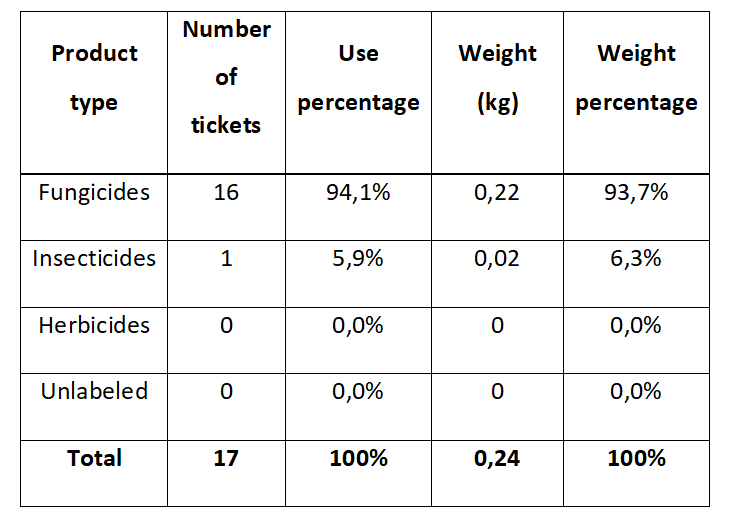
Table 7 shows that, of the 17 sachets collected, classified, and weighed, 94% corresponded to fungicides, which represent the most frequently used inputs when compared to insecticides (5.9%). The total weight of sachet waste amounted to 0.24 kg. The higher use of fungicides, both in containers and sachets, is associated with an increase in application frequency and higher doses required for disease control. Fungicide application constitutes an effective, rapid, practical, and cost-effective management option. However, as occurs with weeds and insects, target fungal populations may develop resistance over time (Vielba et al., 2020).
Similarly, excessive fungicide use may promote cross-resistance and disrupt microbial communities in agricultural soils (Hawkins et al., 2019). In addition, persistent fungicide residues can adversely affect non-target organisms and contribute to ecological imbalance (Zubrod et al., 2019), underscoring the need to implement integrated pest management strategies that reduce dependence on chemical control.
The toxicological categorization of fungicides in sachets was conducted as shown in Table 8.
Table 8. Toxicological Categorization of Fungicides in Sachets.
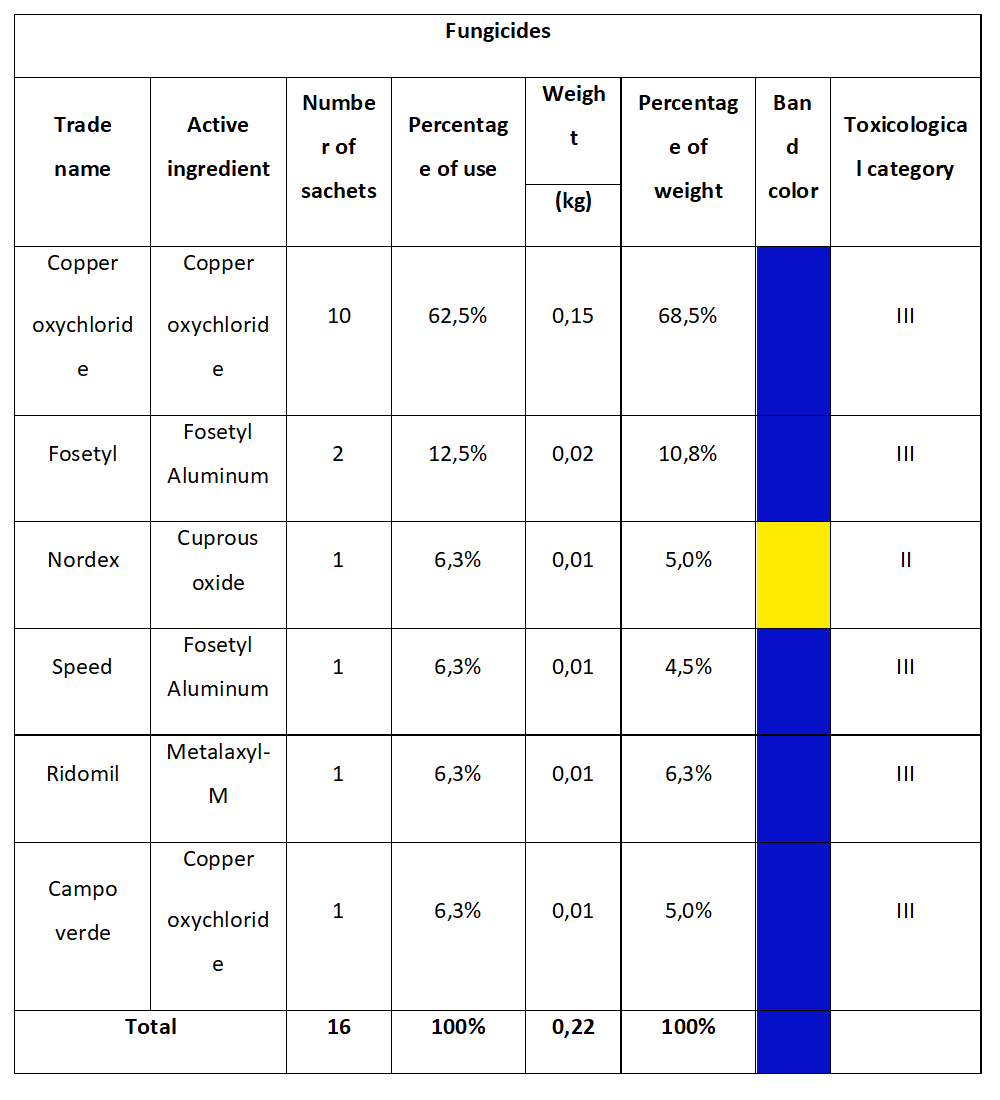
The fungicides packaged in sachets comprise six inputs containing four active ingredients, with copper oxychloride (68.8%) and fosetyl aluminum (18.8%) being the most frequently used. Both active ingredients fall within toxicological category III (moderately toxic), accounting for 83% of the inputs, while toxicological category II (highly toxic) represents 17%.
The inappropriate use and application of chemical fungicides constitutes a major concern, as it may lead to the emergence of resistant strains, thereby hindering effective disease control and reducing treatment efficacy. This situation may also foster dependence on more toxic chemical compounds and increase environmental pollution (Johanna et al., 2021; Cuervo Osorio et al., 2024). In addition, such practices have been associated with environmental accumulation and adverse effects on biodiversity and soil fertility (Riedo et al., 2023).
Finally, the toxicological categorization of insecticides based on the identified sachets is presented in Table 9.
Table 9. Toxicological Categorization of Insecticides.
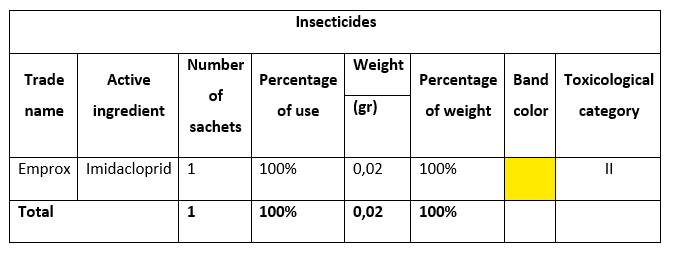
Table 9 indicates that the most commonly used insecticide among avocado producers contains imidacloprid as its active ingredient, which is classified within toxicological category II (highly toxic). Consequently, the use of personal protective equipment (PPE) is essential during its application and in the management of the waste generated; however, such equipment is frequently not used (Fernández Vargas et al., 2024). The application of agrochemicals for pest control significantly reduces soil fertility and productivity and may also displace pollinators, which, although not the primary targets, are adversely affected, thereby limiting crop development and production (Collantes et al., 2023). With respect to imidacloprid and other insecticides, these compounds exert detrimental effects on beneficial insects and soil microorganisms, altering ecosystem functions and pollination services (Pisa et al., 2021). Furthermore, chronic exposure to imidacloprid has been associated with reduced biodiversity and long-term contamination of soil and water resources (Simon-Delso et al., 2015), reinforcing the need for stricter monitoring and enhanced training in the safe handling of agrochemicals.
Conclusions
Agrochemical use in the study area is relatively low, resulting in limited generation of residues in the form of containers and sachets. Nevertheless, producers apply a total of 33 active ingredients through containers and sachets, with fungicides representing the most frequently used inputs (20 active ingredients), followed by insecticides (12 active ingredients) and herbicides (1 active ingredient). These agrochemicals fall within toxicological categories II (highly toxic) and III (moderately toxic).
Most avocado producers (63%) receive technical guidance from agronomic engineers, while 47% also rely on personal experience. In addition, 16% follow product label instructions, and 11% base their practices on advice from vendors. With regard to residue management, 26% of the 19 surveyed farmers perform triple washing of containers, 5% incinerate containers and sachets, and 74% store residues. Among those who store residues, 58% deliver them to the Colecta company during scheduled collection events for appropriate final disposal.
Recommendations
Promote alternative production methods, such as organic agriculture and the implementation of good agricultural practices, in order to minimize agrochemical use and associated environmental impacts. These approaches support sustainable agriculture by preserving natural resources and enabling integrated weed and pest management.
Implement training programs and a comprehensive solid waste management plan to encourage the consistent use of personal protective equipment and the designation of appropriate storage areas for hazardous residues on farms.
Author Contributions
First author: Fieldwork, research, data analysis, conceptualization, and writing of the original draft.
Second author: Fieldwork, research, conceptualization, data analysis, writing, review, and editing.
Third author: Methodology development, fieldwork, data analysis, conceptualization, logistics, writing, review, and editing.
Fourth author: Logistics, review, and editing.
Acknowledgments
The authors express their gratitude to the Technological Institute of Putumayo and the Center for Research and Scientific and Technological Extension (CIECYT) for their support in promoting research activities. Appreciation is also extended to the farmers from the highland area of Sibundoy, Putumayo, for their collaboration during the fieldwork phases.
References
Aktar, M. W., Sengupta, D., & Chowdhury, A. (2019). Impact of pesticides use in agriculture: their benefits and hazards. Interdisciplinary Toxicology, 2(1), 1–12. https://doi.org/10.2478/v10102-009-0001-7
Basu, P., Ngo, H. T., Aizen, M. A., Garibaldi, L. A., Gemmill-Herren, B., Imperatriz-Fonseca, V., ... & Vanbergen, A. J. (2024). Pesticide impacts on insect pollinators: Current knowledge and future research challenges. Science of the Total Environment, 954, 176656. https://doi.org/10.1016/j.scitotenv.2024.176656
Damalas, C. A., & Koutroubas, S. D. (2017). Farmers’ training on pesticide use is associated with elevated safety behaviour. Toxics, 5(3), 19. https://doi.org/10.3390/toxics5030019
Devi, P. I., Manjula, M., & Bhavani, R. V. (2022). Agrochemicals, environment, and human health. Annual Review of Environment and Resources, 47, 399–421. https://doi.org/10.1146/annurev-environ-120920-111015
Duke, S. O. (2020). Glyphosate: Environmental fate and impact. Weed Science, 68(3), 201–207. https://doi.org/10.1017/wsc.2019.28
Elías Estremadoyro, D. F. (2022). Impact of Solid Waste Toxicity Generated by Pesticides. Kawsaypacha: Sociedad y Medio Ambiente, 9, 124–139. https://doi.org/10.18800/kawsaypacha.202201.006
Fernández Vargas, K. D., Sierra-Gaviria, E., Arias Hoyos, A., & Fernández Morantes, C. (2024). Agrochemicals and photo-fenton: A systematic review of socio-environmental impacts and optimal contaminant removal parameters. Revista Novedades Colombianas, 19(2). https://doi.org/10.47374/novcol.2024.v19.2422
Garay Peralta, I., Herrera Alarcón, J., Fernández Viveros, J. A., Díaz Criollo, A., & Domínguez Vázquez, E. Y. (2022). Contaminación en el suelo por uso irracional de agroquímicos y sus repercusiones en la salud. En Actas del VII Congreso de Investigación, Desarrollo e Innovación de la Universidad Internacional de Ciencia y Tecnología. Universidad Internacional de Ciencia y Tecnología. https://revistas.unicyt.org/index.php/actasidi-unicyt/article/view/54
Guerra Acosta, A. d. S., Mena Pantoja, A. A., Burbano Montenegro, M. E., Burbano Montenegro, M. F., & Pardo Potosí, L. M. (2021). Management, classification and collection study of phytosanitaires in the beans crop (Phaseolus vulgaris) in Sibundoy, Putumayo (Colombia). Revista de Investigación Agraria y Ambiental, 12(1), 133–152. https://doi.org/10.22490/21456453.3654
Hawkins, N. J., Bass, C., Dixon, A., & Neve, P. (2019). The evolutionary origins of pesticide resistance. Biological Reviews, 94(1), 135–155. https://doi.org/10.1111/brv.12440
Jorge-Escudero, G., Pérez Polanco, M., Lagerlöf, J. E., Pérez, C. A., & Míguez, D. (2022). Commercial fungicide toxic effects on terrestrial non-target species might be underestimated when based solely on active ingredient toxicity and standard earthworm tests. Toxics, 10(9), 488. https://doi.org/10.3390/toxics10090488
Mendoza Cantú, A., & Ize Lema, I. A. R. (2017). Las sustancias químicas en México. Perspectivas para un manejo adecuado. Revista internacional de contaminación ambiental, 33(4), 719-745. https://doi.org/10.20937/rica.2017.33.04.15
Mier-Tous, J.-M., Pineda-Vides, F., Hernández-Ureche, J., Troncoso-Palacio, A., Andrade-Perez, J., & Padilla-Barrios, J.-I. (2023). APreliminary Review of the Literature About the Challenges of Sustainable Agriculture in Latin America. Boletín de Innovación, Logística y Operaciones, 5(1), 95–105. https://doi.org/10.17981/BILO.5.1.2023.09
Miranda, N., Sánchez, D., & Sicilia, K. (2022). Management of agrochemicals empty containers in rice production in Thealanje District, Province of Chiriquí. Revista Semilla del Este, 3(1), 151–160. https://revistas.up.ac.pa/index.php/semilla_este/article/view/3210
Mondal, R., Manna, A., & Kumar, A. (2026). Sustainable degradation of pesticides: Bridging agricultural practices, aquatic ecology, and forest resource management. ACS Sustainable Resource Management. https://doi.org/10.1021/acssusresmgt.5c00607
Mossa, A. H., & Mohafrash, S. M. (2024). Disposal of expired empty containers and waste from pesticides. Egyptian Journal of Chemistry, 67(4), 65–85. https://doi.org/10.21608/ejchem.2023.222647.8249
Mostafalou, S., & Abdollahi, M. (2013). Pesticides and human chronic diseases: Evidences, mechanisms, and perspectives. Toxicology and Applied Pharmacology, 268(2), 157-177. https://doi.org/10.1016/j.taap.2013.01.025
Motta Escobar, S., Salazar Cabezas, L. D., & Sánchez Leal, L. C. (2022). Perspective of the Use of PseudomonasSpp. As Biocontrol of Phytopathogens in Vegetable Crops in Colombia: A Systematic Review. Revista Mutis, 12(2), 1-17. https://doi.org/10.21789/22561498.1862
Olguín-Hernández, L., Carrillo-Rodríguez, J. C., Mayek-Pérez, N., Aquino-Bolaños, T., Vera-Guzmán, A. M., & Chávez-Servia, J. L. (2024). Patterns and relationships of pesticide use in agricultural crops of latin america: Review and analysis of statistical data. Agronomy, 14(12), 2889. https://doi.org/10.3390/agronomy14122889
Pathak, V. M., Verma, V. K., Rawat, B. S., Kaur, B., Babu, N., Sharma, A., Dewali, S., Yadav, M., Kumari, R., Singh, S., Mohapatra, A., Pandey, V., Rana, N., & Cunill, J. M. (2022). Current status of pesticide effects on environment, human health and it’s eco-friendly management as bioremediation: A comprehensive review. Frontiers in Microbiology, 13, 962619. https://doi.org/10.3389/fmicb.2022.962619
Pisa, L., Goulson, D., Yang, E.-C., Gibbons, D., Sánchez-Bayo, F., Mitchell, E., Aebi, A., Van Der Sluijs, J., MacQuarrie, C. J. K., Giorio, C., Long, E. Y., McField, M., Bijleveld Van Lexmond, M., & Bonmatin, J.-M. (2021). An update of the Worldwide Integrated Assessment (Wia) on systemic insecticides. Part 2: Impacts on organisms and ecosystems. Environmental Science and Pollution Research, 28(10), 11749-11797. https://doi.org/10.1007/s11356-017-0341-3
Ramírez-Muñoz, F. (2021). El herbicida glifosato y sus alternativas. Instituto Regional de Estudios en Sustancias Tóxicas (IRET). Serie Informes Técnicos no. 44 https://hdl.handle.net/11056/31226
Riedo, J., Yokota, A., Walther, B., Bartolomé, N., van der Heijden, M. G., Bucheli, T. D., & Walder, F. (2023). Temporal dynamics of total and bioavailable fungicide concentrations in soil and their effect upon nine soil microbial markers. Science of The Total Environment, 878, 162995. https://doi.org/10.1016/j.scitotenv.2023.162995
Salamanca Castillo, G. F. (2020). Effect of agrochemicals on public health and environment. Universidad Militar Nueva Granada. https://files.core.ac.uk/download/pdf/344703632.pdf
Salis, R. K., Schreiner, V. C., Rozenberg, A., Ohler, K., Baudy Groh, P., Schäfer, R. B., & Leese, F. (2023). Effects of fungicides on aquatic fungi and bacteria: a comparison of morphological and molecular approaches from a microcosm experiment. Environmental Sciences Europe, 35(1), 62. https://doi.org/10.1186/s12302-023-00768-7
Sánchez-Bayo, F., & Wyckhuys, K. A. G. (2019). Worldwide decline of the entomofauna: A review of its drivers. Biological Conservation, 232, 8–27. https://doi.org/10.1016/j.biocon.2019.01.020
Simon-Delso, N., Amaral-Rogers, V., Belzunces, L. P., Bonmatin, J. M., Chagnon, M., Downs, C., Furlan, L., Gibbons, D. W., Giorio, C., Girolami, V., Goulson, D., Kreutzweiser, D. P., Krupke, C. H., Liess, M., Long, E., McField, M., Mineau, P., Mitchell, E. A. D., Morrissey, C. A., … Wiemers, M. (2015). Systemic insecticides (Neonicotinoids and fipronil): Trends, uses, mode of action and metabolites. Environmental Science and Pollution Research, 22(1), 5-34. https://doi.org/10.1007/s11356-014-3470-y
Van Bruggen, A. H. C., He, M. M., Shin, K., Mai, V., Jeong, K. C., Finckh, M. R., & Morris, J. G. (2018). Environmental and health effects of the herbicide glyphosate. Science of the Total Environment, 616–617, 255–268. https://doi.org/10.1016/j.scitotenv.2017.10.309
Vielba-Fernández, A., Polonio, Á., Ruiz-Jiménez, L., de Vicente, A., Pérez-García, A., & Fernández-Ortuño, D. (2020). Fungicide resistance in powdery mildew fungi. Microorganisms, 8(9), 1431. https://doi.org/10.3390/microorganisms8091431
Yu, H., Zhang, Y., Tan, W., & Zhang, Z. (2022). Microplastics as an emerging environmental pollutant in agricultural soils: Effects on ecosystems and human health. Frontiers in Environmental Science, 10, 855292. https://doi.org/10.3389/fenvs.2022.855292
Zubrod, J. P., Bundschuh, M., Arts, G., Brühl, C. A., Imfeld, G., Knäbel, A., Payraudeau, S., Rasmussen, J. J., Rohr, J., Scharmüller, A., Smalling, K., Stehle, S., Schulz, R., & Schäfer, R. B. (2019). Fungicides: An overlooked pesticide class? Environmental Science & Technology, 53(7), 3347–3365. https://doi.org/10.1021/acs.est.8b04392
1 Environmental Sanitation Technologist, Institución Universitaria del Putumayo- UNIPUTUMAYO, Colón, Putumayo, Colombia. Correo electrónico: carloscabrera2020@itp.edu.co - ORCID: https://orcid.org/0009-0005-2176-9630 -Google Scholar: https://scholar.google.com/citations?view_op=new_profile&hl=es&authuser=1. Corresponding author: carloscabrera2020@itp.edu.co
2 Environmental Sanitation Technologist, Institución Universitaria del Putumayo- UNIPUTUMAYO, Colón, Putumayo, Colombia. Correo electrónico: jhosetguerrero2020@itp.edu.co - ORCID: https://orcid.org/0009-0002-5201-1695 - Google Scholar: https://scholar.google.com/citations?view_op=new_profile&hl=es&authuser=1
3 Agronomic Engineer, Specialist in Environmental Management, Master’s in Agricultural Sciences, Full-time Profesor, Institución universitaria del Putumayo, Sibundoy, Putumayo, Colombia. Correo electrónico: Aguerra@itp.edu.co - ORCID: https://orcid.org/0000-0002-9731-8933 - Google Scholar: https://scholar.google.com/citations?view_op=new_profile&hl=es&authuser=1
4 Environmental Sanitation Technologist, Institución Universitaria del Putumayo- UNIPUTUMAYO, Colón, Putumayo, Colombia. Correo electrónico: yersongomez2020@itp.edu.co – ORCID: https://orcid.org/0009-0004-9059-9041 - Google Scholar: https://scholar.google.com/citations?view_op=new_profile&hl=es&authuser=1
How to cite: Cabrera-Valencia, C.H., Guerrero Otaya, J.A., Guerra
Acosta, A.S. & Gómez-Gómez, Y.O. (2026). Evaluation of the Management of
Agrochemical Residues Generated in Avocado Production (Persea americana). Revista Luna azul,
62, 208-231. DOI: https://doi.org/10.17151/luaz.2026.62.12
This
work is licensed under a Creative Commons
Attribution CC BY License.

Código
QR del artículo