Leónides Castellanos
González1 
Alfonso E. Capacho
Mogollón2
Jarol Ramón Valencia3
Recibido: 18/08/2025 Aceptado: 26/10/2025 Actualizado:06/04/2026
DOI: 10.17151/luaz.2025.62.8
Abstract
The quality of irrigation water is very important due to its role in soil conservation and food quality. Variations in the quality of irrigation water due to intervention by farmers with different farming systems are rare in Colombia. The objective of the study was to assess the variations in water quality with the implementation of an agroecological project in the Arboledas municipality, Department of Norte de Santander Colombia. The research was carried out on 15 farms where three agroecological (agroforestry) models were implemented: cedar as forestry, a fruit tree (lemon or avocado), and a short-cycle crop (corn or beans). The results of the initial sampling did not prevent the use of farm water to irrigate the planned polycultures in the municipality, despite presenting high variation coefficients for many variables. With the intervention of the agroecological models, significant variations were observed in some variables. In all models, concentrations of ammonium and manganese increased, and nitrates decreased. While the variations did not change the category of the irrigation water, they do serve as a warning sign to continue monitoring them.
Keywords: farms, agroecology, SAR, EC, hardness
Resumen
La calidad del agua de riego es muy importante debido a su rol en la conservación del suelo y la calidad de los alimentos. Las variaciones de la calidad del agua de riego por la intervención de los agricultores con diferentes sistemas de cultivo son escasos en Colombia. El objetivo del trabajo fue evaluar las variaciones en la calidad del agua con la implementación de un proyecto agroecológico en el municipio de Arboledas, Norte de Santander, Colombia. La investigación se llevó a cabo en 15 fincas donde se implementaron tres modelos agroecológicos (agroforestales): cedro como forestación, un frutal, limón o aguacate, y un cultivo de ciclo corto de maíz o frijol. Los resultados del muestreo inicial no impidieron el uso del agua de las fincas para regar los cultivos de los policultivos planificados en el municipio, a pesar de presentar altos coeficientes de variación para muchas variables. Con la intervención de los modelos agroecológicos, se observaron variaciones significativas en algunas variables. En todos los modelos, las concentraciones de amonio y manganeso aumentaron, y las de nitratos disminuyeron. Si bien las variaciones no modificaron la categoría del agua para riego, sí constituyen una alerta para seguir midiéndolas.
Palabras clave: fincas, agroecología, RAS, CE, dureza
Introduction
Irrigated land accounts for 35-40% of global food production (FAO, 2016). Agriculture, which consumes around 70% of water withdrawal depending on the type of country, constantly competes with domestic, industrial and water supply uses for an increasingly scarce resource (Catacora and Valencia, 2021). Therefore, great attention is paid to the quality of irrigation water because of its role in soil conservation and in meeting the growing demand for quality food (Garcia, 2012). Crop yields are higher in irrigating systems and are less dependent on the adverse weather effects, with agricultural production being the most water-intensive activity worldwide (Medina et al., 2016).
Water for irrigation systems is determined by its quality, so it is necessary to assess physical, chemical and biological parameters to determine whether it is suitable for use in soils (Gómez et al., 2015). Medina et al. (2016) and Zaman et al. (2018) indicated that the quality of irrigation water is determined by the nature, quantity and proportion of ions present. Similarly, the suitability of irrigation water is determined not only by the total amount of salts present but also by the type of salt (Valles-Aragón et al., 2017; Zaman et al., 2018).
Water quality depends on the development of agricultural activity. The content of salts and other specific ions is fundamental and allows it to be classified as fresh, slightly brackish, brackish and saline. Likewise, the physical conditions and soil type, mineralogy, the crop to be established and its nutritional requirements must be considered to determine the needs of different seedlings or to restrict planting and crops production (Mancilla-Villa et al., 2021).
Poor irrigation practices on farms can cause localized salinity problems, which are exacerbated if proper drainage practices are not used. Excessive irrigation leads to an increased salt concentration in the ground water table and its subsequent decline, resulting in more widespread salinization problems at the agroecosystem level (Kadasiddappa et al., 2017).
The phenomena known as sodicity and salinity caused by the accumulation of salts in soils increase the osmotic pressure of water in them, which prevents its use by the roots, causing a nutritional imbalance, which in many cases causes toxicity and deficiencies in plants, resulting in a reduction in yield and deterioration in the quality of the final product (Maua and Porporato, 2015).
Monoculture agriculture is the cause of biodiversity loss, while polyculture farming systems mimic the function and structure of natural ecosystems, which are characterized by a high diversity of species, and much more biologically active soil. This can result in toxicity and nutrient deficiencies, which favors plant nutrition and pest management (Perfecto et al., 2019, Wanger et al., 2020). Agroecological initiatives seek to transform conventional production systems geared toward large food, fiber and biofuel markets, into an alternative model that promotes increased biodiversity with production directed toward a local market independent of fossil fuels. To achieve this, efforts have focused on different and more sustainable agroecosystem designs (Altieri and Toledo, 2010).
In the design of agroecologically sustainable agroecosystems, the implementation of agroecological practices is encouraged, starting with the diversification of plant and animal species in time and space, and continuing with the improvement of recycling and nutrient balance, measures for the conservation of soil conditions, the increase by all possible means of organic matter to improve the biotic activity of the soil, the optimal use of solar radiation, water harvesting practices and efficient management and conservation of water, and improvements of the microclimate by all possible means (Barchuk et al., 2020).
Research in polyculture production projects has been carried out in Colombia with successful results, as it is the case of one developed in Lórica, Córdoba (Banda et al., 2004). These research projects have increased in recent years with various agroecological initiatives, where water quality assessment has been carried out before the implementation of agroecological systems (Guerrero-Guio et al., 2020; Guerra-Tamara, 2022), as well as before and after comparisons, seeking a scientific answer as to whether agroecological models in the form of polycultures and agroecological practices influence or not the quality of irrigation water used on farms (Villamizar et al., 2023).
An agroecological project known as "Plantar", designed to strengthen promising crops, was developed in six municipalities in the Department of Norte de Santander, including Arboledas, with the aim of implementing three agroforestry models for the sustainable development and competitiveness of farmers (Gobernación Norte de Santander, 2018). This pilot macro project aimed at assessing the impact of agroforestry systems on the productivity and competitiveness of farms as well as their influence on the natural resources of agroecosystems (water, soil and biodiversity).
Furthermore, the delivery of an irrigation system to the beneficiaries of the agroforestry models reinforced the need to characterize the physicochemical variables of irrigation water on farms before and after the project intervention, reason why the objective of this research was to assess the variations in water quality with the implementation of the three agroforestry models in the municipality of Arboledas, once the harvest of short cycle crops was completed.
Materials and methods
The Plantar project aimed to establish three agroecological models in the form of agroforestry systems (timber trees, fruit trees, and short-cycle crops). These systems were designed according to the soil and climatic conditions of the municipality, also taking into account the agricultural development plans of Arboledas.
The municipality is characterized by a mountainous topography and numerous water springs that feed the network of streams that finally converge into the Arboledas River, a tributary of the Zulia River, which in turn is a tributary of the Catatumbo River which flows into Lake Maracaibo, Venezuela (Mayor’s Office, Arboledas Municipality, Department of Norte de Santander, 2012).
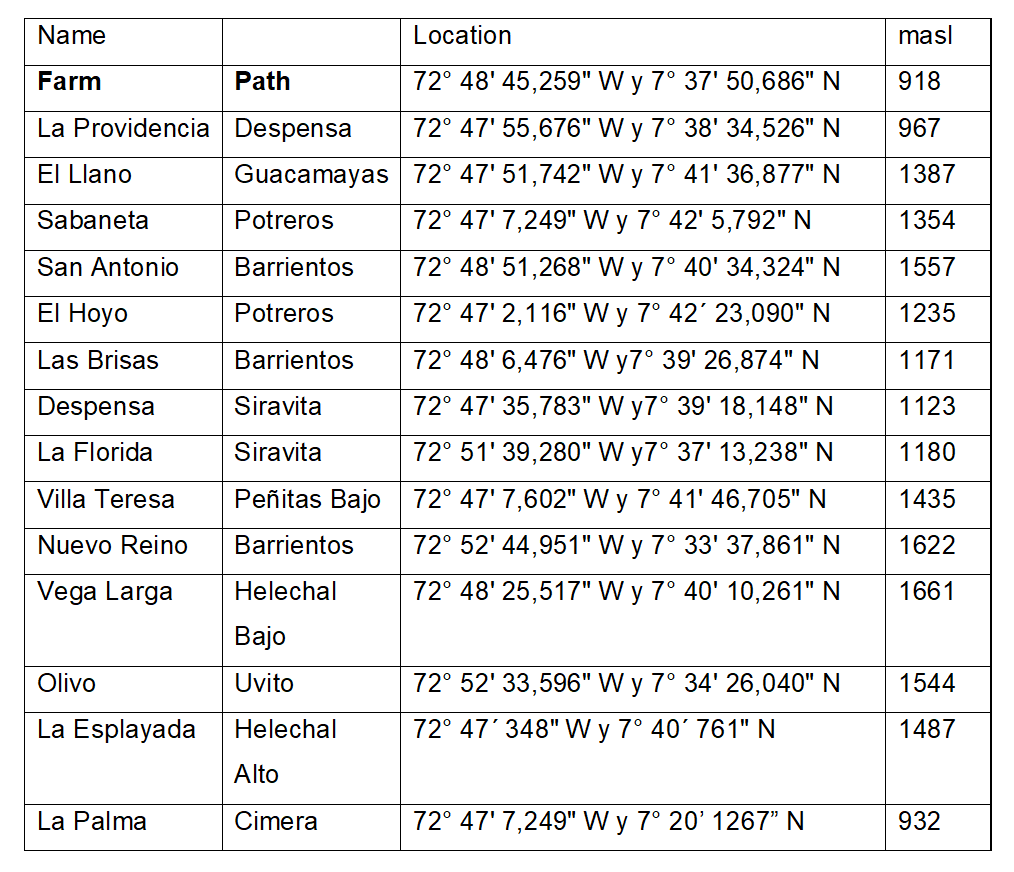
Following the criteria established by the Norte de Santander Government, 15 farms distributed throughout the municipality were selected to participate in the Plantar project (Table 1). The altitude of the farms ranged from 918 to 1661 meters above sea level (masl).
Table 1. Georeferencing and elevation at the entrance of each farm participating in the project
Source: Authors
The selected farms covered 2–3 hectares, mainly cultivated with corn, beans, and vegetables, generally in monoculture systems. Among the objectives of the “Plantar” project was the training of farmers in agroecological practices, with emphasis on increasing the use of organic matter and bio-inputs for pest control, whether produced on the farm or supplied by the project.
Two agroforestry plots were established on each farm: one with agroecological practices and the other with the conventional practices. Due to the small size of the farms, most had direct access to water sources for irrigation. For the initial characterization of the irrigation water, 30 samples were collected (two per farm). When only one source was available, duplicate samples were taken at 30-minute intervals. Sampling sites were located near a gauging station to corelate the river flow with the water sample.
The sampling container was filled with 250–500 mL of water, depending on the variable being measured, and submerged upstream. The containers were hermetically sealed and reinforced with adhesive tape to prevent leakage. In addition, the sampling point location was recorded to ensure accuracy, and each sample was labeled with the name of collector, farm or location, and water type (spring or pipeline). These samples were stored at a temperature not lower than 5 ºC. For the water quality analysis of both the agroecological plot and the control plot, samples were taken from the same water source at different time intervals, so the work was carried out at the farm level and not at the level of the agroecological model, due to the small size of the farms.
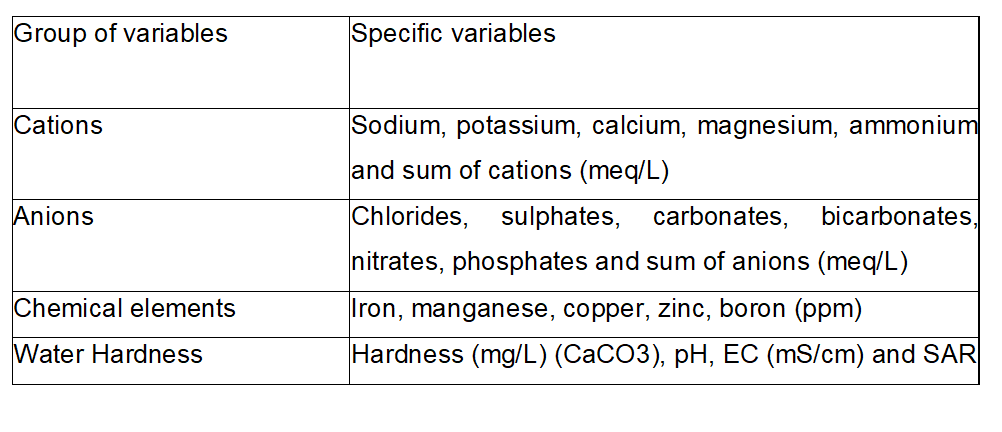
Following a proper chain of custody, samples from the 15 farms were sent to the Dr. Calderón Laboratories in Bogotá, where analyses were conducted. The physical and chemical variables determined are listed in Table 2. (Table 2).
Table 2. Diagnostic variables to characterize water.
Source: Authors
The analytical techniques followed APHA-AWWA-WEF (2012) protocols: potentiometry for pH and EC, atomic absorption with saturation extraction for cations, and volumetric or potentiometric titration for anions. (APHA-AWWA-WEF. 2012).
A descriptive analysis on the physicochemical variables from the 15 farms was carried out to determine means and standard deviations, with emphasis on the coefficient of variation (threshold of 60%) as a measure of spatial variability (Guerrero-Guio et al., 2021). The SPSS statistical package version 25 was used for this purpose (IBM, 2017).
Variations in water quality.
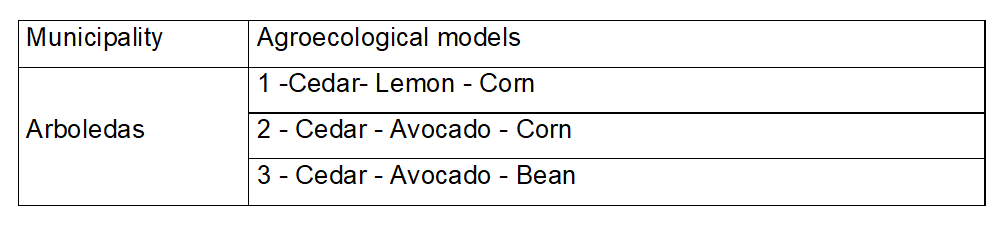
The three agroecological models in the polycultures modality (forest-fruit-transitory crop) that finally remained after a participatory adjustment by farmers according to the tradition, the soil-climatic conditions and their preferences are shown in Table 3. The criterion that prevailed in the project was the establishment of polycultures in agroforestry systems and the use of agroecological practices of soil conservation, nutrition and pest management which will be favorable to preserve the quality of soil, water and to increase biodiversity in general.
Table 3. Crops that made up
the three agroecological models.
Source: Authors
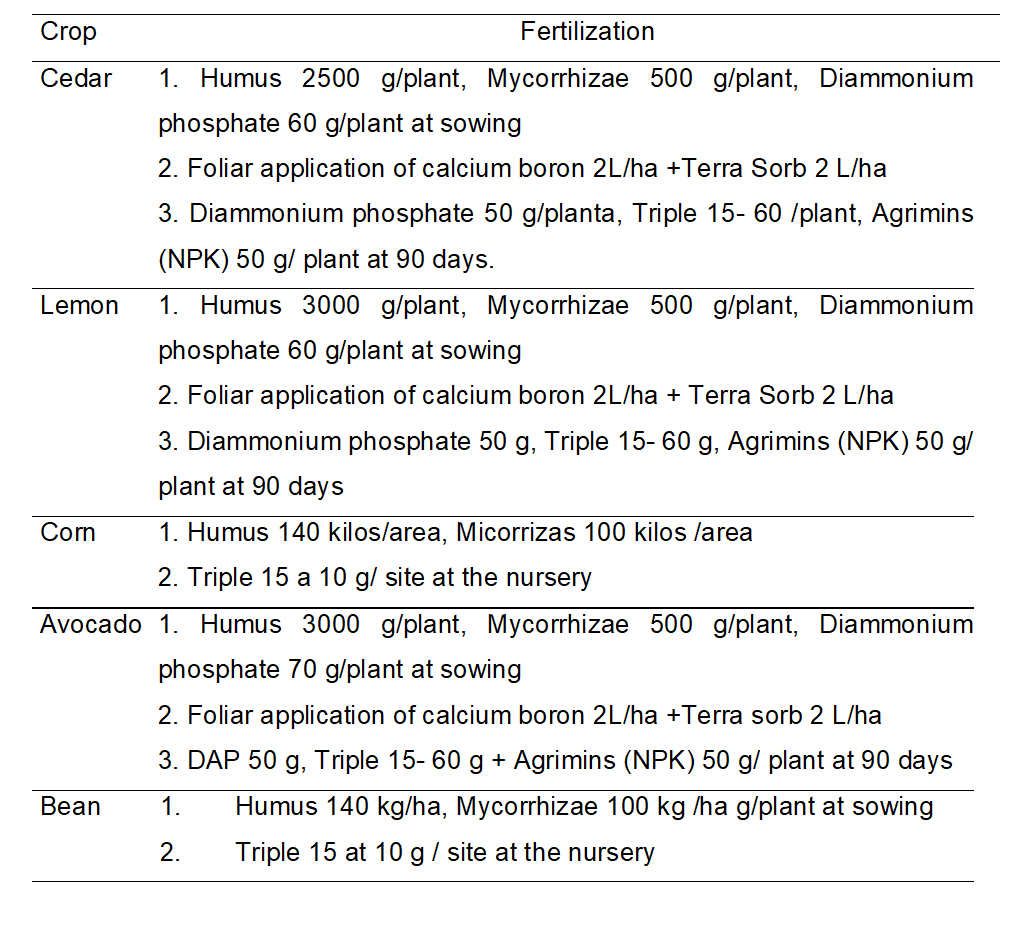
Considering the results of the agrochemical analysis of the soil, the inputs provided by the project and the nutritional requirements of the species, fertilization plans were designed. Being a participatory project, these fertilization plans were agreed with the farmers and, even though it was intended that the fertilization management would be different between the experimental area (1ha) and the control area (1ha), in the end fertilization was carried out on the two hectares of polycultures and the only difference was in the humus dosage. Each model showed slight differences, but the fertilization practices were similar, differentiating the fertilization of each crop within the polyculture (Table 4).
Table 4. Fertilization
carried out before the second water sampling of the crops of the agroecological
models.
Source: Authors
Fourteen months after the start of the project and, after the short cycle crops harvest was completed, two samples were taken again from the water supply sources of each of the 15 farms. The procedure was similar and the variables measured in the laboratory were the same as in the first sampling.
A descriptive statistical analysis of the physicochemical variables of the water was carried out based on the initial data of the 30 samples. A statistical analysis of Student-T comparison was carried out between the mean values of the variables before and after the intervention of each agroforestry model (10 samples) in the 5 farms using the SPSS statistical package. The unpaired sampling method was used with a 5 % probability of error.
Results and discussion
The mean values of the physicoshemical variables from the first water sampling on the farms showed that in general the water was suitable for agricultural irrigation, as it met most of the parameters and adequate levels of hardness of all the variables (Ayer and Wescot, 1985; Castellanos et al., 2000). However, a descriptive analysis with emphasis on the coefficient of variation showed that the coefficients of variation for many variables were greater than 60% in the municipality (Guerrero-Guio et al., 2021). Of a total of 22 variables analyzed, only 8 did not have Coefficients of Variation (CV) greater than 60% concentration of ammonium, carbonates, phosphates, magnesium, copper and boron as well as pH and SAR. On the other hand, the descriptive statistical analysis reflected undesirable situations in some of the farm sources of supply, such as very high concentrations of iron, bicarbonates, hardness and high pH (Ayer and Westcot, 1985) (Table 5).
Table 5. Results of the descriptive statistical analysis of water variables in the first sampling between farms of agroforestry models.
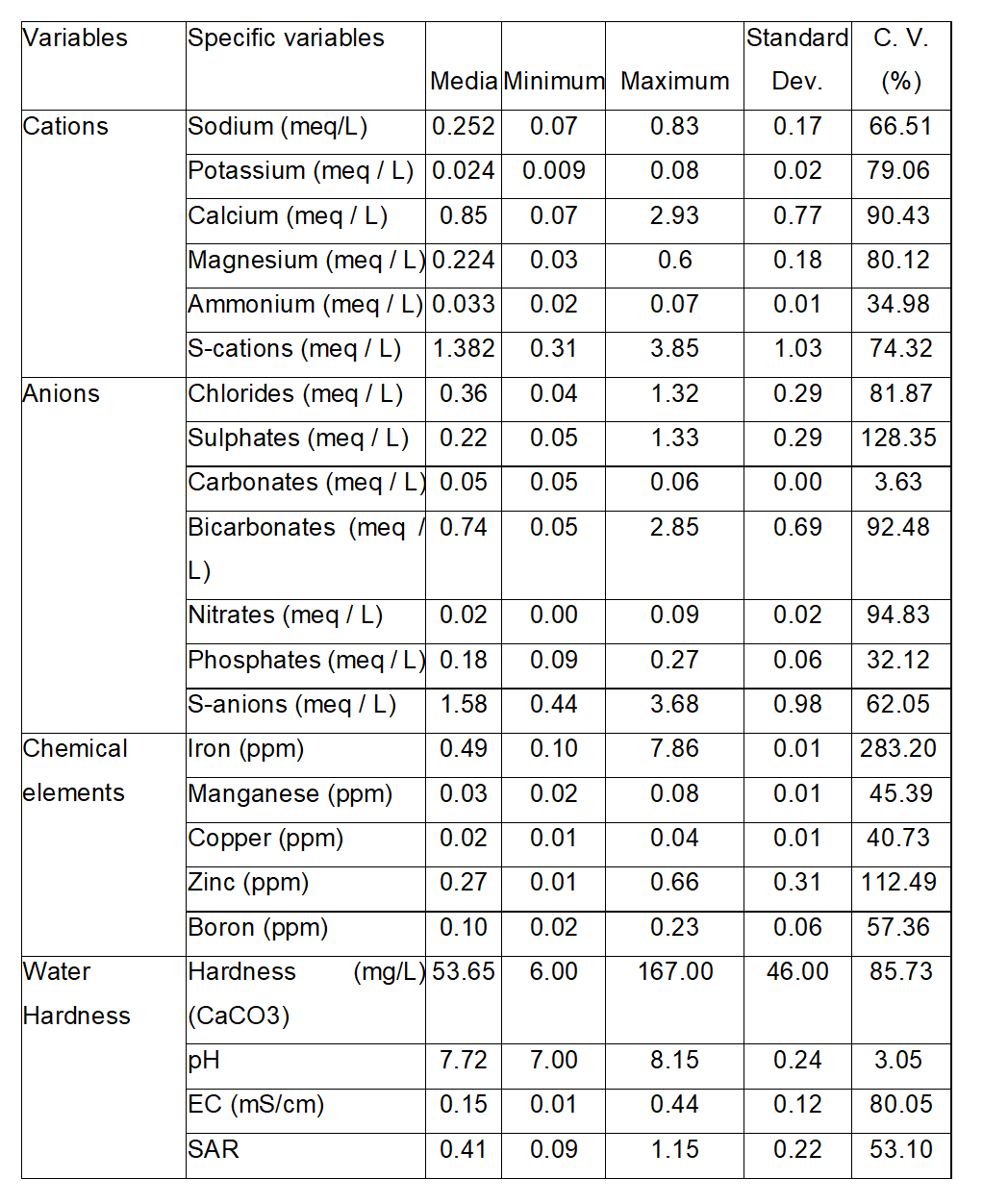
S-cations: Sum of cations, S-anions: sum of anions, pH: degree of acidity, SAR: Sodium Adsorption Ratio (SAR), EC: Electrical Conductivity, EC.
An analysis of the box plot shows that cations, sodium, calcium and the total sum of cations were the variables with the greatest dispersion. All anion variables presented outliers, except bicarbonates and the sum of anions but, these two, also presented data far from the median. Among the chemical elements, iron, manganese and copper presented outliers, while zinc showed a median displaced from the central area. The pH and SAR presented outliers, while hardness showed dispersed values with respect to the median (Figure 1). This graphical analysis corroborates the dispersion of the data from the samples of the different water sources on the farms that were part of the research, as shown in Table 1.
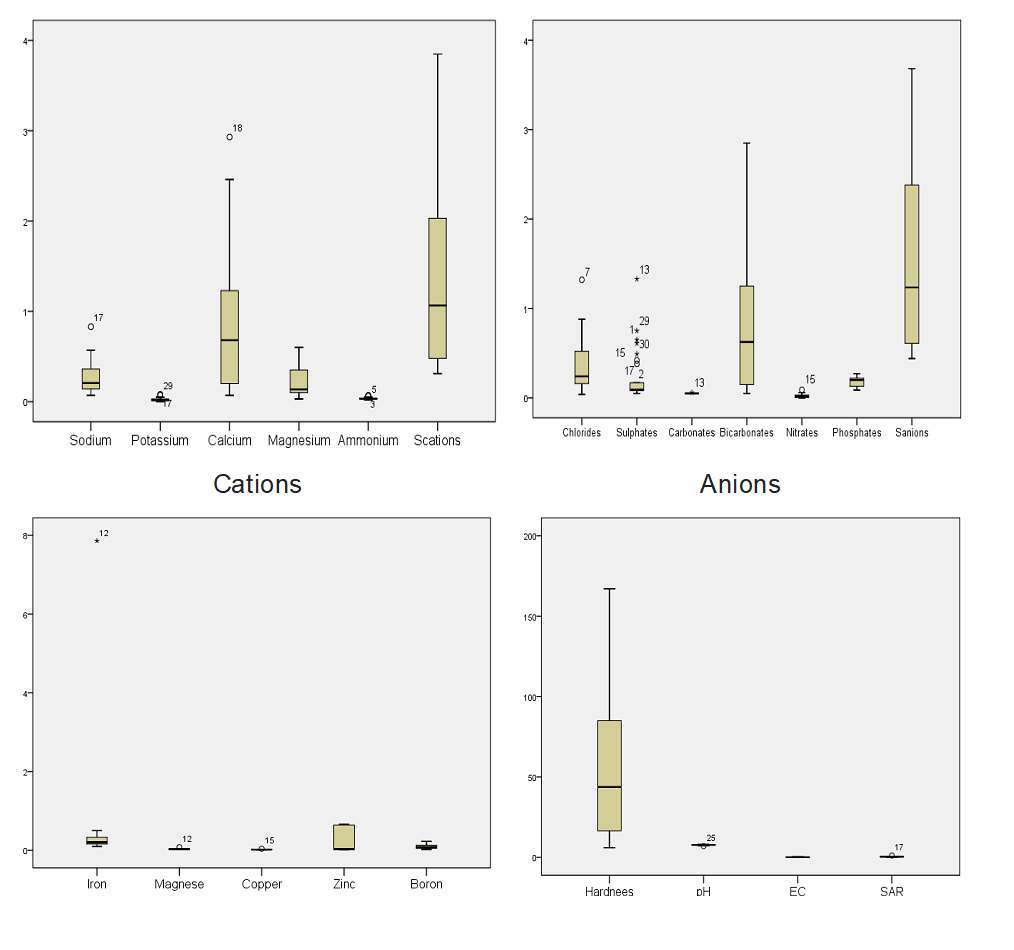
Figure 1.Results of the graphic analysis of the physicochemical variables of water before the implementation of the agroecological models. Source: Authors
Agroecological Model 1: Cedar - Lemon – Corn
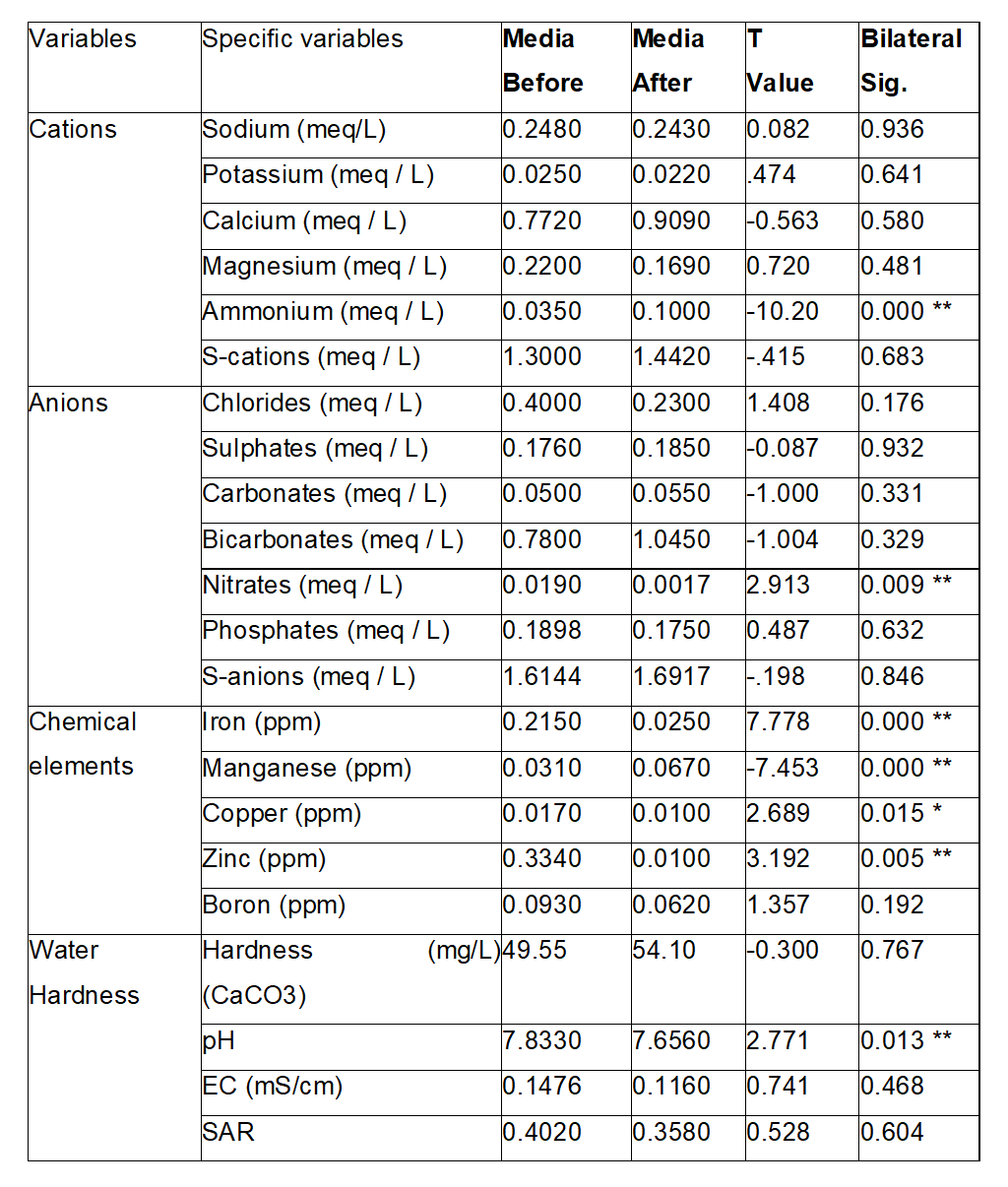
The physical-chemical properties of the water being evaluated in Agroecological Model 1: Cedar - Lemon – Corn, after the short cycle crops of Model 1 were harvested, remained within the permissible ranges for use in agricultural irrigation considering the values of sodicity and salinity, as well as the concentrations of sodium, chlorine and boron (Ayer and Westcot, 1985; Castellanos et al., 2000). However, the comparison of agrochemical variables before and after crop implementation showed a significant increase (p<0.05) of ammonium (from 0,035 to 0,0017 meq / L) and manganese (from 0.031 to 0.067 meq / L), and a significant decrease in nitrate cation concentration (from 0,019 to 0,1 meq / L), for the elements iron (from 0,215 to 0,025 meq / L), copper, (from 0.017 to 0.010 meq / L) and zinc (from 0.3340 to 0,01 meq / L). A highly significant decrease in pH was observed, which decreased on average to 7.65, a value considered adequate for irrigation water by the Agricultural Information Service of Murcia (SIAM, 2019) (Table 6).
Table 6. Comparison of the physical-chemical variables of the water before and after establishing the agroecological model 1: Cedar - Lemon - Corn.
Source: Authors
Agroecological model 2: Cedar - Avocado – Corn
The comparison of the physicochemical properties of water before and after the implementation of the agroecological model Cedar - Avocado - Corn shows that the variables of irrigation water varied differently on the farms after the completion of the first transition crops cycle. However, they are considered to have remained within the parameters allowed for irrigation use (Ayer and Westcot, 1985; Castellanos et al., 2000) (Table 6). A significant increase in ammonium (from 0,034 to 0,109 meq / L) and manganese (from 0,031 to 0,059 meq / L) was observed, as well as a decrease in the concentration of nitrates (from 0,0335 to 0,0015 meq / L) and copper (from 0,02 to 0,01 meq / L). However, no significant variations were observed in the water hardness variables (Table 7).
Table 7. Comparison of
physicochemical variables of water before and after establishing the
agroecological model 2: Cedar - Avocado - Corn.
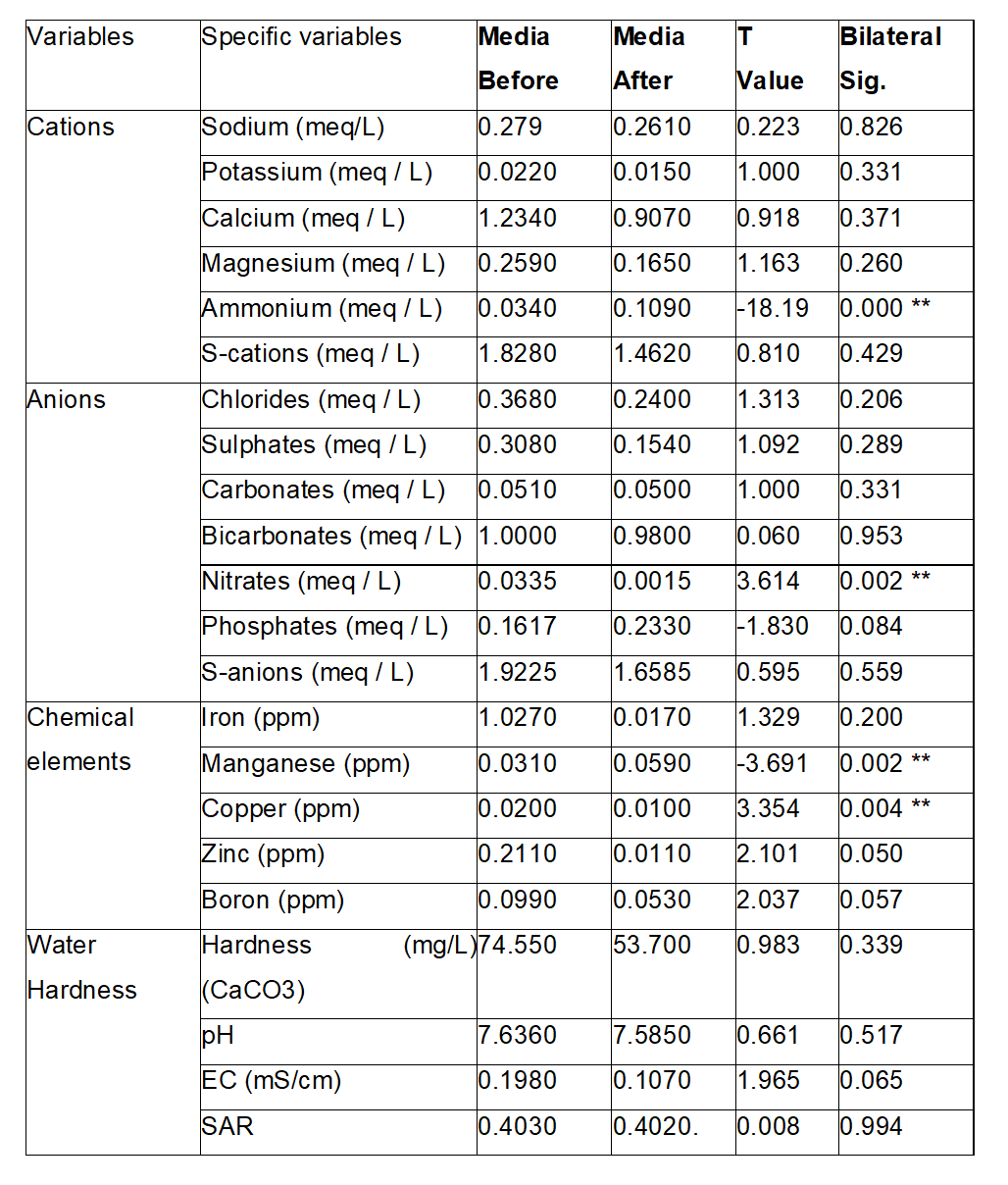
S-cations: Sum of cations, S-anions: sum of anions, pH: degree of acidity, SAR: Sodium Adsorption Ratio (SAR), EC: Electrical Conductivity, EC.
** Indicates that the mean increased or decreased to a highly significant level p<0.01.
Source: Authors
Agroecological Model 3: Cedar - Avocado – Bean
In agroecological model 3: Cedar - Avocado – Bean it was confirmed that, after the completion of the first cycle of transition crops, water maintained the irrigation quality (Ayer and Westcot, 1985; Castellanos et al., 2000). However, a statistically significant difference was observed in eight physicochemical variables of water. An increase in ammonium (from 0,029 to 0,104 meq / L), bicarbonates (from 0,045 to 0,081 meq / L), phosphates (from 0,1878 to 0,248 meq / L), manganese (from 0,029 to 0,078 meq / L) and SAR (from 0,415 to 0,593) was observed. A significant decrease in the concentration of nitrates (from 0,0151 to 0,0017 meq / L), copper (from 0,0180 to 0,0120 meq / L) and zinc (from 0,269 to 0,100 meq / L) was observed (Table 8).
Table 8. Comparison of water physicochemical variables before and after establishing the agroecological model 3: Cedar - Avocado – Bean
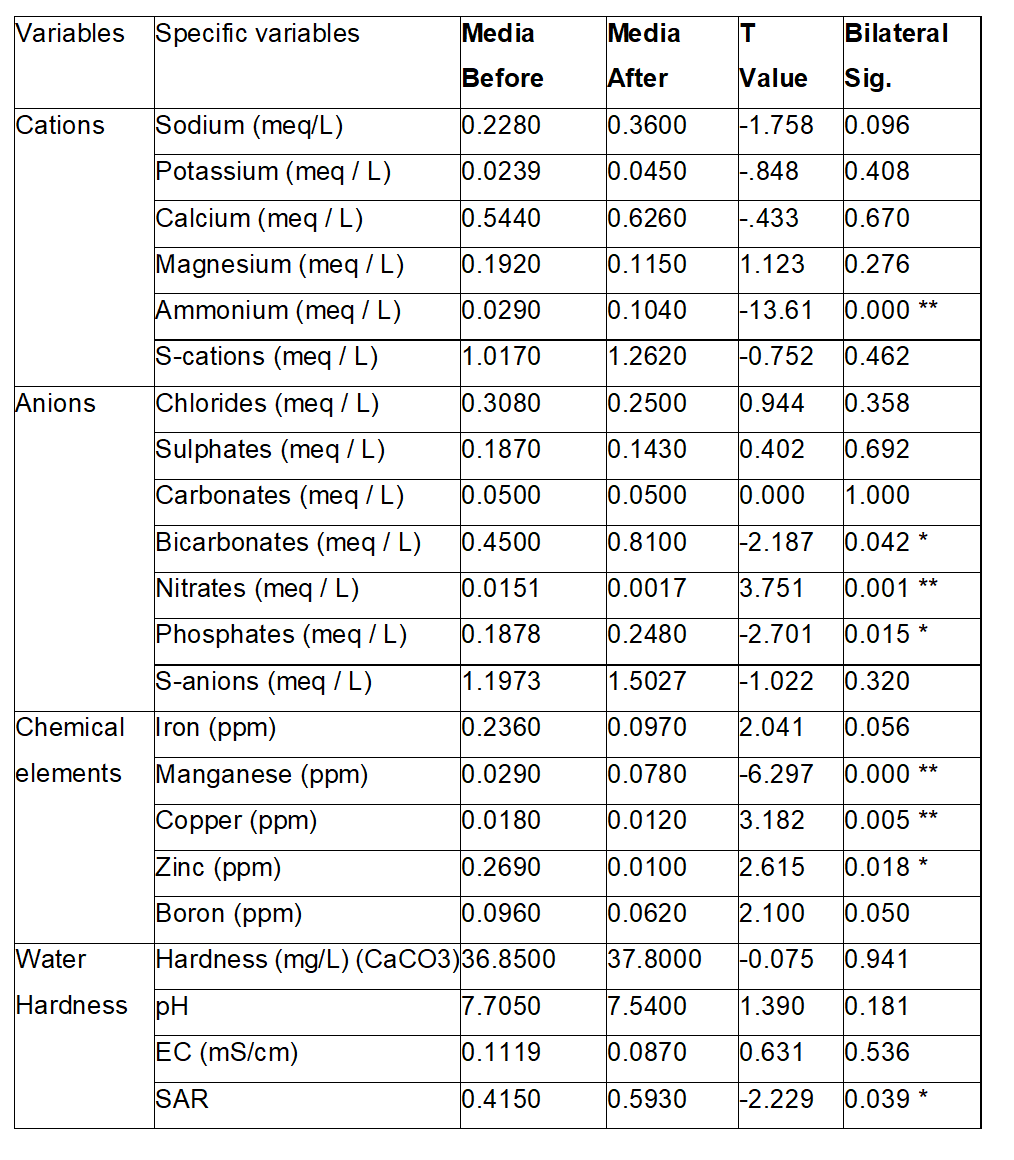
S-cations: Sum of cations, S-anions: sum of anions, pH: degree of acidity, SAR: Sodium Adsorption Ratio (SAR), EC: Electrical Conductivity, EC.
* Indicates that the mean significantly increased or decreased p<0.05
** Indicates that the mean increased or decreased to the highly significant level p<0.01.
Source: Authors
It is important to note that in all agroforestry models implemented, ammonium concentrations increased and nitrate concentrations decreased, as well as manganese concentrations increased and copper concentrations decreased.
Before planting, cations were generally found in low concentrations in the project farms, although sometimes with a high coefficient of variation, which reflects an unfavorable spatial distribution that was not favorable for farms belonging to the same agroecological model.
In particular, the low sodium concentration, which plants require in small quantities, did not represent a problem and contributed to irrigation with low salinity (Tartabul and Betancourt, 2016). However, the low concentration of macro elements such as magnesium, potassium and calcium, was not not very favorable since some authors claim that adequate levels in the water favor plant development. Therefore, in crops irrigated with these waters, the presence of deficiency of these nutrients should be taken into account (Kafkafi et al., 2012). Calcium was present in high concentrations and should be kept under observation, as high contents in the water tend to generate scaling in a sprinkler irrigation system (Ayer and Westcot, 1985
The ammonium cation was found in very low concentrations, not toxic to crops, but with very insufficient contribution to nutrition. All this had to be assessed comprehensibly with other diagnostic tools, to develop a fertilization plan that would achieve an adequate nutritional balance in the crops on these farms. However, the fertilization plans were not based on variable doses, but rather on inputs allocated by the project to farmers, as established in the methodology.
Most anions were found at low concentrations with the exception of bicarbonate which ranged from 0.01 to 2.85 meq/L. This anion exceeded 0.9 meq/100L which, according to some authors, represents a moderate risk for sprinkler irrigation systems (Ayers and Westcot, 1985; Can et al., 2011).
In general, chemical elements were found in low concentrations with the exception of iron which ranged between 0.01 and 7.86 ppm. This indicates that iron could have a different impact on irrigation systems in some farms, since concentration between 0.1 and 1.5 ppm is considered moderate risk and above 1.5 ppm is considered severe risk (Ayer and Westcot, 1985). In this regard, the maximum permissible limit for iron concentration in irrigation water is 5 ppm (Valles-Aragon et al., 2017). It is suggested that the presence of this element can induce iron deposits that can accumulate in the irrigation system, restricting water flow and reducing pressure, which requires greater expenditure of fuel for pumping through clogged pipes and in the water distribution system, which leads to slower distribution in the irrigated area (Grijalva-Endara et al., 2020).
Some authors state that a possible alternative to reduce iron in water is aeration, as it provides dissolved oxygen to the iron concentration in water which is necessary to convert iron to the ferrous form, which is insoluble and can be removed. Other forms of aeration include waterfalls, fountain systems, aeration cones and aeration trays (Casierra-Posada et al., 2014), but these alternatives were not applied on the farms under study.
Water hardness ranged from 53.65 to 167.00 (mg/L) (CaCO3), which represents risk to some farms that reached values between 75 and 150 (mg/L), classified as moderately hard and very hard with more than 150 mg/L (Canovas, 1986). Although water hardness is not a parameter considered for the restriction of water for irrigation, it is an aspect that should be taken into acount on these farms as it can blockade and limit the lifetime of irrigation systems, particularly drip irrigation systems as pointed out by Tartabul and Betancourt (2016).
The pH in the water supply sources ranged between 7 and 8.18 with an average of 7.7 indicating undesirable situations in some farms, since the Agricultural Information Service of Murcia (SIAM, 2019) considers pH higher than 7.7 unsuitable for irrigation water. In general, a tendency toward the presence of alkaline water was observed, something that was not noted by Guerrero-Guio et al. (2021) on farms in Boyacá, but that was observed by López et al. (2016) in a characterization of urban-industrial wastewater from the hydrographic network of the valley of Mexico with a view to its use for agricultural irrigation.
SAR values between 0.09 and 1.15 reflected a range within the desired situation and reaffirmed the results of low risk of sodicity due to the low sodium concentration and low EC observed and discussed above.
Regarding bicarbonate, an anion that increased significantly to 0.81 meq/L, it put the irrigation systems at risk as it exceeds the level of 0.09 meq/L, which some authors suggest is a slight risk in a sprinkler irrigation system and can also remove calcium from the clay. As a consequence, soil irrigated with water with a high bicarbonate content tends to exchange it for sodium, affecting plant species susceptible to its tolerance, which affects nutrients absorption and metabolism and can be a risk for salinity (Can et al. , 2011).
The significant increase in phosphates in the Cedar - Avocado - Bean model serves as a warning of eutrophication, as it favors the proliferation of microscopic plants that can clog pumps and irrigation systems (Tartabul and Betancourt, 2016).
The influence of the polycultures in models 1 and 3 on the reduction of copper and zinc, which can cause toxicity problems to crops, is considered a favorable effect, even though neither before nor after were they at risk levels (Ayers and Westcot, 1985).
The decrease in nitrate concentrations can be interpreted as the crops being able to extract all the nitrogen supplied during fertilization, considering the presence of a crop such as corn, which is highly wasted in models 1 and 2, and avocado that requires a lot of water and nutrients in models 2 and 3 (Naranjo and Reyes, 2021).
The increase in ammonium in the three models is concerning. Tartabull and Betancourt (2016) warn about the risk of high ammonium anion concentration in irrigation water as it can favor algae growth which is detrimental to irrigation systems. It has been noted that ammonium nitrogen in surface water originated from the natural degradation of organic matter, is a transient component in water because, as part of the nitrogen cycle, it is influenced by the biological activity of bacteria which gradually oxidize it to nitrites and finally to nitrates (Carrera et al., 2005). The increase in ammonium could be explained by the application of high doses of organic matter in the form of humus to all three crops in the polyculture plots. Therefore, its concentration should be monitored in future water analyses to determine if this is a transient phenomenon. However, sugarcane bagasse biochar is a green and low-cost adsorbent in the field of environmental remediation, and has shown great potential (90%) in removing ammonium and phosphate ions in water (Chuquimboques Marrero et al., 2019).
The highly significant increase of manganese level in the three agroecological models should be studied in depth, even though it eventually showed maximum concentrations between 0.059 and 0.078 ppm, well below the maximum permissible concentration for irrigation water (0.2 ppm) (Matamoros, 2003; Conagua, 2013), while for human consumption only up to 0.15 ppm is permitted (CCNNRFS, 2000). Should the upward trend in manganese levels in water continue, the use of the macrophyte aquatic species Eichhornia crassipes Solms-Laubach could be considered, which has been shown to accumulate this metal and allow its remission in surface water sources, Meza (Barragán, 2022).
Monitoring water quality on these farms must continue because, although many variables did not prevent the use of water for irrigation in these agroecological models, variations sometimes favorable and sometimes unfavorable were observed after the implementation of polycultures. Therefore, proper irrigation management is necessary, as noted by Betancourt et al. (2016). In this sense, the integrated management of the agroecosystem and in particular of the water resource becomes even more crucial due to the implications for crop quality when not managed correctly, as well as for soil quality (sodicity) and the possible effects on the durability and efficiency of irrigation systems.
The importance of conducting studies on water quality for irrigation is evident, even during the implementation of agroecological models such as those in this research, due to the multiple factors that can influence the physicochemical variables of water in the different supply sources, which may or may not be anthropogenic, and which may or may not be managed within the agroecosystem as Castillo et al. (2024) have also warned.
The present results are similar to those obtained in other research studies where it has been observed that water from farm supply sources meets the requirements for agricultural use, but there are high variations in the variables of irrigation water such as cations, anions concentrations, chemical elements or hardness (Guerrero-Guio et al., 2020), or statistical difference were evidenced between analyzes before and after implementing agroecological models, especially where high amounts of soil organic matter have been used (Villamizar et al., 2023). This is a starting point on the influence of the implementation of agroecological models in the form of agroforestry systems on irrigation water quality, so projects of this type will increase various locations, not only in the Department of Norte de Santander, Colombia.
The results indicate that variations in the physicochemical properties of water are not always associated with farm management, regardless of the type of agriculture implemented. Therefore, it is necessary to maintain systematic monitoring of these variables of water irrigation in the sources of the farms.
Furthermore, for future agroecological initiatives of this type, more specific complementary information should be provided, farm by farm, on the water returns from polyculture fields to the supply sources and, if possible, have maps of the drainage systems and the dynamics of water movement on the farm, so that it can be defined when changes in water quality are due to the intervention of agroecological practices or when they are not.
In general, the results highlight the importance of developing agroecological or agroforestry models for the management of water resources. Understanding the dynamics before and after their implementation is key to monitor these models within agricultural extension processes, and can contribute to innovation and strengthening of agri-food systems, as also suggested by Zárate.et al. (2025).
Conclusions
The results of the initial sampling classified the water from the three agroforestry models planned in the municipality of Arboledas as suitable for irrigation. However, considerable variability was detected in most physicochemical parameters of the supply sources, presenting undesirable conditions related to the concentration of iron and bicarbonate, water hardness pH and especially iron levels which may pose risks of damage to the irrigation systems.
Ammonium concentrations increased while nitrate concentrations decreased, and manganese concentrations also increased in all agroforestry models implemented. Although the variations observed after the first transition crop cycle did not alter the overall classification of irrigation water quality, they highlight the need for continued monitoring due to the favorable reduction of iron and pH in the Cedar–Lemon–Corn model, and the concerning increases in ammonium, bicarbonate, phosphates, manganese and SAR in the Cedar-Avocado-Bean model. The latter model exhibited greater variability in water chemical composition compared to the other models, an aspect that requires further attention.
The data collected were sufficient to discuss the possible influence of anthropogenic actions associated with the project on irrigation water during the implementation of agroforestry models, but did not provide detailed information on the characteristics of the complex hydrogeological environments of the area and the water movements within the farms that could explain the influence of natural processes on the variations in the physical and chemical properties of water in these agroecosystems.
Acknowledgements
The authors would like to thank he Government of the Department of Norte de Santander, which financed the project, and gave them the opportunity to work on it, allowing the possibility to have the necessary resources to conduct the research and obtain the data that served as the basis for this article.
References
Alcaldía Municipio de Arboledas Norte de Santander. (2012). Plan de Desarrollo Arboledas “Mi compromiso con Arboledas: Lo haremos mejor” 2012 – 2015 https://repositoriocdim.esap.edu.co/handle/123456789/18062
Altieri, M. A., & Toledo, V. M. (2010). La revolución agroecológica de América Latina Rescatar la naturaleza, asegurar la soberanía alimentaria y empoderar al campesino. El Otro xfDerecho, 42, 163 202. http://biblioteca.clacso.edu.ar/Colombia/ilsa/20130711054327/5.pdf
APHA-AWWA-WEF. (2012). “Standard Methods for the Examination of Water and Wastewater”. 22th Edition USA, 3-67 y 3-68, method 3500-Cr B.
Ayers, R. S., & Westcot, D. W. (1985). Water quality for agriculture (Vol. 29, p. 174). Rome: Food and Agriculture Organization of the United Nations.
Barchuk, A. H., Guzmán, M. L., Locati, L., & Suez, L. S. (2020). Manual de buenas prácticas para diseños agroecológicos. Editorial Brujas, 2020. Córdoba. Argentina
Betancourt, C., Tartabull, T., & Labaut Y. (2017). El manejo integrado del agua en la agricultura: necesidad de implementación y aspectos vinculados. Revista científica Agroecosistemas, 5(2), 40-54. https://aes.ucf.edu.cu/index.php/aes/article/view/75/108
Carrera, S., Estrany, F., Rueda, M., Peña, A., & Oliver, R. (2005). Eliminación de Nitrógeno Amoniacal en Aguas Residuales Sanitarias. Revista Ingeniería Química, 420. 161-168. https://www.tecnicaindustrial.es/eliminacion-del-nitrogeno-amoniacal-en-aguas/
Canovas, J. (1986). Calidad Agronómica de las aguas de riego, Servicio de Extensión Agraria, Ministerio de Agricultura, Pesca y Alimentación, Madrid. https://www.worldcat.org/title/calidad-agronomica-de-las-aguas-de-riego/oclc/801948851?referer=di&ht=edition
Castillo, C. F. A., Rojas, P. B., & Meneses, C. V. (2024). Diagnóstico de las prácticas agrícolas en las fincas cultivadas aguas abajo del embalse del Río Pirrís. Repertorio Científico, 27(1), 37-48. https://revistas.uned.ac.cr/index.php/repertorio/article/view/5209/7900
Catacora, C. C. A., & Valencia, E. L. (2021). Implementación de un sistema de internet de las cosas para optimizar la gestión del agua en la agricultura de la Región Tacna. Ingenieria Investiga, 3(1), 519-533. https://doi.org/10.47796/ing.v3i1.478
Casierra-Posada, F., Blanke, M. M., & Guerrero-Guío, J. C. (2014). Iron tolerance in calla lilies (Zantedeschia aethiopica). Gesunde Pflanzen, 66, 63-68. https://doi.org/10.1007/s10343-014-0316-y
Castellanos, J., Uvalle, B., Aguilar A. (2000). Manual de interpretación de análisis de suelos, aguas agrícolas, plantas y ECP. 2da edición. INTAGRI, México. 2000
CCNNRFS (Comité Consultivo Nacional de Normalización de Regulación y Fomento Sanitario). (2000). Modificación a la Norma Oficial Mexicana NOM-127-SSA1-1994, Salud ambiental. Agua para uso y consumo humano. Límites permisibles de calidad y tratamientos a que debe someterse el agua para su potabilización. México D.F. (México). https://catalogonacional.gob.mx/FichaRegulacion?regulacionId=14351
Chuquimboques Marrero, J., Vergara Rojasa, J., Mendoza Bobadilla, J. (2019). Optimización de la remoción simultánea de nitrato, nitrito, amonio y fosfato de aguas residuales municipales. Revista de la Sociedad Química del Perú, 85(1), 85-96.
Conagua. Ley Federal de Derechos. Disposiciones aplicables en materia de aguas nacionales. (2013). Comisión Nacional del Agua. Ley. Tlalpan, Ciudad de México, México. https://www.gob.mx/conagua/documentos/informacion-de-orientacion-para-el-contribuyente-74169
Food and Agriculture Organization (FAO). (2016). Evaluación de los Recursos Hídricos Renovables. FAO: Global Water Information System. http://www.fao.org/nr/water/aquastat/main/index.stm
Gobernación Norte de Santander (2018). Proyecto Plantar. Desarrollo estratégico agroecológico con uso de TICs para el fortalecimiento de cultivos promisorios en el Departamento de Norte de Santander. http://plantar.gov.co/
Gómez, C., José, J., Muñoz, B., Rodríguez, H., & Lourdes, M. De. (2015). Calidad del agua para riego en la agricultura protegida en Tlaxcala. Ingeniería, 19(1), 39–50. https://www.revista.ingenieria.uady.mx/ojs/index.php/ingenieria/article/view/13/30
Grijalva Endara, A. de las M., Jiménez Heinert, M. E., & Ponce Solórzano, H. X. (2020). Desmineralización del agua como respuesta ante el cambio climático. RECIMUNDO, 4(4), 22-36. https://doi.org/10.26820/recimundo/4.
Guerra-Tamara, BP (2022). Evaluación de la calidad de agua para riego en unidades productivas agrícolas en el Departamento de Sucre, Colombia. (Doctoral dissertation, Corporación Universidad de la Costa).
Guerrero-Guio, J., Castellanos-González, L., y Rodríguez- Cely, N. (2021). Calidad de agua para riego de 60 fincas agroecológicas de 4 municipios del departamento de Boyacá. Inge Cuc, 17(1), 1–16. DOI: https://doi.org/10.17981/10.17981/ingecuc.17.1.2021.08
IBM (2017) SPSS Statistics for Windows, version 25. Armonk, NY: IBM SPSS Corp.
Kadasiddappa, M.M., Rao, V.P., Reddy, K.Y., Ramulu, V. Devi M.U., & Reddy S. N. (2017). Effect of irrigation (drip/surface) on sunflower growth, seed and oil yield,nutrient uptake and water use efficiency - A review. Agricultural Reviews, 38(2): 152-158, https://www.sciencedirect.com/science/article/abs/pii/S0378377418306140
Kafkafi U., & Tarchitzky J.. (2012). Fertirrigación una herramienta para una eficiente fertilización y manejo del agua. Ed Asociación Internacional de la Industria de Fertilizantes (IFA) e Instituto Internacional de la Potasa, p 151. https://www.ipipotash.org/udocs/391-2012_ifa_ipi_fertirrigacion.pdf
López-García, A.D., Ortega-Escobar, H.M., Ramírez-Ayala, C., Sánchez-Bernal, E.I., Can-Chulim, Á., Gómez-Meléndez, D.J., & Vázquez-Alvarado, R.E. (2016). Caracterización fisicoquímica del agua residual urbano-industrial y su importancia en la agricultura. Tecnología y ciencias del agua, 7(6), 139-157. http://www.revistatyca.org.mx/index.php/tyca/article/view/1287
Mancilla-Villa, O. R., Anzaldo-Cortes, B. N., Guevara Gutiérrez, R- D., Hernández-Vargas, O., Palomera-García, C., Figueroa-González, Y., Ortega-Escobar, H. M., Flores-Magdaleno, H., Can-Chulim, Á., Cruz-Crespo, E., Sánchez-Bernal, E. I., Olguín-López, J. L., & Mendoza-Saldivar, I. (2021). Calidad del agua subterránea para uso agrícola en Zacoalco de Torres y Autlán de Navarro, México. Terra Latinoamericana, 39, e745.: https://doi.org/10.28940/terra.v39i0.745
Matamoros A. (2003). Suelos contaminados por metales traza. En: Soc. Col. de la Ciencia del Suelo. Manejo integral de la fertilidad del suelo. Edit. Guadalupe Ltda. Bogotá. p.111-119.
Maua, Y., & Porporato, A. (2015). A dynamical system approach to soil salinity and sodicity. Advances in Water Resources, 83: 68–76, https://doi.org/10.1016/j.advwatres.2015.05.010
Medina, E.K., Mancilla, O.R., Larios, M.M., Guevara, R.D., Olguín, J.L. & Barreto, O.A. (2016). Calidad del agua para riego y suelos agrícolas en Tuxcacuesco, Jalisco. IDESIA 34(6):51-59. http://dx.doi.org/10.4067/S0718-34292016005000035
Meza Barragán, O. L. (2022). Evaluación de la remoción del Manganeso de aguas superficiales para abastecimiento en zonas rurales utilizando la planta macrófita Eichhornia crassipes (Mart.) Solms-Laubach, conocida como Jacinto de Agua. Universidad del Norte. Barranquilla Colombia. http://hdl.handle.net/10584/10954
Perfecto, I., Vandermeer, J., & Wright, A. (2019). Nature's matrix: linking agriculture, biodiversity conservation and food sovereignty. Routledge.
Servicio de Información Agrario de Murcia (SIAM). (2019). Interpretación y Clasificación de Análisis de Agua. http://siam.imida.es/apex/f?p=101:35:1931879389481452
Tartabull, T., & Betancourt, C. (2016). La calidad del agua para el riego. Principales indicadores de medida y procesos que la impactan. Revista Científica Agroecosistemas [seriada en línea], 4(1). pp. 47-61. https://aes.ucf.edu.cu/index.php/aes/article/view/75/108.
Valles-Aragón, M.C., Ojeda-Barrios, D.L., Guerrero-Prieto, V.M., Prieto-Amparan, J. A., & Sánchez-Chávez, E. (2017). Calidad del agua para riego en una zona nogalera del estado de chihuahua. Revista Internacional de Contaminacion Ambiental, 33(1), 85–97. https://doi.org/10.20937/RICA.2017.33.01.08
Villamizar, C. J. Castellanos L. Valencia" y J.. D. Influencia de tres modelos agroforestales sobre la calidad del agua en el municipio Mutiscua, Colombia ", Prospectiva, Vol. 21 N° 2 2023. 120 – 133 http://doi.org/ 10.15665/rp.v21i2.3173
Wanger, T. C., DeClerck, F., Garibaldi, L. A., Ghazoul, J., Kleijn, D., Klein, A. M., & Weisser, W. (2020). Integrating agroecological production in a robust post-2020 Global Biodiversity Framework. Nature Ecology & Evolution, 4(9), 1150-1152.
Zaman, M., Shahid, S. A., & Heng, L. (2018). Guideline for Salinity Assessment, Mitigation and Adaptation Using Nuclear and Related Techniques. In Guideline for Salinity Assessment,Mitigation and Adaptation Using Nuclear and Related Techniques. https://link.springer.com/book/10.1007/978-3-319-96190-3
Zárate Lozada, JP, Valencia Vélez, V., & Villamizar Castro, HA (2025). Caracterización de prácticas agroecológicas en fincas del departamento del Meta, Colombia. Revista Kawsaypacha: Sociedad y Medio Ambiente , (15). (15), D-006. https://doi.org/10.18800/kawsaypacha.202501.d006.
1 *Corresponding Author. PhD. Universidad de Pamplona. Via Bucaramanga Km 1. Pamplona. Colombia. lclcastell@gmail.com. http://orcid.org/0000-0001-9285-4879
2 MSc. Universidad de Pamplona. Via Bucaramanga Km 1. Pamplona. Colombia. aecapacho@unipamplona.edu.co. https://orcid.org/0000-0002-0044-5566
3 PhD. Universidad de Pamplona. Via Bucaramanga Km 1. Pamplona. Colombia. jarol.ramon@unipamplona.edu.co. https://orcid.org/0000-0002-4929-8544
To cite this article: Castellanos González, L., Capacho Mogollón,
A. E., & Valencia, J. R. (2026). Variations in water quality with the
intervention of an agroecological project in Arboledas, Colombia. Revista Luna Azul, (62), 130-150, DOI: https://doi.org/10.17151/luaz.2026.62.8
This work is licensed under a Creative Commons Attribution CC BY License.

Código
QR del artículo