Epidemiological aspects of the ringspot
(Mycosphaerella brassicicola (Duby) Lindau) in the three species of cruciferous
crops in Pamplona, Norte de Santander.
Leónides
Castellanos González1
Beatriz
Adriana Rodríguez Vanegas2
Francisco
Javier Ruiz Lizarazo3
Recibido:
16/10/2024 Aceptado: 09/08/2025 Actualizado: 29/12/2025
DOI: 10.17151/luaz.2025.61.15
Abstract
Several vegetables of the cruciferous family, such as cabbage, broccoli, and cauliflower, are of great importance in Colombia, but their yields are limited by various Phyto pathological problems, including ringspot disease, although research results on this topic are scarce. The objective of this study was to evaluate epidemiological aspects of ringspot disease in three crops: broccoli, cauliflower, and cabbage, in a vegetable garden in Pamplona, Norte de Santander. Incidence and severity were assessed, as well as the Area Under the Disease Progress Curve (AUCPE). The research was carried out in the vegetable garden of the Escuela Normal Superior de Pamplona (Teaching School of Pamplona) between February and June 2022. Weekly sampling was conducted in plots of cabbage, cauliflower, and broccoli with similar planting dates to determine the incidence and severity of ringspot disease. Meteorological data were recorded. Pearson correlations and regressions were performed between these variables using linear, quadratic, and logistic models. The SPSS statistical package was used. The disease described different epidemiological curves in the three cruciferous species, appearing earlier in broccoli, but the Area Under the Disease Progress Curve (AUDPC) for both disease incidence and severity were higher for broccoli and cauliflower. Ringspot incidence and severity consistently correlated with crop age in all three species, but rarely with climatic variables, apparently due to the favorable and stable climatic conditions in Pamplona. The quadratic mathematical model was adjusted to the disease incidence as a function of age in all three crops, while the quadratic and logistic models showed a very good fit to the disease severity as a function of age in broccoli and cauliflower, and the quadratic model was better for cabbage.
Key words: epidemiology, fungal pathogen, mathematical modelling
Resumen
Varias hortalizas de la familia de las crucíferas como repollo, brócoli y coliflor son de gran importancia en Colombia, pero sus rendimientos se ven limitados por varios problemas fitopatológicos entre ellos la mancha anular, sin embargo, son escasos los resultados de investigación sobre esta. El objetivo fue evaluar aspectos epidemiológicos de la enfermedad de la mancha anular en los tres cultivos, brócoli, coliflor y repollo en un huerto, en Pamplona Norte de Santander. Se evaluó la incidencia y severidad, al igual que el Área Bajo la Curva de Progreso de la Enfermedad (ABCPE). La investigación se desarrolló en el Huerto de la Escuela Normal Superior de Pamplona entre febrero y junio de 2022. Se realizaron muestreos semanales en parcelas de repollo, coliflor y brócoli de fechas de siembras similares para determinar la incidencia y la severidad de la mancha anular. Se registraron datos meteorológicos. Entre estas variables se realizaron correlaciones y regresiones de Pearson con modelos lineales, cuadráticos y logísticos. Se utilizó el paquete estadístico SPSS. La enfermedad describió curvas epidemiológicas diferentes en las tres especies de crucíferas, apareció más tempranamente en brócoli, pero el AUDPC tanto para la incidencia como para la severidad de la enfermedad fueron mayores para el brócoli y la coliflor. La incidencia y severidad de la mancha anular siempre mostraron correlación con la edad del cultivo en las tres especies, pero rara vez con las variables climáticas, aparentemente debido a las condiciones climáticas favorables y estables en Pamplona. El modelo matemático cuadrático se ajustó a la incidencia de la enfermedad en función de la edad en los tres cultivos, mientras que los modelos cuadrático y logístico tuvieron muy buen ajuste a la severidad de la enfermedad en función de la edad en brócoli y coliflor y el cuadrático fue mejor para el caso del repollo.
Palabras clave: epidemiología, hongos patógenos, modelación matemática
Introduction
Cruciferous crops such as cauliflower, broccoli, and cabbage are among the most economically significant horticultural species in Colombia, due to their considerable volume of production and their role in food security and rural economies. According to the National Agricultural Survey (ENA, 2019), the total cultivated area for vegetables and legumes reached 288,212 hectares. Of this, flowering vegetables (broccoli and cauliflower) occupied 4,152 hectares, while leafy vegetables such as cabbage, lettuce, and parsley occupied 23,788 hectares. Leafy vegetables alone contributed 415,168 tons to national production, ranking second only to tomatoes in total production.
Despite their relevance, cruciferous crops are vulnerable to numerous phytopathological challenges that compromise yield and quality. Many of these problems are exacerbated by a lack of technical knowledge about pathogen biology, epidemiological dynamics, and environmental conditions that favor disease outbreaks. This lack of knowledge leads to inadequate crop protection strategies (Pineda et al., 2020).
In the Norte de Santander Department, the cultivated area for cabbage, cauliflower, and broccoli in 2018 was 73 hectares, 85 hectares, and 82 hectares, respectively, with more than 120 farms dedicated to their production (Jaimes & Sánchez, 2020). In the municipality of Pamplona, 43% of farmers grow fruits and vegetables, and 38% are specifically dedicated to vegetable cultivation. However, neither Pamplona nor Norte de Santander are among the main regions for organic horticultural production (Villalva, 2018).
Among the most damaging diseases affecting cruciferous crops is ringspot, caused by the fungal pathogen Mycosphaerella brassicicola (Duby) Lindau. This disease is characterized by concentric necrotic lesions on foliage, primarily developing on older leaves. The pathogen proliferates in humid conditions and can persist in the field through infected crop residues (Blanco Metzler & Granados Montero, 2021). The lack of proper crop rotation further promotes the survival of the pathogen and increases the incidence of the disease (Castellanos et al., 2021).
Considering the scarcity of regional studies focusing on the epidemiology of ringspot in cruciferous crops, especially in the municipality of Pamplona and the broader Norte de Santander region, this study aimed to evaluate the epidemiological patterns of ringspot disease caused by M. brassicicola in field-grown cauliflower, broccoli, and cabbage
Materials and methods
Non-experimental quantitative research was carried out during the development of the crop cycle, at the school garden of the Escuela Normal Superior in Pamplona Norte de Santander, during the first semester of 2022. First, M. brassicicola was identified as the causal agent of the main disease affecting the broccoli (Monclano hybrid), cauliflower (Clapton hybrid) and cabbage (Ruby King F1 hybrid) crops . Plots of theses crops, planted at similar times were sampled and then an epidemiological study of the disease was carried out. Within each crop, monitoring was carried out from February 2022 to June 2022, with sampling every seven days,, Disease variables, incidence, severity were quantified and subsequently the Area Under the Disease Progress Curve (AUDPC) was estimated, for the incidence and severity in each crop.
Assessment of incidence, severity and Area
Under Disease Progress Curve (AUDP)
The research was carried out in plots of approximately 100 m2 of the three cruciferous crops, with the same planting date. Samples were taken every seven days after transplanting each crop. Crop age and the phenological stages were recorded, as well as the management practices of the farmers. Meteorological data were obtained from an automatic weather station located 50 m from the vegetable garden.
Evaluations and comparisons of the epidemiological curves of the same disease were carried out between the three species and the age of the crops, according to the incidence, severity and AUCPE.
Disease
incidence
The incidence of the disease was recorded in 50 random plants per plot using the following formula (Agrios, 2005). The data began to be taken 15 days after transplanting the seedling.
Disease severity
The same 50 random plants per plot were used to calculate the disease severity, using a general 6-grade scale for low-growing crops (0- healthy plant, 1- only some spots, up to 5 % of foliar affected area, 2- from 6 to 25 % of foliar affected area, 3- from 26 to 50 %, 4- from 51 to 75 % and 5- more than 75% of foliar affected area (Ciba Geigy, 1981). Townsend and Heuberger´s formula (Ciba-Geigy, 1981) was used.to estimate severity at the plot level.
Area Under the Disease Progress Curve
(AUCPE).
The method of Campbell and Madden (1990), was used to assess the Area Under the Disease Progress Curve (AUCPE) in each crop plot.
Statistical analysis
Correlation and regression analyses were performed to determine the influence of meteorological data on the incidence and severity of the disease in each cruciferous crop. Disease development was also evaluated and compared based on the AUCPE of the pathology in each cruciferous species and across different species. Pearson correlations and regressions were performed with linear, quadratic, and logistic models. The SPSS statistical package was used
Results and discussion
The first symptoms of ringspot in the broccoli plot appeared two weeks after sowing (14 days after planting). The meteorological conditions that preceding this event were: relative humidity between 82 and 85 %, very stable average temperatures between 14.0 and 14.2 ◦C and total weekly rainfall between 0.3 and 3.7 mm. The initial disease incidence was 20%, which increased rapidly, apparently due to the inoculum potential from neighboring fields and not due to primary inoculum within the same plot. Subsequently, the incidence remained between 80 and 90% between weeks 3 and 7 of crop age in the plot. From week 8 until the end of the crop cycle, the disease incidence remained at 100 %. It should be noted that the increase in incidence from 90% to 100% was preceded by increased rainfall the two preceding weeks ranging from 8.1 to 8.7 mm/week, an average relative humidity of up to 86% the previous week and average weekly temperatures between 14.6 and 15.9 ◦C. Disease severity reached 19.6% when the crop was three weeks old and remained at low levels until week 7 when it reached 23.2%, under the conditions prior to this point. After this point, the curve increased more sharply, particularly between week 9 (34.6%) and week 11 (81.2%) when average weekly relative humidity was between 71.1 and 78.7%, the average weekly temperatures between 15.8 and 16.4 OC and, very specifically, a precipitation of 19.1 mm in week 9. Finally, the severity tended to stabilize between 81.2% (week 11) and 83.6% (week 12). (Figure 1).
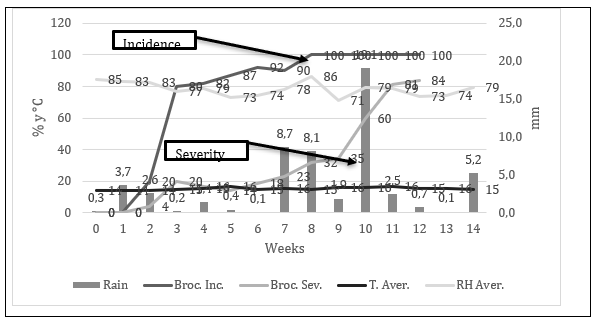
Figure. 1. Behavior of the incidence and severity of ringspot in broccoli in relation to climatic variables. Source: authors
The first symptoms of M. brassicicola in the cauliflower plot were observed at the same time as in broccoli, in the second week, under similar environmental conditions, but with an initial incidence of 12% which increased rapidly by week 7 with an incidence of 36%, but then declined sharply until week 9, when it reached 100% incidence. This increase was favored by relative humidity, which rose from 74.1% to 86.2% between weeks 6 and 8. Rainfall showed higher values in week 8 and 9 with 8.7 mm and 8.1 mm and with a slightly variable temperature between 14 °C and 16.4 °C. However, this was also possibly favored by the inoculum from neighboring plots. The cauliflower severity curve starts in week 2 at 2.4 but it reaches 7.2% in week 7, gradually increasing to 22.4%. in week 9. Thereafter, it shows a very steep slope until week 10 with a severity of 67.2, after which it continued to rise to 84.8, ending at 100%. It is worth noting that accumulated rainfall of 19.1 mm was recorded in week 10. (Figure 2).
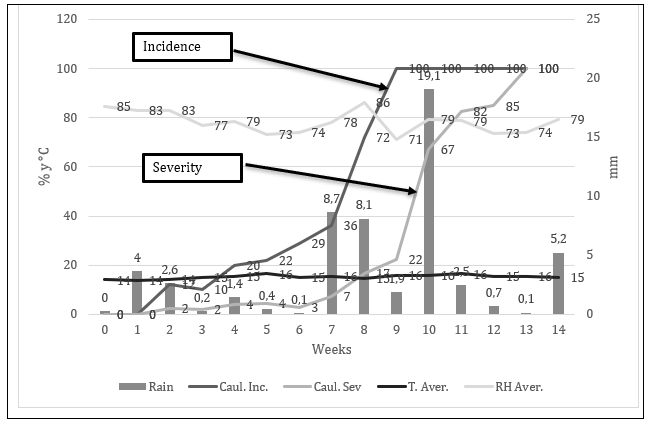
Figure. 2. Behavior of the incidence and severity of ringspot in cauliflower in relation to climatic variables. Source: authors
Symptoms in cabbage appeared in week 9, approximately 63 days after sowing. Both incidence and severity remained at 0% until week 9, hence, incidence increased to 100% by week 10, remaining constant until week 14, while severity by week 10 was 43.2% and continued to increase reaching 71.6% in week 14. Regarding climatic conditions, relative humidity in week 8 was 86.2% (the highest percentage), decreasing in week 9 to 71.1% (the lowest percentage) and remained between 79.2% and 79.5%. in subsequent weeks The average temperature remained approximately constant during the 14 weeks of observation, ranging between 14°C and 16.4°C. Rainfall it was 8.7 and 8.1 mm in weeks 7 and 8 respectively. This contributed to the development of the disease and the possible spread of fungus inoculum from neighboring plots, considering that the literature indicates that cabbage is highly susceptible to this disease compared to broccoli and cauliflower. However, in this case, the opposite occurred possibly due to some initial resistance of planted hybrid to this pathogen (Figure 3).
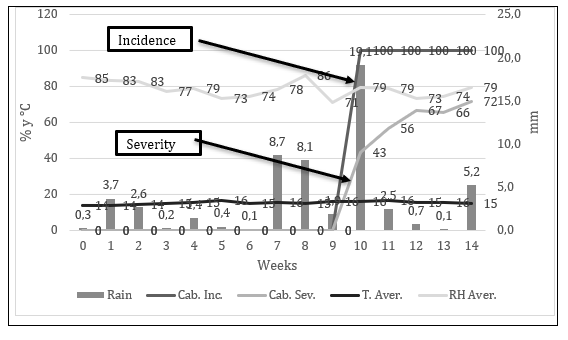
Figure 3. Behavior of the incidence and severity of ringspot in cabbage in
relation to climatic variables. Source: authors
When comparing the incidence of the disease in broccoli, cauliflower and cabbage, it was observed that the pathology appeared first in broccoli, followed by cauliflower and then cabbage. Due to this situation and the increasing development of this variable, the three curves were totally different. When comparing the AUDPC of M. brassicicola in the three crops (broccoli, cauliflower and cabbage) in relation to incidence, the highest area under the curve occurred in broccoli with 6188, followed by cauliflower with 4557, and finally cabbage with an AUDPC of 3150. This provides a measure of the persistence and importance of the disease in each crop and the level of susceptibility or aggressiveness of the pathogen under concurrent conditions during this research (Figure 4).
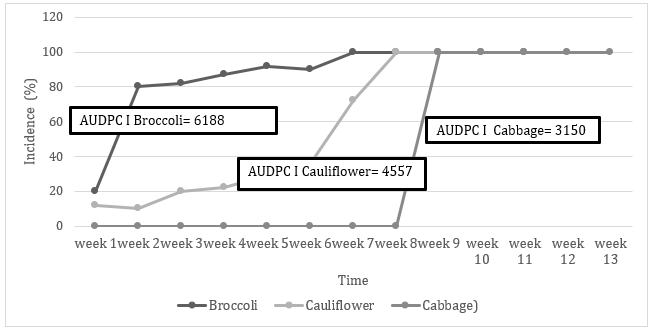
Figure. 4. Area Under the Disease Progress Curve (AUDPC) for the incidence in the tree crops. Source: authors
When analyzing the severity curves of the disease in the three crops, it was observed that up to week 9 the severity in broccoli was higher than in cauliflower, but from then on they followed similar curves, while the disease progression lagged behind in cabbage. This situation resulted in broccoli having the highest AUDPC (2424.8) and cauliflower having the second highest (2413.6) with a minimal relative difference. On the other hand, in cabbage, the disease increased from week 9, only reaching a relatively lower AUDPC (1874.6) (Figure 5), which suggested to perform an analysis of variance.
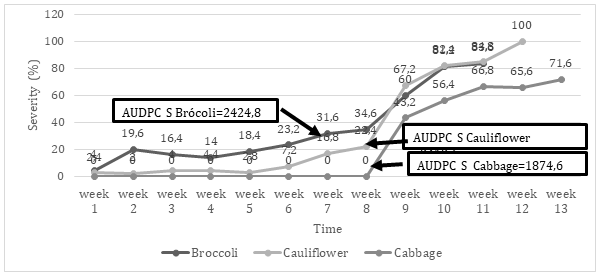
Figure 5. Area Under the Disease Progress Curve (AUDPC) for the severity in the tree crops. Source: authors
The analysis of variance showed a statistical difference in overall disease incidence levels across samplings periods during the growing for the three crops, but not in disease severity. A comparison of means (Table 1) revealed that the disease incidence in broccoli was higher during the growing cycle than in cabbage, while in cauliflower it was intermediate between broccoli and cabbage, and it did not differ significantly from those average incidence values.
Table 1. Result of the analysis of variance of the ringspot variables between the different cruciferous species
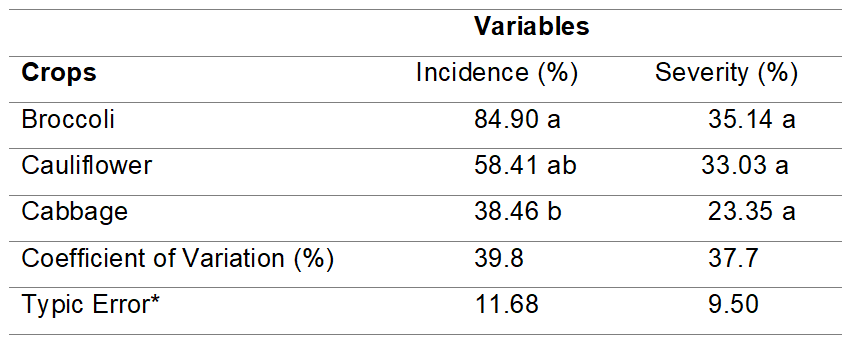
*.. Media with unequal letters in the columns differ for P≤0,05 by Tukey test
Source: authors
Although these results indicate a higher level of susceptibility of broccoli under these conditions or a higher virulence of M. brassicicola for this crop, they should be corroborated in the future. However, according to Syngenta (2022) the Clapton cauliflower hybrid exhibits high resistant to clubroot (P. brassicae), and the Monclano broccoli hybrid shows intermediate resistance to P. brassicae and downy mildew (Peronosphora brassicae), but, no resistance of these two hybrids to M. brassicicola is reported. In relation to Ruby King F1 hybrid cabbage, the marketing company does not offer information on resistance to any disease (Agroglobal, 2022).
Cabbage was the crop with lowest incidence of ringspot, 39.8% compared to the other two species mentioned above, that is, it was less susceptible despite having the other two adjacent crops. According to Jaramillo and Díaz (2006), the pathogen must have been spread by rain splash and wind, but in this case, it was the last crop to show symptoms of ringspot disease, possibly due to the site adaptability or hybrid characteristics. Therefore, more information is needed on the genetic characteristics of this hybrid and, in comparison with the genes of the parental line Brassica oleracea derived from the cauliflower-type Romanesco cabbage in which this patent was filed, refers to resistance to M. brassicicola (Barten, 2013).
Mathematical relationship of the incidence
and severity of the ringspot with age and meteorological variables in each of
the crops.
The correlation analysis between the ringspot variables with age and the meteorological variables in each crop showed positive and highly significant coefficients (p<0.01) between disease incidence and severity with age in the broccoli crop, and a positive and significant coefficient (p<0.05) between incidence and average temperature in the same crop. In cauliflower, a positive and highly significant coefficient was observed between disease incidence and severity and crop age . In cabbage, a positive and highly significant coefficient was also obtained between disease incidence and severity and crop age. (Table 2).
Table 2. Results of the correlation analysis between ringspot variables with age and meteorological variables in each crop
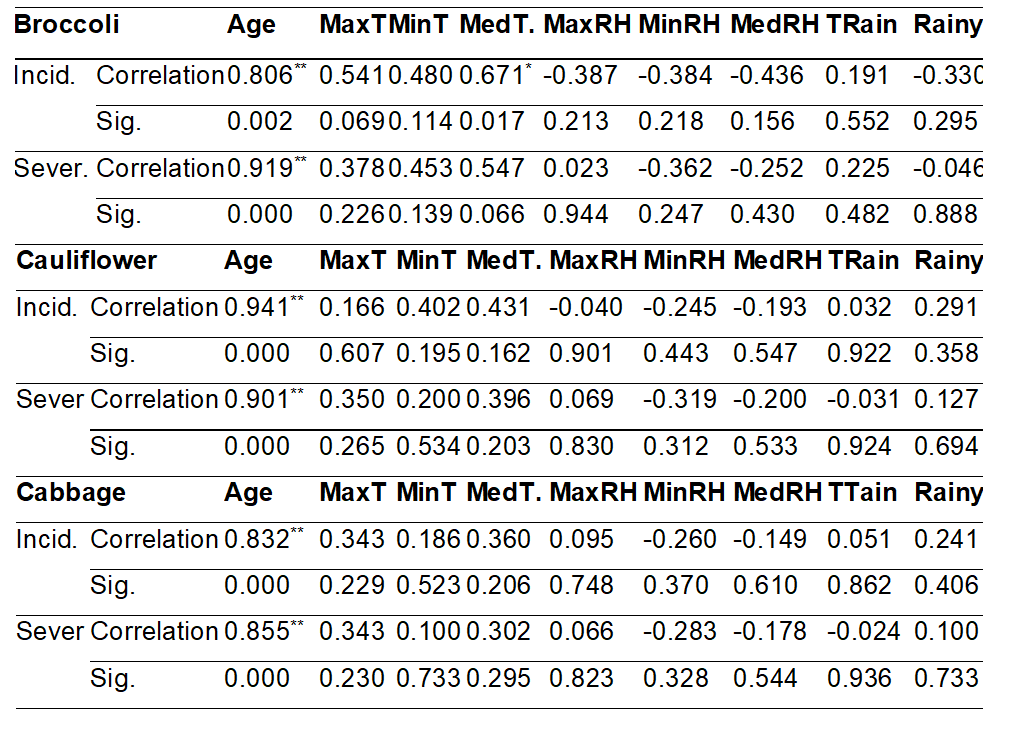
*. The correlation is significant for p<0,05.
**. The correlation is significant for p<0,01.
Source: authors
The static correlation analysis shows the strong dependence of disease variables with age in the three crops, which has been verified in many cases of short-cycle crop diseases such as early blight in potatoes (Castellanos et al., 2005 a, b).
The disease was correlated with temperature, at least in one crop, but not with relative humidity, which can be attributed to the small variation in temperature and, to some extent. to the high relative humidity present, always in the favorable range for the ringspot, since according to Blanco-Metzler and Granados Montero (2021), the development of the fungus is favored by a relative humidity close to 90%, and temperatures between 5 to 20 °C.
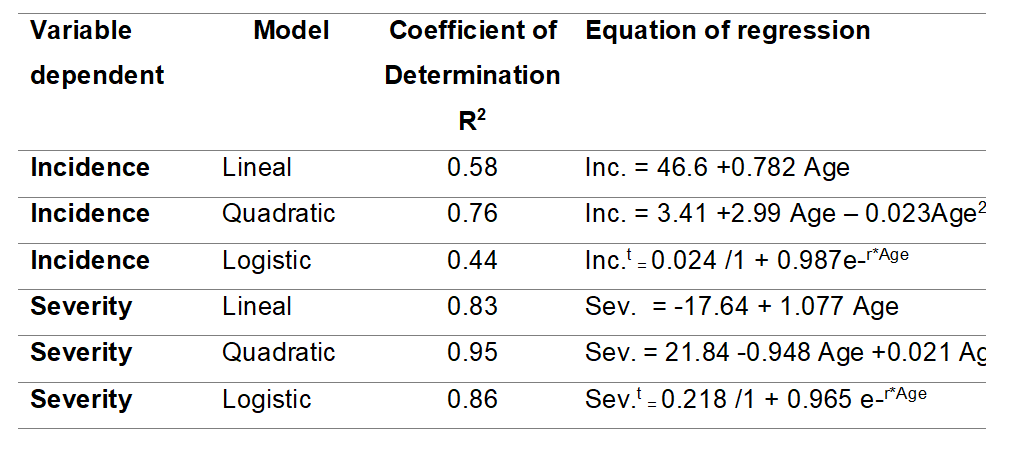
Based on the correlations results obtained, regression analyzes on the incidence and severity of the disease with respect to crop age were carried out. The regression analysis in broccoli showed coefficients of determination (R2) greater than 0.7 for disease incidence as the dependent variable depending on the age of the crop for a quadratic model, while for three mathematical models, (one linear, one quadratic and one logistic) for disease severity as a function of crop age the coefficients of determination were (R2> 0.83) (Table 3).
Table 3. Results of the regression analysis between the variables of the ringspot disease and the age of the broccoli crop.
Source: authors
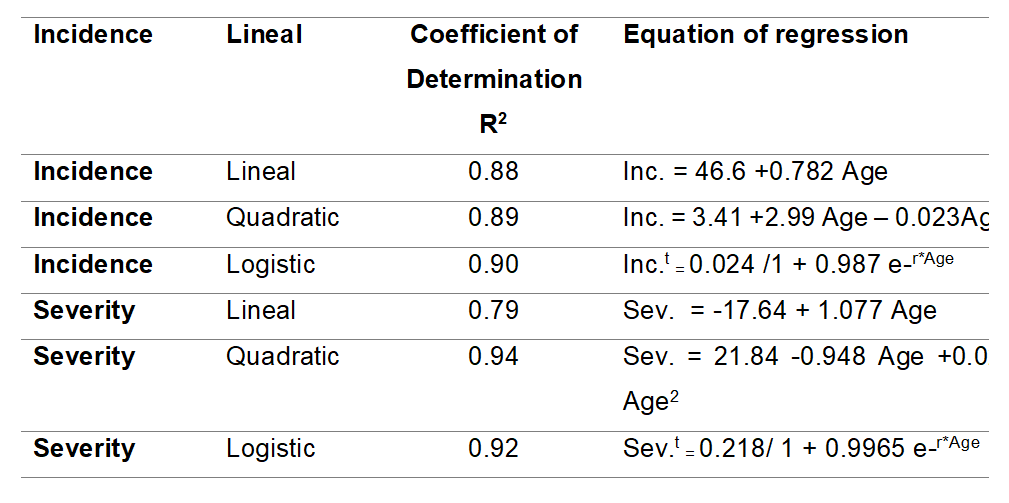
In cauliflower cultivation, the three models under study showed determination coefficients higher than 0.70, both for the incidence and severity depending on the age of the crop (Table 4).
Table 4. Results of the regression analysis between the variables of ringspot disease and the age of the cauliflower crop.
Source: authors
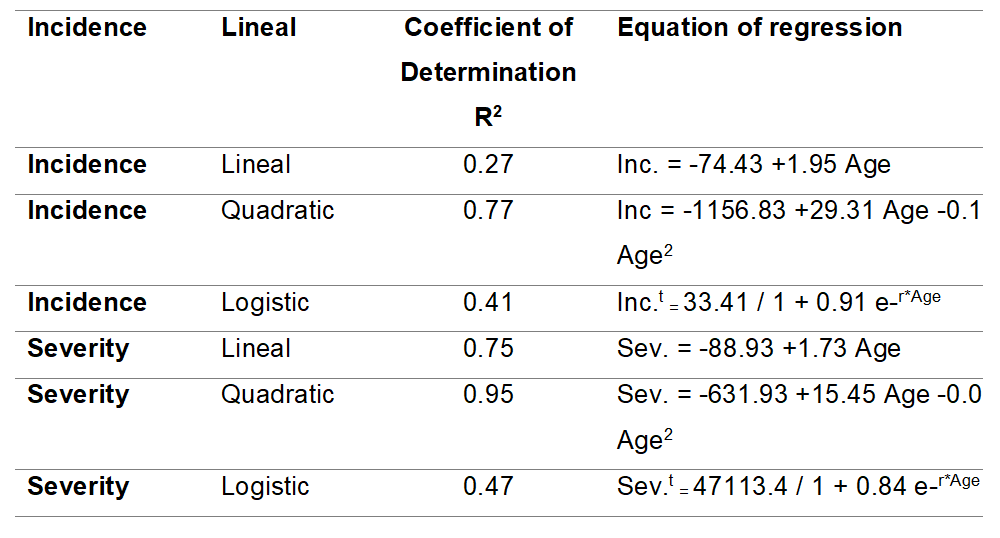
In cabbage cultivation, only the quadratic mathematical model showed a coefficient of determination higher than 0.70 between disease incidence and the age of the crop. However, a linear model and a quadratic model showed R2 higher than 0.70 for the disease severity according to crop age (Table 5).
Table 5. Results of the regression analysis between the variables of the ringspot disease and the age of the cabbage crop.
Source: authors
The results of the mathematical model obtained can be considered preliminary for ringspot in the three cruciferous crops, considering that the varieties and hybrids present could vary in future plantations. However, they are of great importance due to the scarcity of epidemiological studies on this disease. The existing studies are older, such as those by Götz et al. (1993) and Kennedy et al. (2000), and focused on the spread of the causal agent and the conditions that favored it rather than on the disease model.
The adjustment of disease severity to the logistic model in two crops (broccoli and cauliflower) is very important, as this is one of the most recommended models for studying population behavior (Ulloa et al., 2010), and it is widely used by plant epidemiologists for disease modeling (López, 2000; Castellanos, 2000).
On the other hand, the fact that partial correlations with the meteorological variables have not been obtained does not mean that further research into complex linear or exponential mathematical modeling, models based on crop age and meteorological variables such as those obtained by Castellanos et al. (2005) for the incidence of potato early blight, should not be pursued.
Further research is needed on the epidemiology of this important cruciferous crop disease in Colombia, especially in Andean regions such as Pamplona, where the climate is cold with little seasonal variation throughout the year. This is particularly important given that other research studies have failed to establish relationships between climatic conditions and disease occurrence due to insufficient inoculum sources in some conditions (Köhl et al., 2011). Therefore, further epidemiological studies should be conducted, particularly on inoculum sources and pathogen dissemination, as there is evidence that inoculum levels in cruciferous crop residues remained high up to two months after harvest, but were almost undetectable after the first year (Wakeham and Kennedy, 2010).
Future research on mathematical modeling of ringspot should consider more crop cycles and more years, process meteorological data in other ways, and include other recommended models such as the monomolecular model for incidence and the Gompertz and Weibull models for severity (López, 2000; Castellanos, 2000; Pedroza and Gaxiola, 2009), where other models with different levels of adjustment could be obtained.
Conclusions and recommendations
1. Broccoli exhibited the highest susceptibility to ringspot disease under the environmental conditions of Pamplona, as evidenced by the higher incidence and severity values, as well as the largest Area Under the Disease Progress Curve (AUDPC), suggesting a strong epidemiological relationship between crop age and disease progression.
2. Statistical analyses confirmed that age was the most influential factor in in the development of the disease in the three crops, while meteorological variables showed limited correlation, probably due to the consistently favorable and stable climatic conditions for Mycosphaerella brassicicola in the study area.
3. Quadratic and logistic mathematical models provided strong fits (R² > 0.9) to predict disease progression in broccoli and cauliflower, while only the quadratic model was suitable for cabbage, indicating variability in host-pathogen interaction dynamics and the potential of mathematical modeling as a tool for epidemiological forecasting.
4. The models obtained should be validated with farmers, and further research should be conducted to delve deeper into the epidemiology of the disease over more crop cycles and include other mathematical models.
Potential conflict of interest
The authors declare that there are no potential or actual conflicts of interest regarding the results of the research and their publication.
References
López, H. A. (2000). Descripción cuantitativa de las epidemias de las plantas. Revista Facultad Nacional de Agronomía Medellín, 53(1), 941-968.
Agrios, G. (2005). Plant Pathology. Florida University. Elsevier Academic Press.
Agroglobal S.A.S (2022). Ficha Técnica Repollo Ruby King F. https://www.agroglobal.com.co/images/Fichas_Tecnicas_2022/18_Ficha_Tecnica_Repollo_Ruby_King.pdf
Barten, P. (2013). Brassica oleracea plants with resistance to Mycosphaerella brassicicola (U.S. Patente N° 8.492.615.) Washington, DC: Oficina de Marcas y Patentes de los Estados Unidos. https://patentimages.storage.googleapis.com/34/44/2d/bc101f154fd59d/US8492615.pdf
Blanco Metzler, H., Granados Montero, M. D. M. (2021). Guía para el diagnóstico fitosanitario de hortalizas para pequeños agricultores, Costa Rica. https://www.kerwa.ucr.ac.cr/bitstream/handle/10669/85626/OP%20204-21_Guia%20diagnostico%20fitosanitario_impreso.pdf?sequence=1&isAllowed=y
Campbell, C. L., & Madden, L. V. (1990). Introduction to plant disease epidemiology. John Wiley & Sons.
Castellanos, L. (2000). Nocividad, epidemiología y manejo del tizón temprano (Alternaria solani Sor.) en el cultivo de la papa, Tesis en opción al grado científico de Doctor en Ciencias Agrícolas, Universidad Central de Las Villas, Cuba,
Castellanos, L., Castro, M. H., Martínez, G. & Villamizar, C. (2021). Evaluación de alternativas preventivas para el manejo de Plasmodiophora brassicae Woronin en cultivos de coliflor bajo las condiciones del municipio de Mutiscua Norte de Santander. Revista Ambiental Agua, Aire y Suelo 11(2), 11 -23.
Castellanos, L.. Rivero, T., Porras, Á., & Pajón, J. (2005a). Modelación matemática de Alternaria solani Sor. en papa en función de las variables meteorológicas y la edad del cultivo. Fitosanidad. 9 (1), 7-14.
Castellanos, L.; Rivero, T.; Porras, Á; Pajón, J. (2005b). Modelación matemática de Alternaria solani Sor. en papa en función del tiempo Fitosanidad 9, 1, 27-32
Ciba-Geigy. (1981). Manual para Ensayos de Campo en Protección Vegetal. Segunda edición. revisada y ampliada. División Agricultura, CIBA–GEIGY. Basilea, Suiza. 205 p.
DANE. (2019). Boletín Técnico Encuesta Nacional Agropecuaria (ENA). https://www.dane.gov.co/files/investigaciones/agropecuario/enda/ena/2019/boletin_ena_2019.pdf
Götz, M., Zornbach, W., & Boyle, C. (1993). Life cycle of Mycosphaerella brassicicola (Duby) Lindau and ascospore production in vitro. Journal of Phytopathology, 139(4), 298-308
Ivancovich, A. J., & Lavilla, M. (2016). Propuestas de escalas para la evaluación a campo y en laboratorio del tizón foliar y la mancha púrpura de la semilla, causadas por Cercospora kikuchii en soja. EEA Pergamino, INTA.
Jaimes M, E. A., & Sánchez, Y. R. (2020). Plan Departamental de Extensión Agropecuaria PDEA Norte de Santander. https://www.minagricultura.gov.co/ministerio/direcciones/PublishingImages/Paginas/PDEA/Norte%20de%20Santander.pdf
Jaramillo, J. E. &, Díaz, C. A. (2006). El cultivo de las crucíferas: Brócoli, coliflor, repollo, col china. Corporación colombiana de Investigación Agropecuaria, Centro de Investigación la Selva, Rionegro (Colombia).
Kennedy, R., Wakeham, A. J., Byrne, K. G., Meyer, U. M., & Dewey, F. M. (2000). A new method to monitor airborne inoculum of the fungal plant pathogens Mycosphaerella brassicicola and Botrytis cinerea. Applied and Environmental Microbiology, 66(7), 2996-3003.
Köhl, J., Vlaswinkel, M., Groenenboom‐de Haas, B. H., Kastelein, P., Van Hoof, R. A., Van der Wolf, J. M., & Krijger, M. (2011). Survival of pathogens of Brussels sprouts (Brassica oleracea Gemmifera Group) in crop residues. Plant pathology, 60(4), 661-670.
Pedroza, A., & Gaxiola, J. (2009). Análisis del área bajo la curva del progreso de las enfermedades (ABCPE) en patosistemas agrícolas [Libro electrónico]. En topicos selectos de estadística aplicados a la fitosanidad (1.a ed., pp. 180–189). IPN CIIDIR-OAXACA. https://doi.org/10.13140/2.1.4475.7767
Pineda J. M.; Calderón, A. & Castaño, J. (2020). Guía ilustrad de enfermedades y patógenos en cultivos hortícolas. Editorial Universidad de Caldas. Manizales- Colombia.
Ricardo, N. S., Aballe, Á. G. P., Gómez, S. R., & Noris, P. N. (2013). Comportamiento del tizón temprano del tomate (Alternaria solani) en las condiciones del municipio de Holguín, Cuba. Fitosanidad, 17(2), 75-81.
Syngenta, (2022) Brócoli hibrido Monclano y coliflor Hibrido Clapton. Colombia. https://www.syngenta.com.co/search/site?keyword=Clapton%2C+monclano&sort_by=search_api_relevance
Ulloa, J.T; Rodríguez, J. A. (2010). El modelo logístico: Una alternativa para el estudio del crecimiento poblacional de organismos. REDVET. Revista Electrónica de Veterinaria, 11(3), 1695-7504.
Villalva, F. R. (2018). Propuesta de política pública para incentivar la producción orgánica de frutas y verduras en el municipio de Pamplona.
Wakeham, A. J., and Kennedy, R. (2010). Risk assessment methods for the ringspot pathogen Mycosphaerella brassicicola in vegetable brassica crops. Plant Dis. 94:851-859.
1 Leónides Castellanos González, Universidad de Pamplona. Pamplona. Norte de Santander. Colombia. lclcastell@gmail.com, https://orcid.org/0000-0001-9285-4879,
2 Beatriz Adriana Rodríguez Vanegas. Universidad Pamplona. Pamplona. Norte de Santander. Colombia. beatriz.rodriguez2@unipamplona.edu.co, https://orcid.org/0009-0002-9229-8045
3 Francisco Javier Ruiz Lizarazo. Universidad de Pamplona. Pamplona. Norte de Santander. Colombia. francisco.ruiz@unipamplona.edu.co, https://orcid.org/0009-0001-4387-837X
To cite this article: Castellanos González, L., Rodríguez Vanegas, B. A., & Ruiz Lizarazo, F. J. (2025). Epidemiological aspects of ringspot (Mycosphaerella brassicicola (Duby) Lindau) in three species of cruciferous crops in Pamplona, Norte de Santander. Journal Luna Azul, (61) 379-397. DOI: https://doi.org/10.17151/luaz.2025.61.15
Esta obra está bajo una Licencia de Creative Commons Reconocimiento CC BY

Código
QR del artículo